Compatibility brief
Can Black ghost knifefish live with Corydoras Catfish?
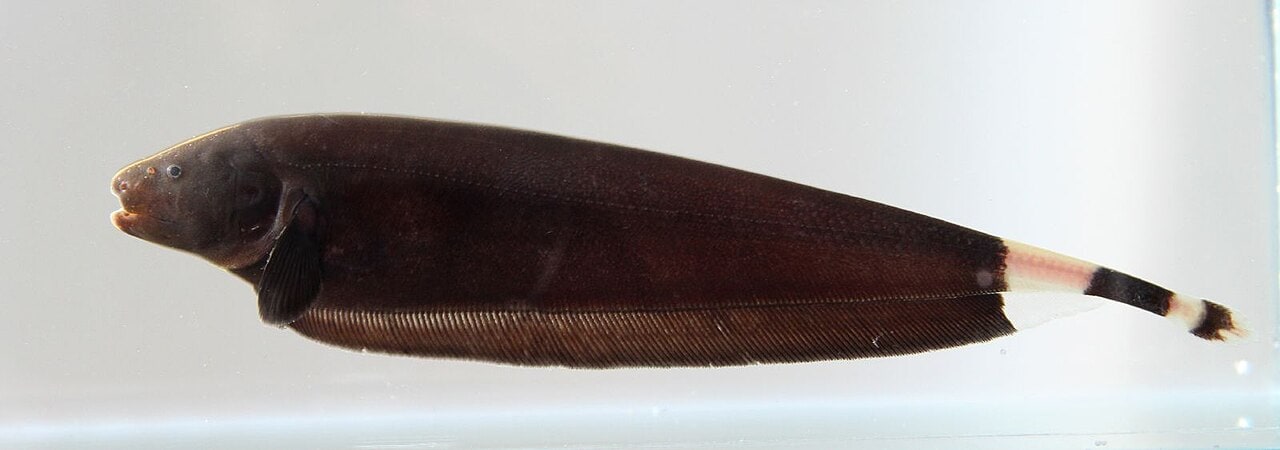
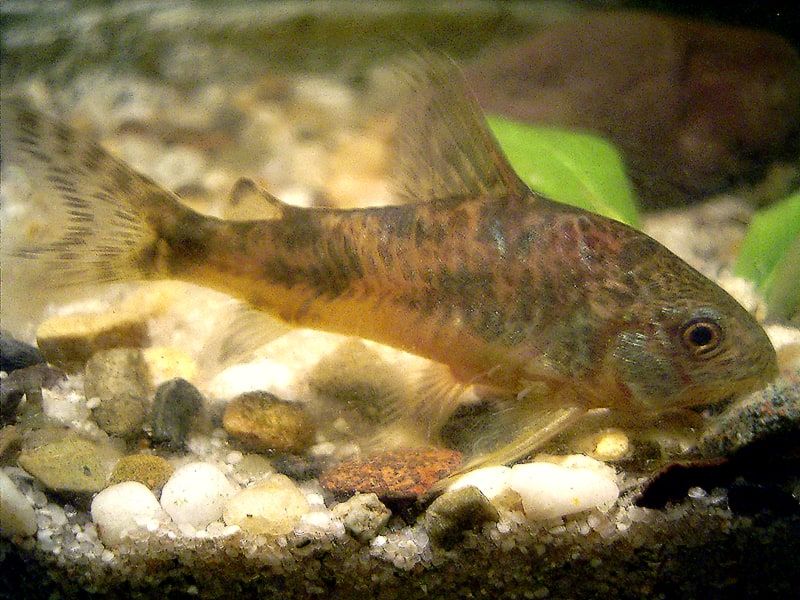
Risky. This mix is commonly discouraged for typical setups.
Compatibility score
Profile confidence: low
How we decideFishori checks adult size and predation risk, behaviour, water requirements and tank needs before giving a verdict.
500L
Combined minimum footprint reference for these two species: about 500L (larger active fish often want more length).
Black ghost knifefish (about 45cm as an adult) can realistically eat Corydoras Catfish (about 6cm) once grown. Plan around adult sizes, not shop sizes.
Temperament gap (semi-aggressive vs peaceful) adds stress on top of the hard incompatibility — space and cover do not make this pairing safe.
Assessment details
Temperament difference
Black ghost knifefish is semi-aggressive, while Corydoras Catfish is peaceful. Expect chasing or stress unless the tank is large and heavily structured — monitor closely.
Black ghost knifefish may eat Corydoras Catfish
Top issueBlack ghost knifefish (45cm) is predatory and Corydoras Catfish (6cm) is small enough to be eaten. This pairing is unsafe.
Narrow temperature overlap
Black ghost knifefish and Corydoras Catfish have only a narrow shared temperature range. Maintaining stable water temperature will be important.
“Black ghost knifefish (45cm) is predatory and Corydoras…”
Black ghost knifefish may eat Corydoras Catfish
Next steps
Concrete changes, not "research more" filler.
- •Provide plenty of hiding spots and visual breaks so Corydoras Catfish can escape if harassed.
- •Corydoras Catfish should be kept in a group of at least 6 for best health and behaviour.
- •Black ghost knifefish reaches ~45cm: tank length and turning room matter more than the litre number. A tall, short tank of the same volume is not equivalent.
Try instead
- →Build a species-only tank for the larger fish, or restock with fish too large to be eaten at adult sizes.
- LiveAquaria. Black ghost knifefish (Apteronotus albifrons care sheet)
Primary: large-aquarium retailer care profile: very large tank, dim lighting, hiding, carnivore diet, and size expectations. Cross-check the stated minimum with your own footprint and filtration; Fishori uses a stricter home-aquarium minimum than a catalog line.
- FishBase. Apteronotus albifrons
Secondary: natural history and max length; weakly electric foraging in the dark. Translate into tank length and nocturnal feeding, not a neon-tetra list.
- Seriously Fish. Corydoras paleatus
Primary: aquarium size, water chemistry, behaviour, and compatibility (URL verified in upgrade script; recheck if site content changes).
- FishBase. Corydoras paleatus
Secondary: taxonomy, distribution, and maximum length in nature; cross-check with aquarium import lines and measured tank parameters.
- Wikipedia. Corydoras paleatus
Secondary: general species context; verify all husbandry numbers against a dedicated aquarium care sheet and your test kit, not a single table row.
Try this next
Build the full stocking list with Black ghost knifefish + Corydoras Catfish
Plan further
Check each species’ mates list, size the glass, then verify the full stock in the builder. Methodology explains how verdicts are produced.
Individual fish vary in personality. Fishori uses conservative hobby rules. Observe any new introduction closely, feed thoughtfully, and keep a quarantine or backup plan. This is not veterinary advice.
Profile data confidence: medium. Driven by the lower-confidence profile (Black ghost knifefish): Typical care sources — trade names for this fish get mixed up, so verify the ID before you buy.