Living layout
Aquarium plants
20 species with care difficulty, light requirements, CO2 needs, and placement guidance. All plants are freshwater. Low-light and no-CO2 options are clearly labelled.
Start with beginner plants · low-light plants · no-CO2 plants.
Images are Wikimedia Commons–verified species photos where available; otherwise neutral placeholders—not stock art.
Plant guides
Easy beginner aquarium plantsLow-light aquarium plantsAquarium carpet plantsPlants for shrimp tanksPlants that grow without CO2Fast-growing aquarium plants
Easy, low-light — no CO2 needed
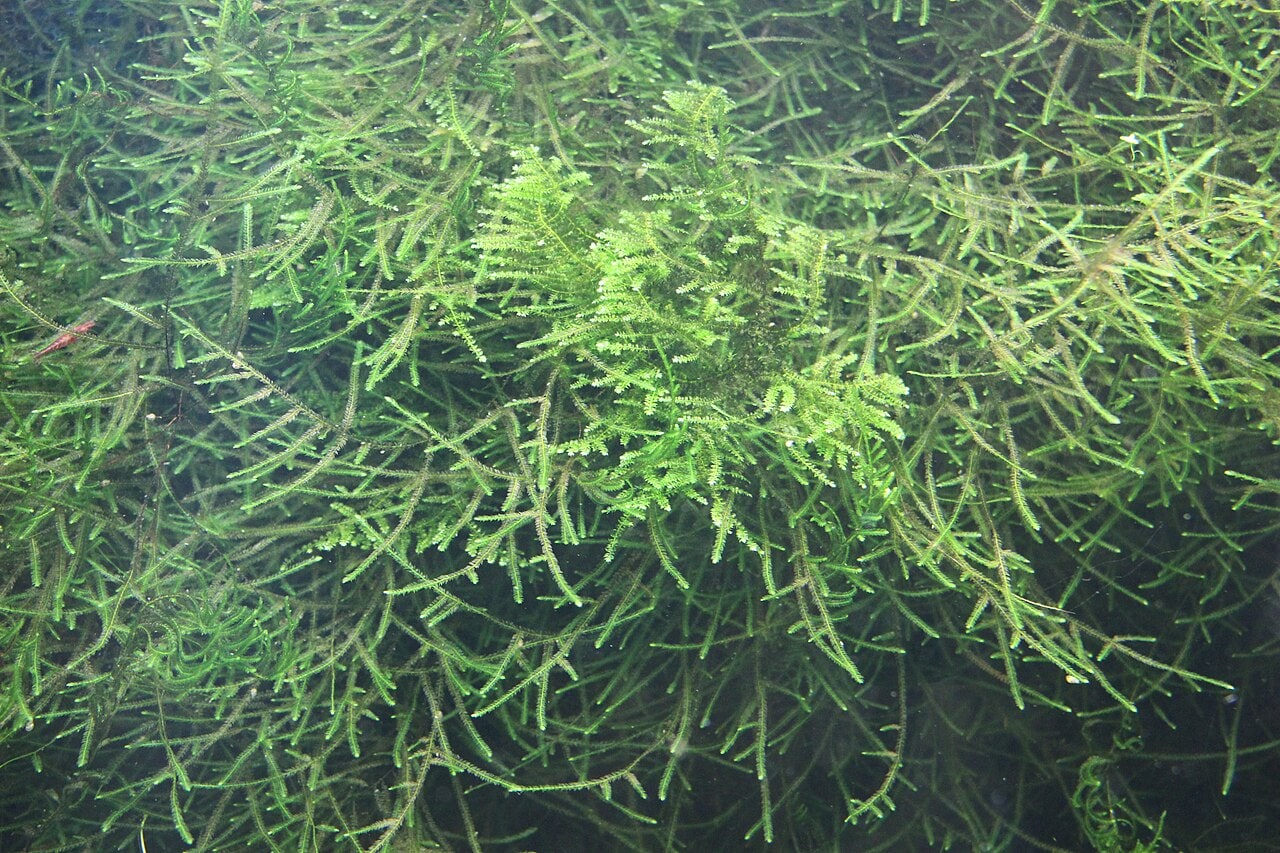
Java Moss
Taxiphyllum barbieri
easylow lightNo CO2
Java Moss is one of the most forgiving aquarium plants available. It attaches to rocks, driftwood, and mesh, forming dense green mats that provide shelter for fry and invertebrates. Tolerates a wide range of temperatures and light levels.
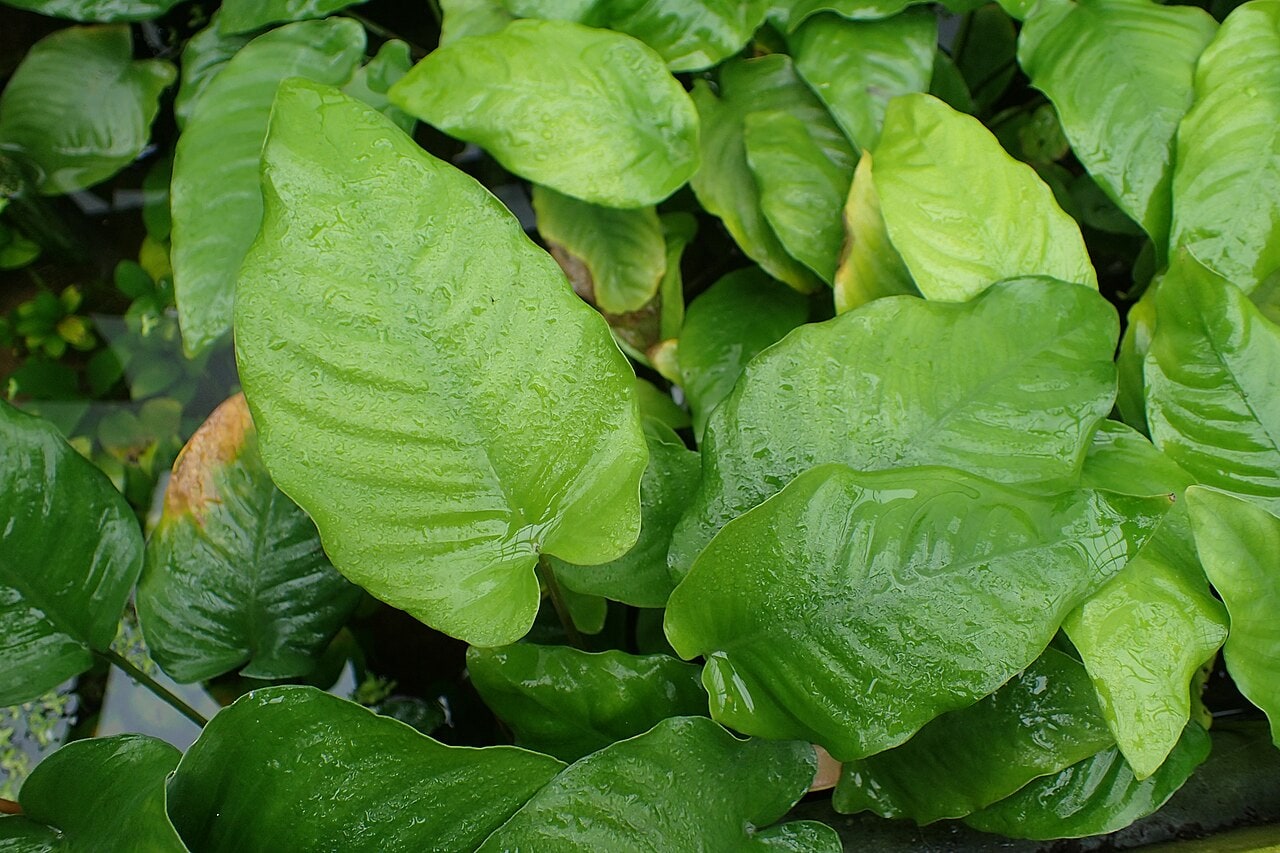
Anubias
Anubias barteri var. barteri
easylow lightNo CO2
Anubias is a slow-growing rhizome plant from West Africa. Its thick, dark-green leaves are extremely resilient and are largely ignored by most fish, except dedicated herbivores. It thrives tied to hardscape rather than planted in substrate.
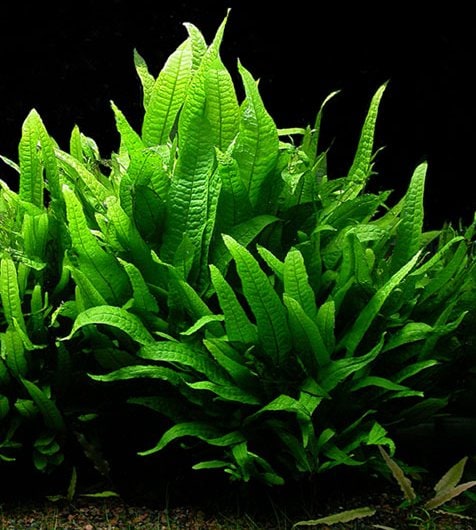
Java Fern
Microsorum pteropus
easylow lightNo CO2
Java Fern is an undemanding, slow-growing fern that thrives when attached to hardscape. Its tough leaves are rarely eaten by fish, making it one of the few plants safe with cichlids and goldfish. New plantlets grow on the leaf margins.
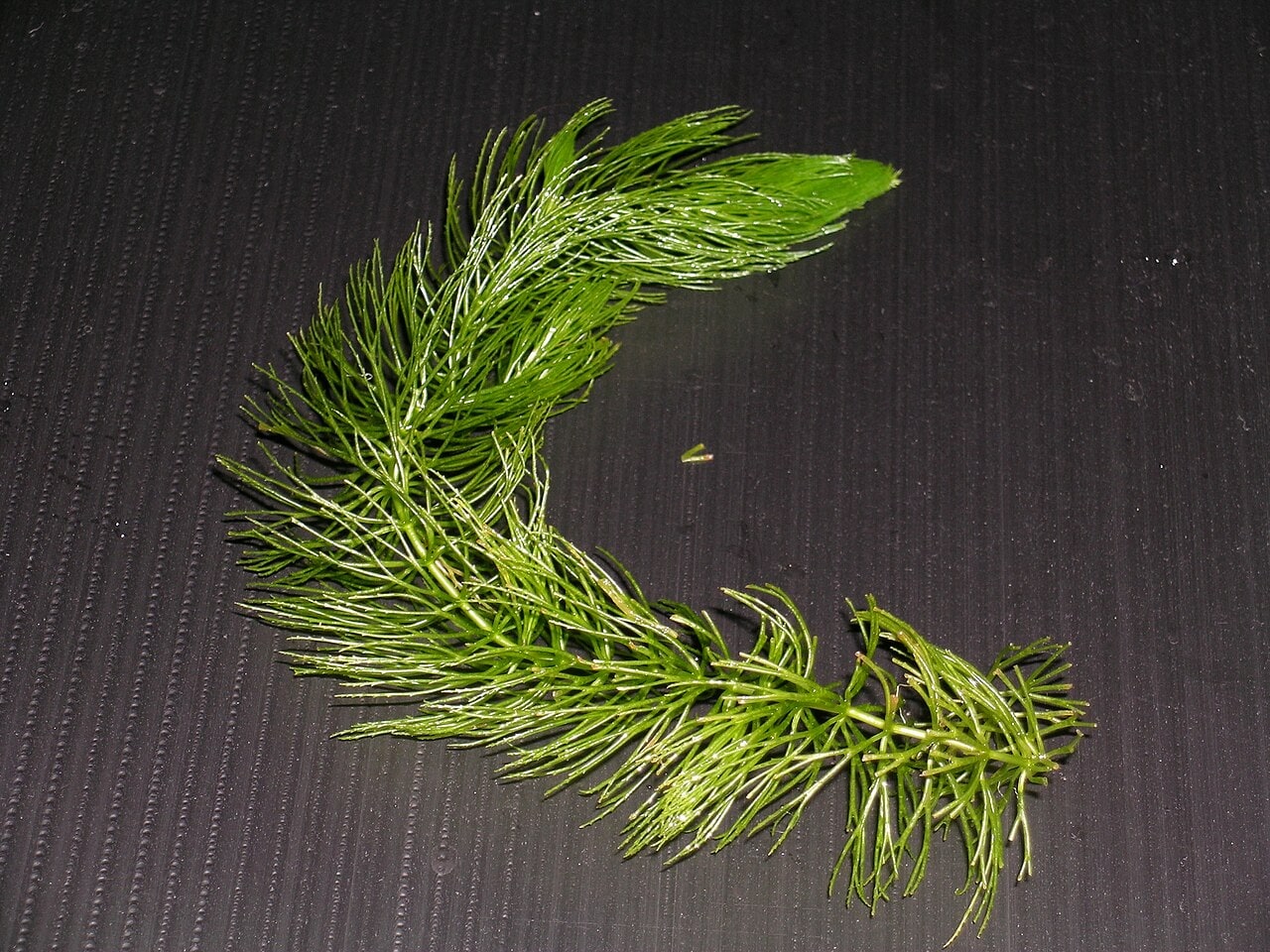
Hornwort
Ceratophyllum demersum
easylow lightNo CO2
Hornwort is a fast-growing, rootless stem plant that can be floated or anchored in substrate. Highly effective at absorbing nitrates, making it a practical choice for new tanks or overstocked setups. Needle-like leaves shed readily, vacuum them up regularly.
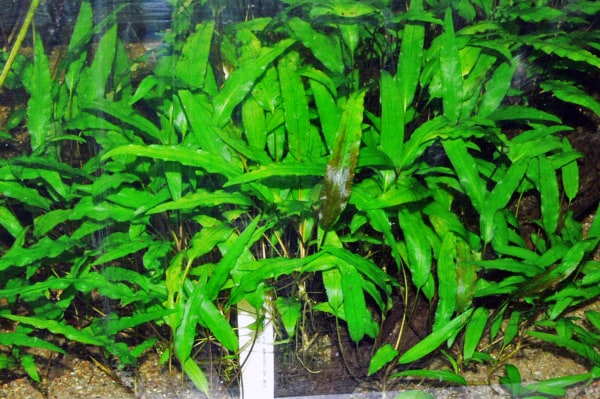
Cryptocoryne Wendtii
Cryptocoryne wendtii
easylow lightNo CO2
Cryptocoryne wendtii is a resilient, slow-growing rosette plant widely available in many leaf-colour variants (green, brown, red). Once established, it spreads naturally via runners. It may melt back after a change in conditions, new growth will be adapted to your tank.
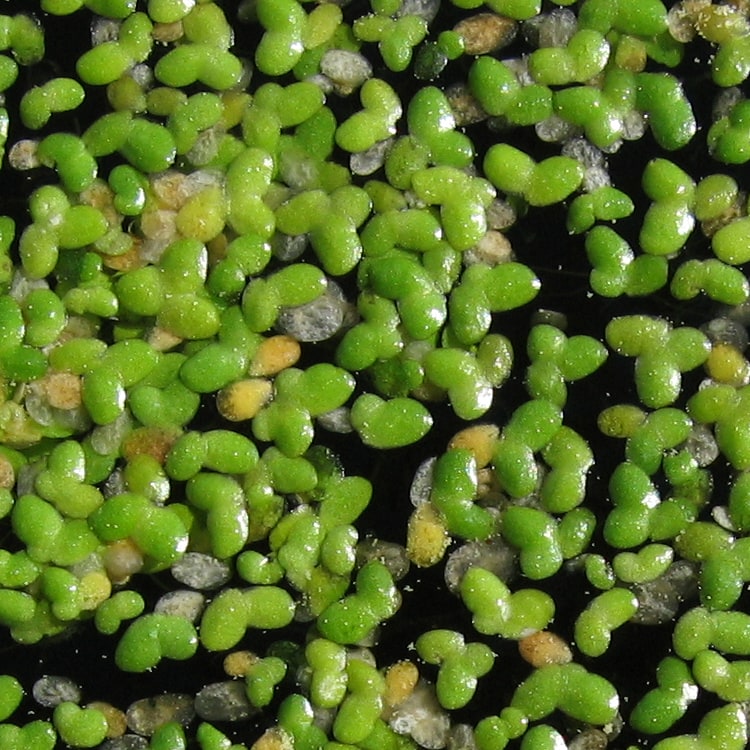
Duckweed
Lemna minor
easylow lightNo CO2
Duckweed is the smallest flowering plant and one of the easiest floating plants to maintain. It is very fast-growing, highly effective at nutrient export, and shades the tank well. A double-edged plant: extremely useful for nutrient control, but notoriously hard to remove once introduced.
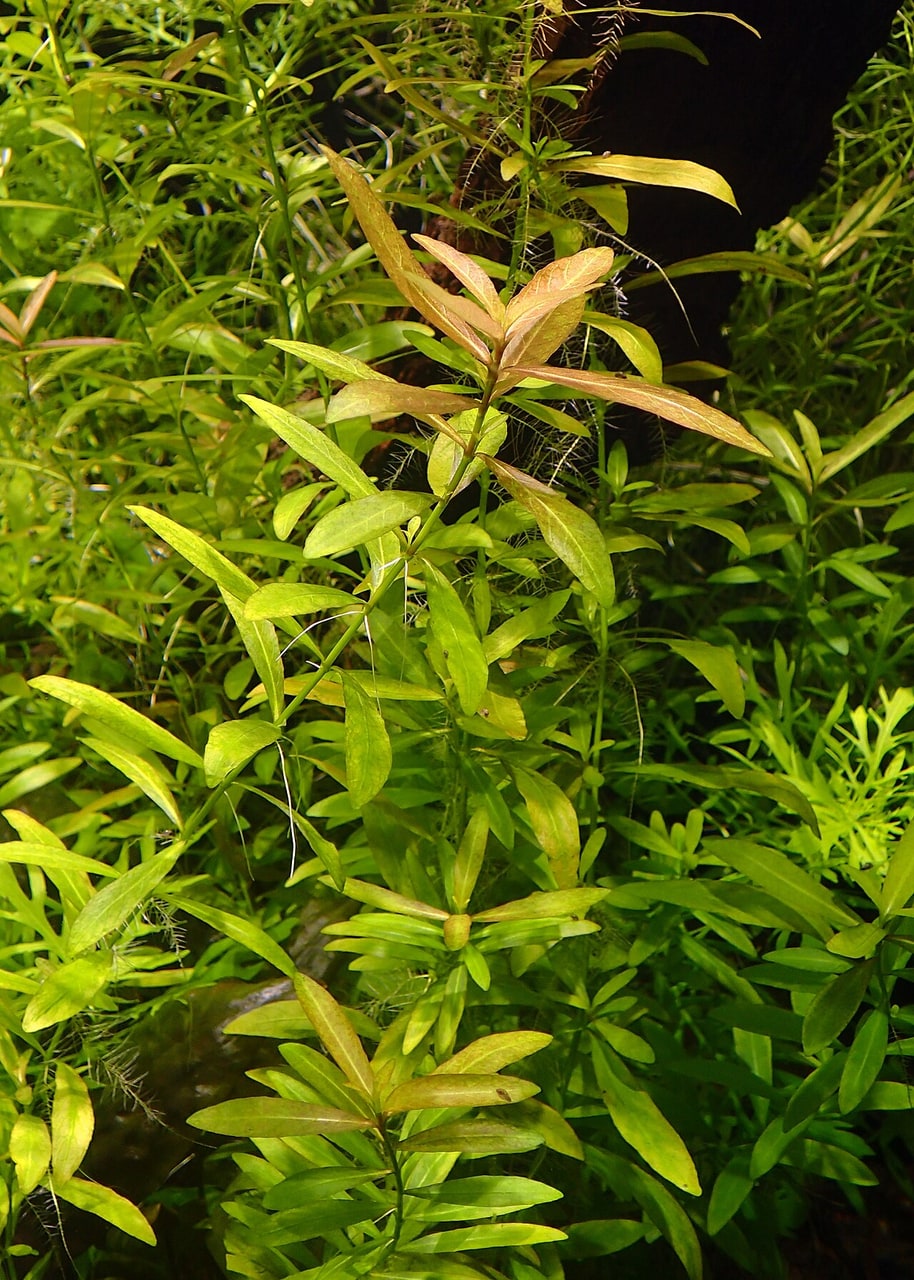
Hygrophila Polysperma
Hygrophila polysperma
easylow lightNo CO2
Hygrophila polysperma is one of the most beginner-tolerant stem plants. It grows in almost any conditions, tolerates low light, and does not need CO2 or fertiliser. Its fast growth helps reduce algae by competing for nutrients.
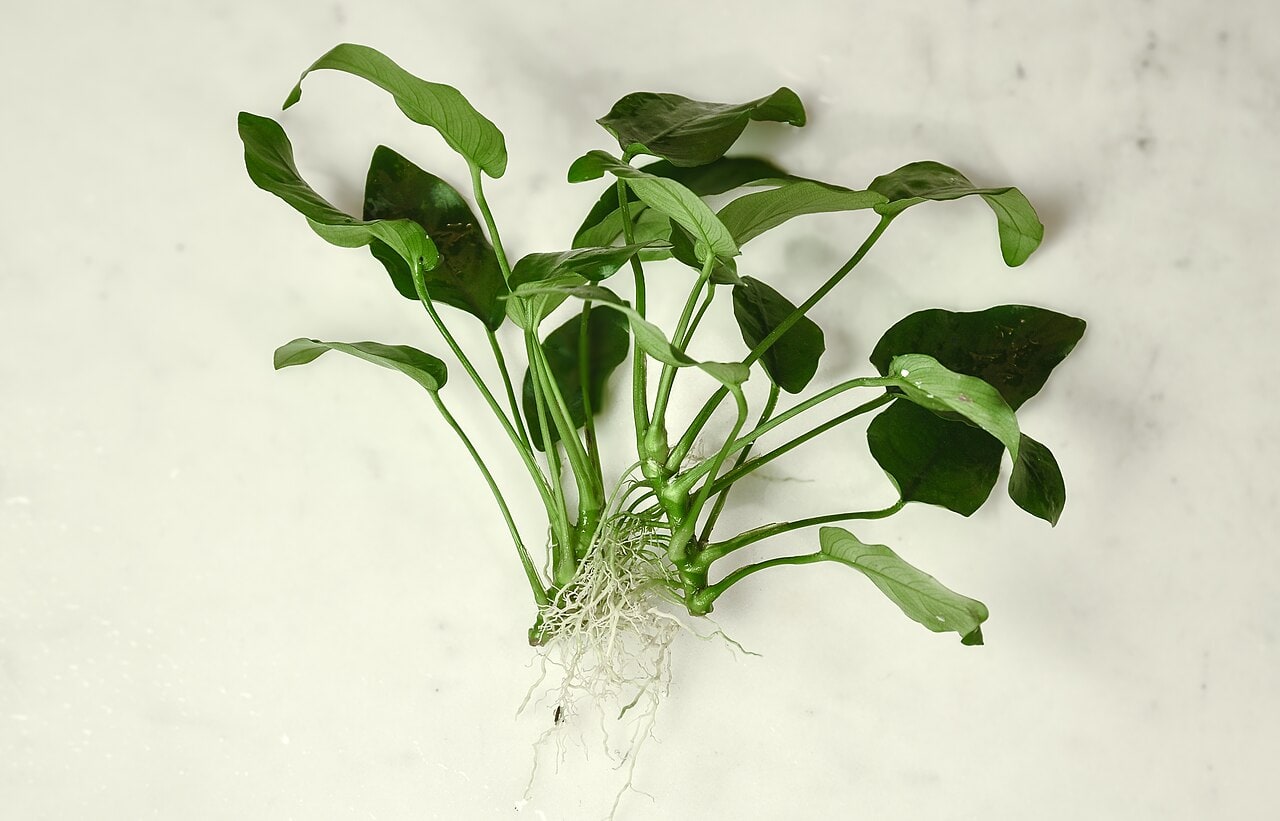
Anubias Nana
Anubias barteri var. nana
easylow lightNo CO2
Anubias nana is the miniature version of Anubias barteri, forming compact clusters of small dark-green leaves. It is ideal for foreground or hardscape attachment. Extremely slow-growing and tolerant of low light, a favourite in low-tech and shrimp tanks.
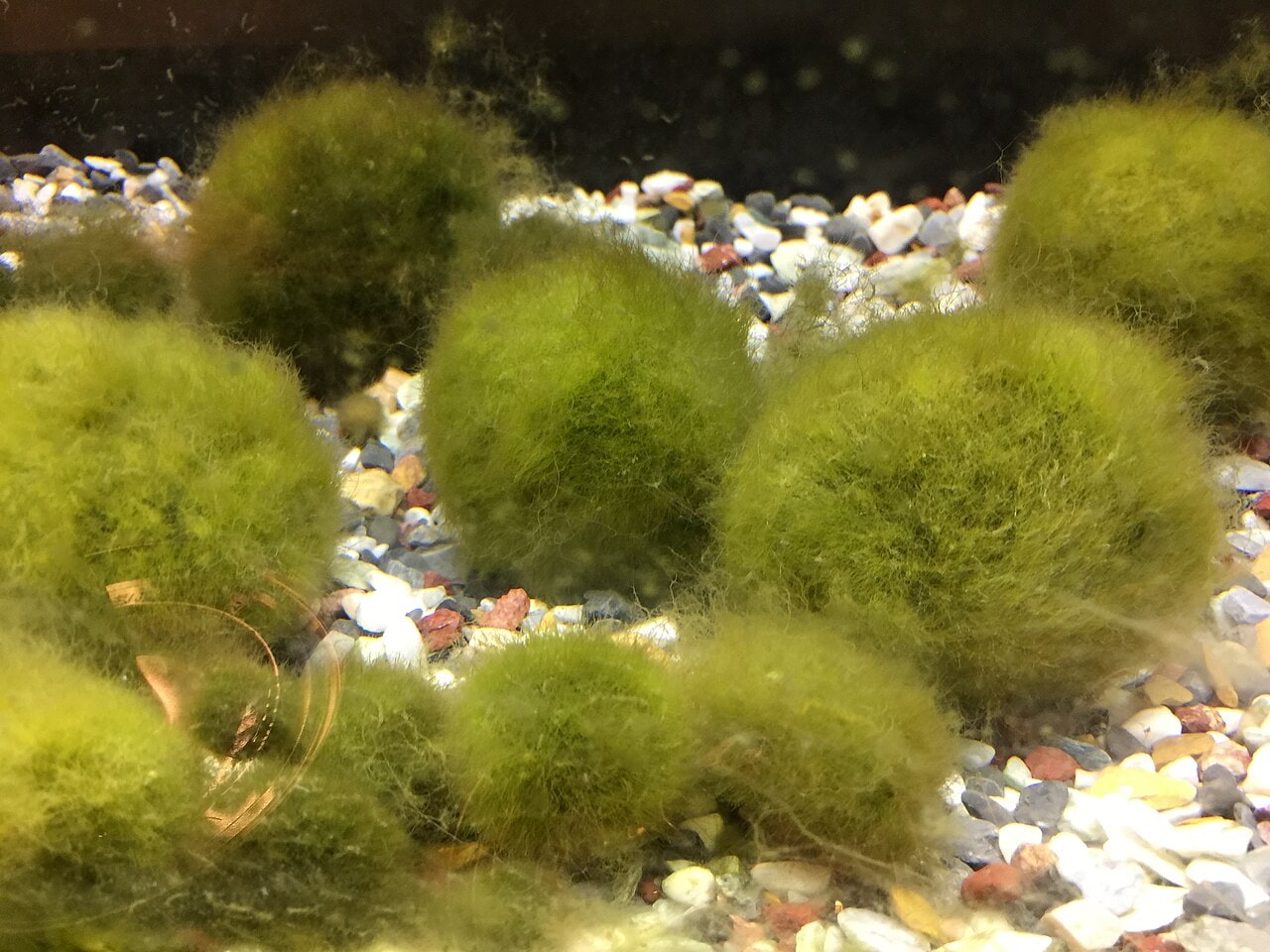
Marimo Moss Ball
Aegagropila linnaei
easylow lightNo CO2
Marimo Moss Balls are not true moss, they are spherical colonies of filamentous algae that grow naturally in sub-alpine lakes. In aquariums they provide surface area for beneficial bacteria and microorganisms, and are a popular, low-maintenance décor element.
Easy — medium or higher light
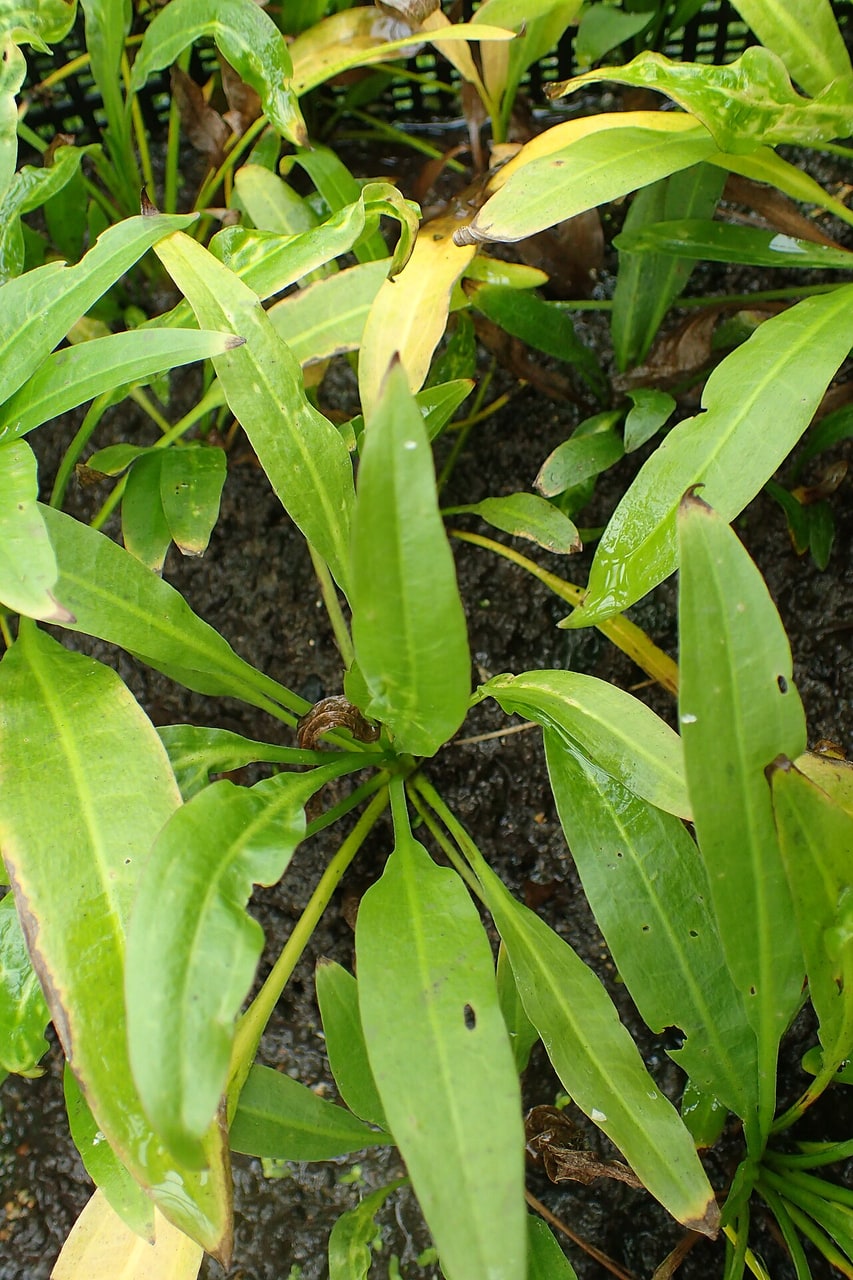
Amazon Sword
Echinodorus grisebachii
easymedium lightNo CO2
Amazon Sword is a large rosette plant native to South America. It produces broad, lance-shaped leaves and can dominate a tank when mature, making it best suited as a solo background centerpiece in medium to large aquariums. Roots heavily and benefits from root tabs.
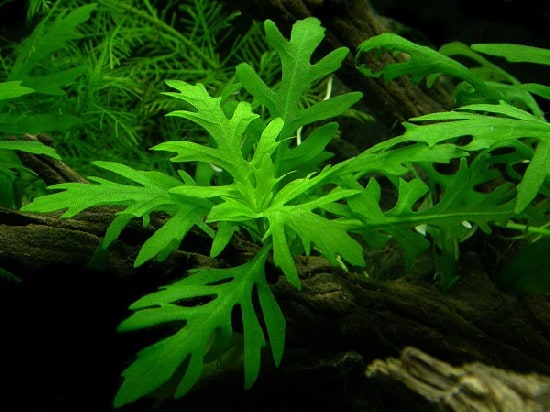
Water Wisteria
Hygrophila difformis
easymedium lightNo CO2
Water Wisteria is a fast-growing stem plant with delicate, lace-like leaves in moderate to high light. Easy to propagate and effective at competing with algae for nutrients. A popular choice for beginners wanting a bushy background plant without CO2.
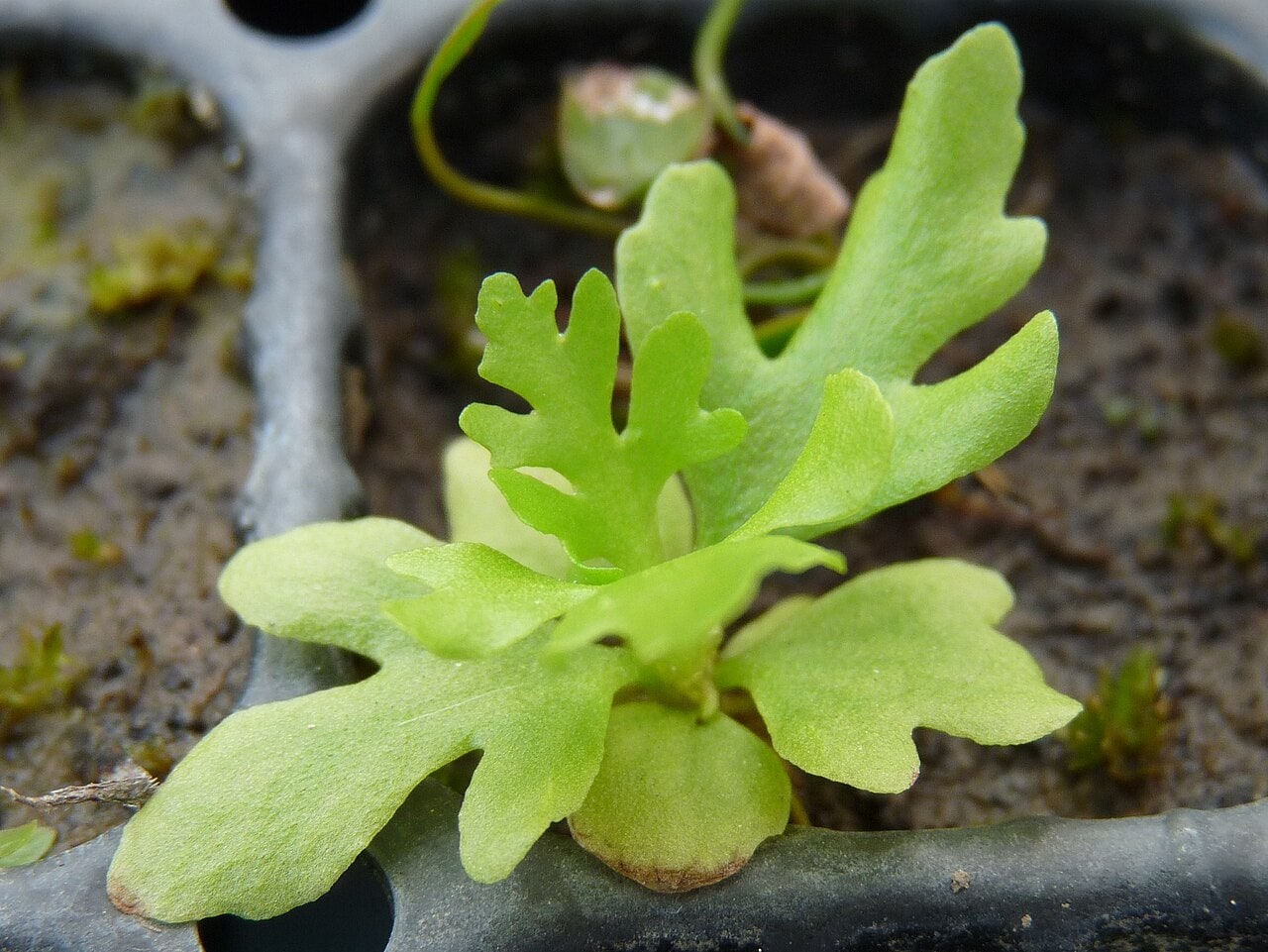
Water Sprite
Ceratopteris thalictroides
easymedium lightNo CO2
Water Sprite is a versatile, fast-growing fern that can be planted in substrate or floated on the surface. When floating, it shades the tank and provides excellent cover for surface-dwelling fish and fry. Effective at nutrient uptake and algae competition.
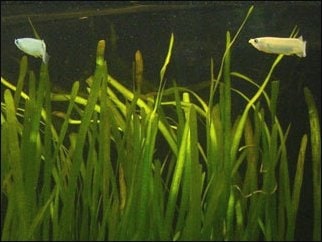
Vallisneria
Vallisneria spiralis
easymedium lightNo CO2
Vallisneria is a classic tall background plant with ribbon-like leaves that sweep across the water surface. It tolerates hard, alkaline water well, making it one of the few plants suited to African cichlid tanks. Spreads quickly via runners.
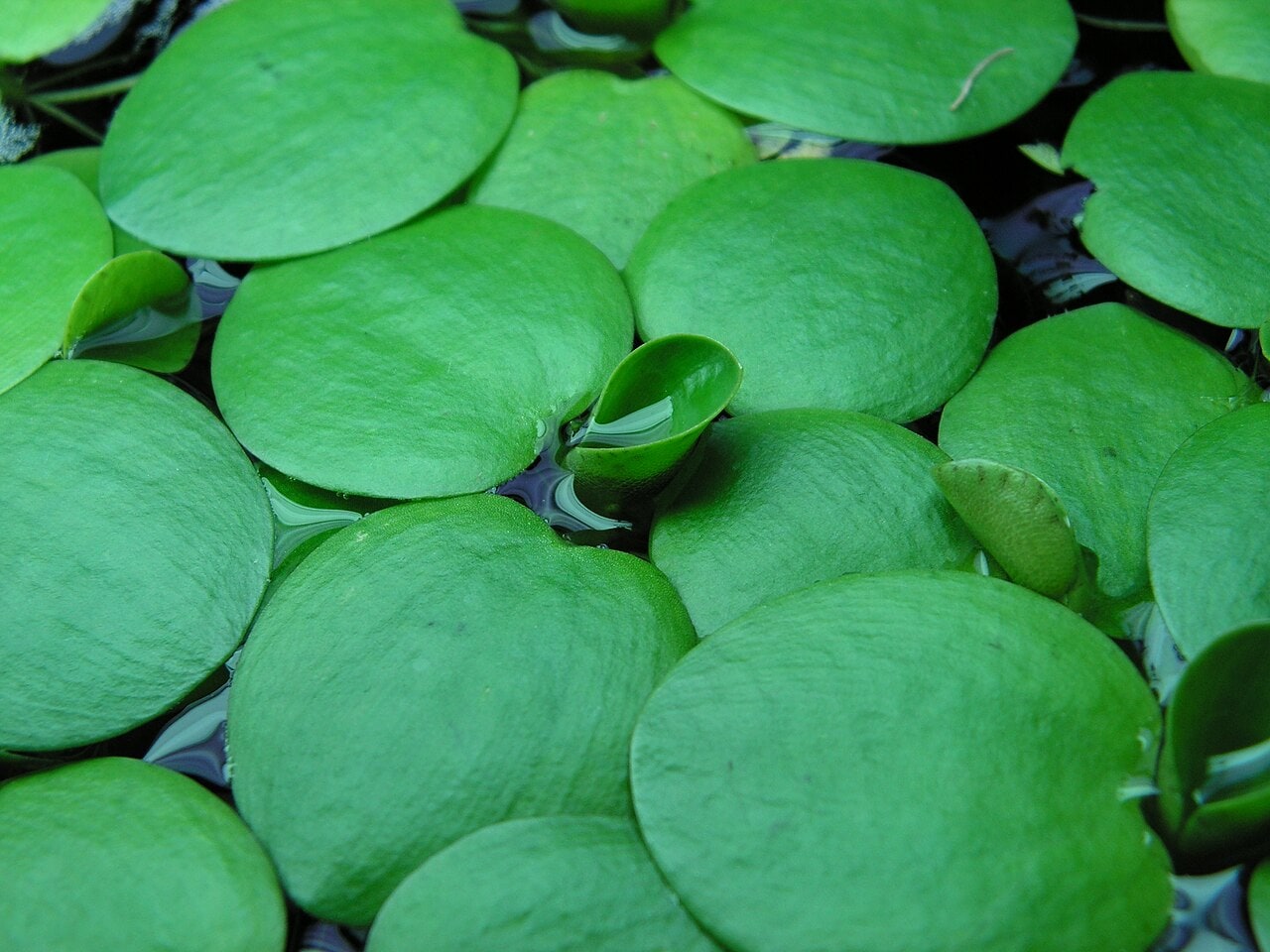
Amazon Frogbit
Limnobium laevigatum
easymedium lightNo CO2
Amazon Frogbit is a floating plant with rosettes of rounded leaves and long trailing roots that provide excellent cover for surface fish, fry, and invertebrates. It grows fast and can cover a tank surface quickly. Very effective at nutrient uptake.
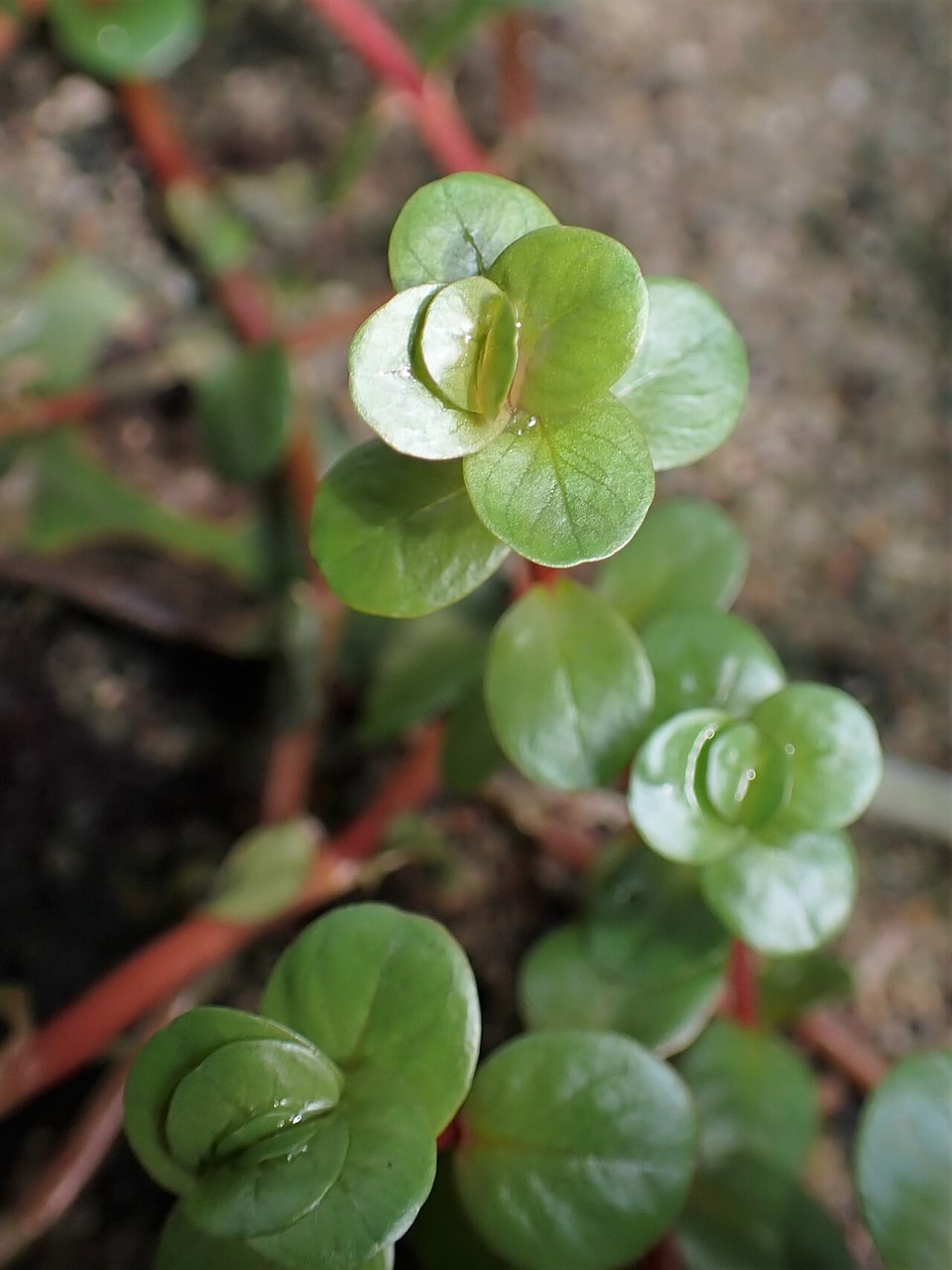
Rotala Rotundifolia
Rotala rotundifolia
easymedium lightNo CO2
Rotala rotundifolia is a popular, fast-growing stem plant whose leaves shift from green to pink-orange under high light with CO2. In lower light it stays green and grows more slowly. Works well in background groups, creating a soft, feathery effect.
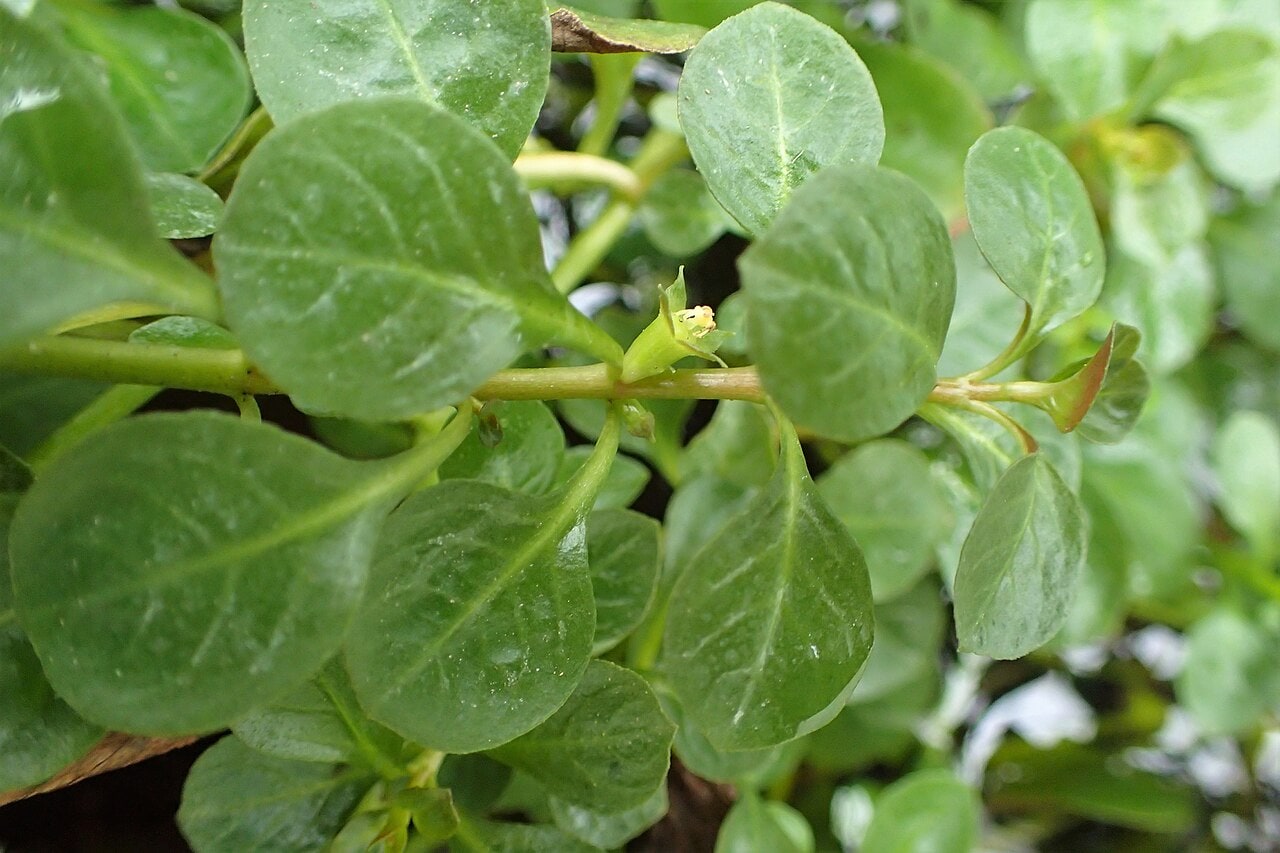
Ludwigia Repens
Ludwigia repens
easymedium lightNo CO2
Ludwigia repens is a colourful stem plant with green tops and deep red undersides. It is one of the easiest red plants available and does not require CO2 injection, though CO2 improves colour intensity significantly.
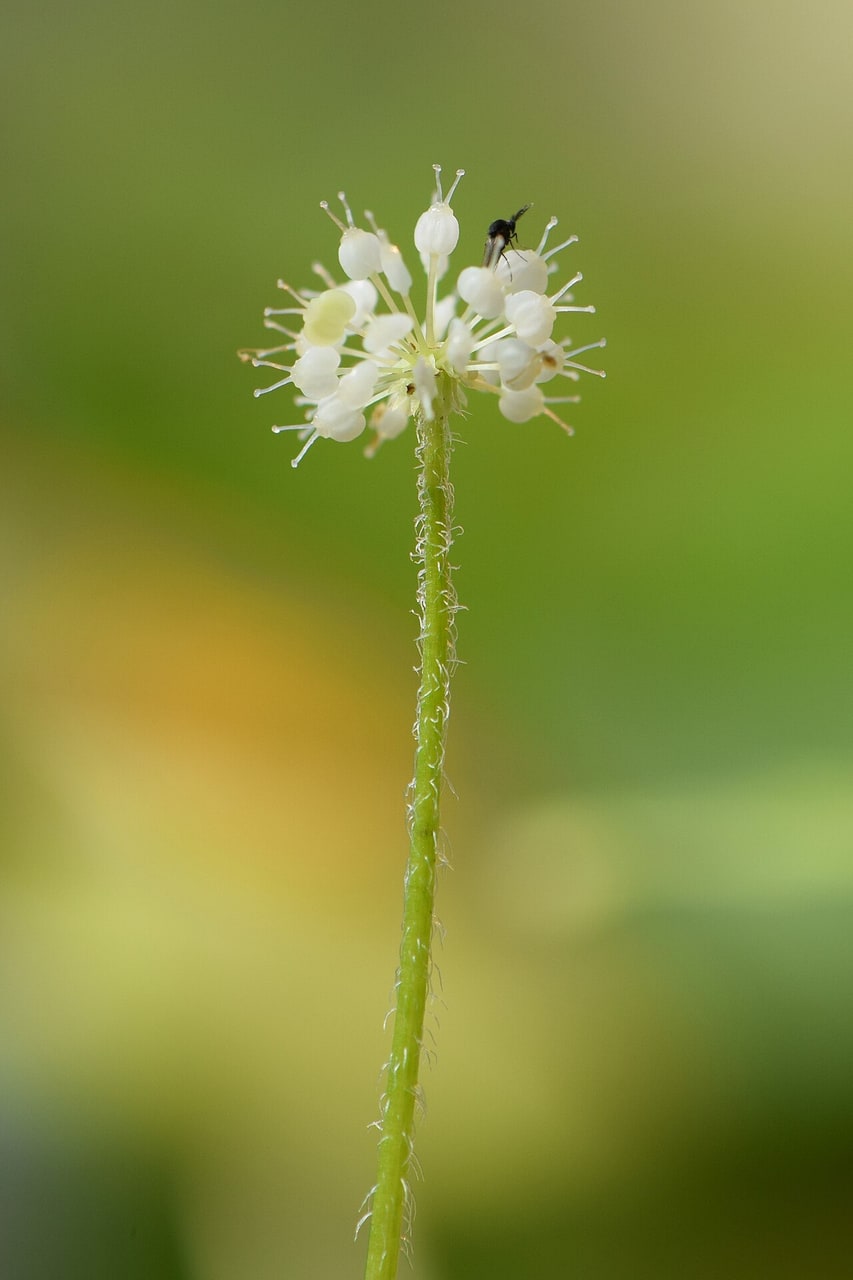
Brazilian Pennywort
Hydrocotyle leucocephala
easymedium lightNo CO2
Brazilian Pennywort is a versatile, fast-growing stem plant with round, lily-pad-like leaves. It can be planted in substrate or left floating at the surface. Provides good cover for surface-oriented fish and shrimp.
Intermediate plants
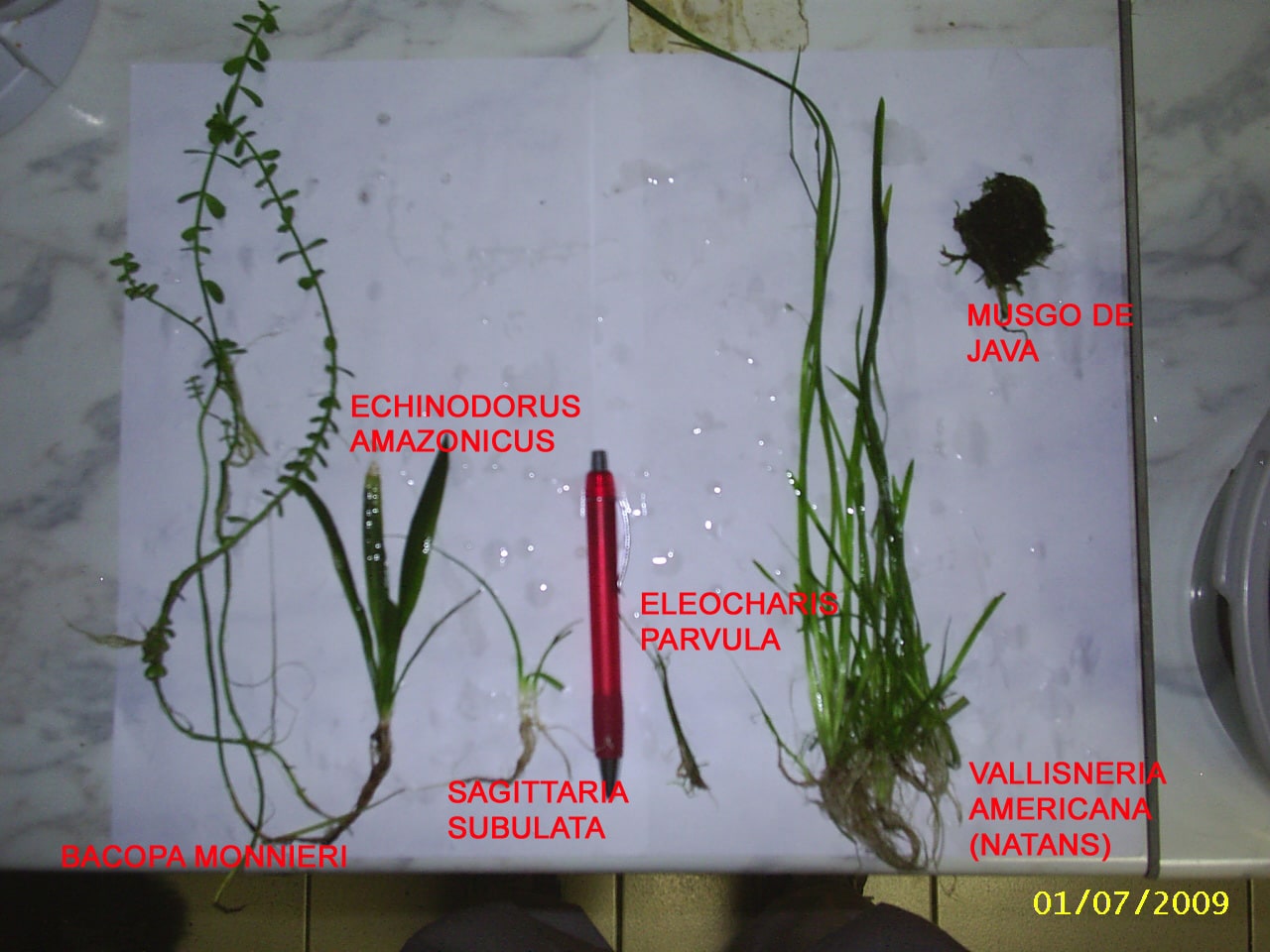
Dwarf Hairgrass
Eleocharis parvula
mediummedium lightNo CO2
Dwarf Hairgrass forms a dense grass-like carpet in the foreground given adequate light and nutrients. It spreads via runners. CO2 injection significantly speeds establishment; without it, growth is slow and sparse, and algae may outcompete it before it covers the substrate.

Monte Carlo
Micranthemum tweediei
mediummedium lightNo CO2
Monte Carlo is a popular carpet plant producing small, round bright-green leaves. It grows well in medium light without CO2 but spreads much faster with it. Grows more easily than HC Cuba for beginners looking for a carpet effect.
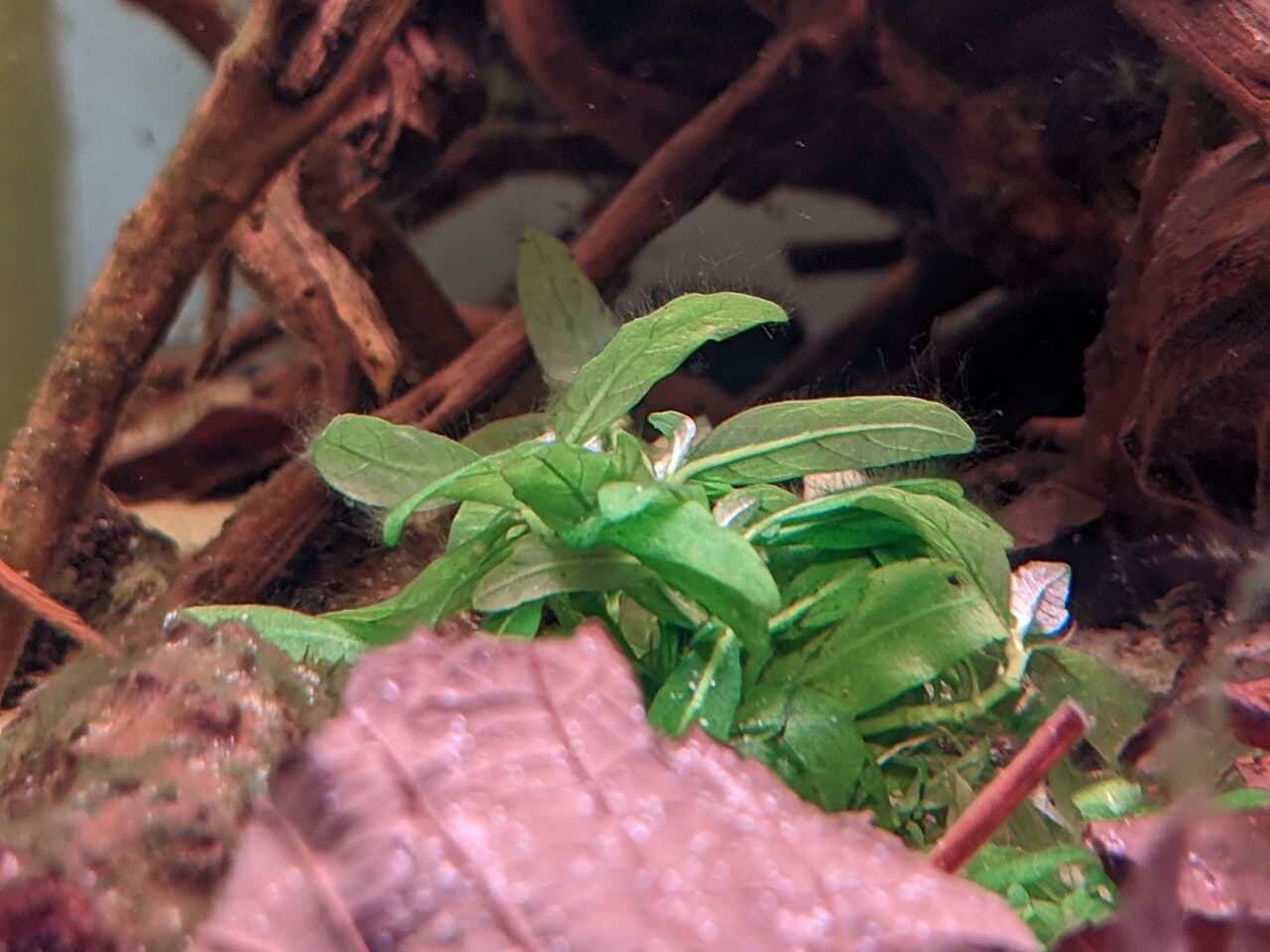
Staurogyne Repens
Staurogyne repens
mediummedium lightNo CO2
Staurogyne repens is a small, compact foreground plant with round, serrated leaves. It forms a bushy low cluster and is one of the more accessible foreground stem plants that does not require CO2 injection. Growth is slow, but it is a versatile hardscape accent plant.
Plan hardscape, then livestock
Shortlist plants here, then set litres and fish in the builder before you buy.