Compatibility brief
Can Neon Tetra live with Red-tailed catfish?
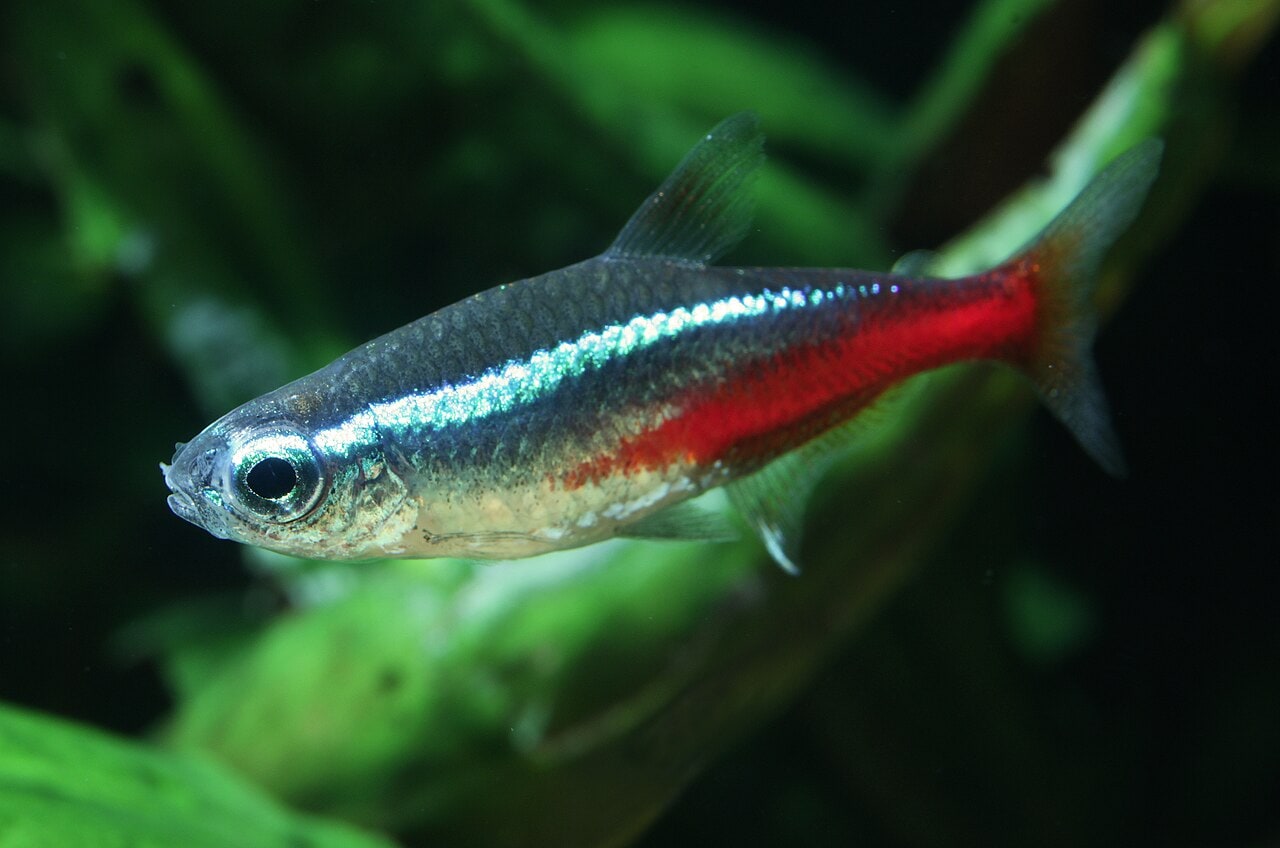
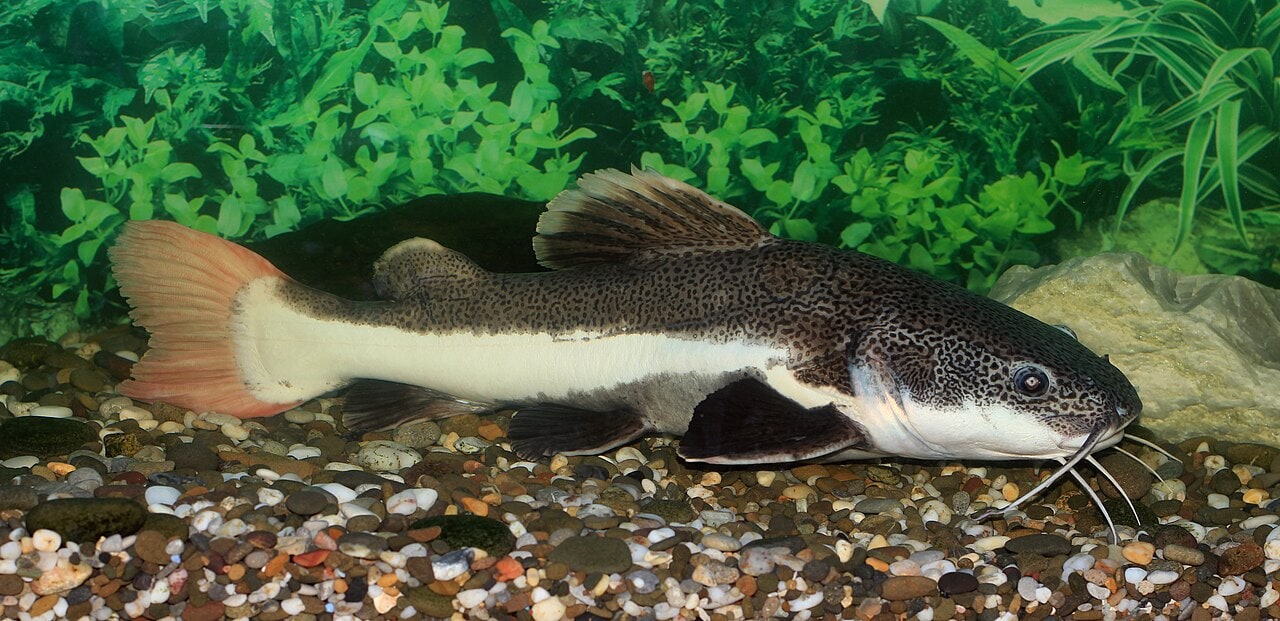
No. Keep them in separate tanks.
Check total
This number is how the checks added up. It is not the chance these fish will be safe.
2000L
2000 litres is Red-tailed catfish's published minimum, not a tank for keeping them together.
Where the bands overlap is a fact about each profile. It is not a heater or pH setting for one tank.
Red-tailed catfish (about 120cm as an adult) can realistically eat Neon Tetra (about 4cm) once grown. Plan around adult sizes, not shop sizes.
Red-tailed catfish attacks other fish. Neon Tetra does not. You may see chasing, torn fins, or a fish that hides and stops eating. Keep them in separate tanks.
Assessment details
Aggression mismatch
Top issueThe aggressive fish will likely bully or harm the peaceful one.
Red-tailed catfish may eat Neon Tetra
Red-tailed catfish (120cm) is predatory and Neon Tetra (4cm) is small enough to be eaten. This pairing is unsafe.
Narrow temperature overlap
Neon Tetra and Red-tailed catfish have only a narrow shared temperature range. The temperature ranges meet. That match is not a heater setting for one tank.
“The aggressive fish will likely bully or harm the peaceful one”
Aggression mismatch
Next steps
- •Keep Red-tailed catfish and Neon Tetra in separate tanks: Red-tailed catfish may eat Neon Tetra. A bigger tank does not stop that.
- •Red-tailed catfish reaches ~120cm: tank length and turning room matter more than the litre number. A tall, short tank of the same volume is not equivalent.
Try instead
- →Build a species-only tank for the larger fish, or restock with fish too large to be eaten at adult sizes.
- Seriously Fish. Paracheirodon innesi
Supports the 60 × 30 cm base and a volume of about 54 litres. Re-read 2026-10-22.
- FishBase. Paracheirodon innesi
Supports: taxonomy and wild maximum size — translate to tank stocking, not a target number.
- Wikipedia. Paracheirodon innesi
Supports: general species background and common-name orientation only.
- Seriously Fish. Phractocephalus hemioliopterus
Care sheet for size, water, behaviour and tank mates.
- FishBase. Phractocephalus hemioliopterus
Secondary: taxonomy, distribution, and maximum length in nature; cross-check with aquarium import lines and measured tank parameters.
- Wikipedia. Phractocephalus hemioliopterus
Secondary: general species context; verify all husbandry numbers against a dedicated aquarium care sheet and your test kit, not a single table row.
Try this next
Keep them in separate tanks
Do not add them to the same tank. This is not veterinary advice.
Profile data confidence: high. That mark is about the two profiles, not whether to keep these fish together. Checked against several solid care sources that mostly agree.