Compatibility brief
Can Angelfish live with Molly?
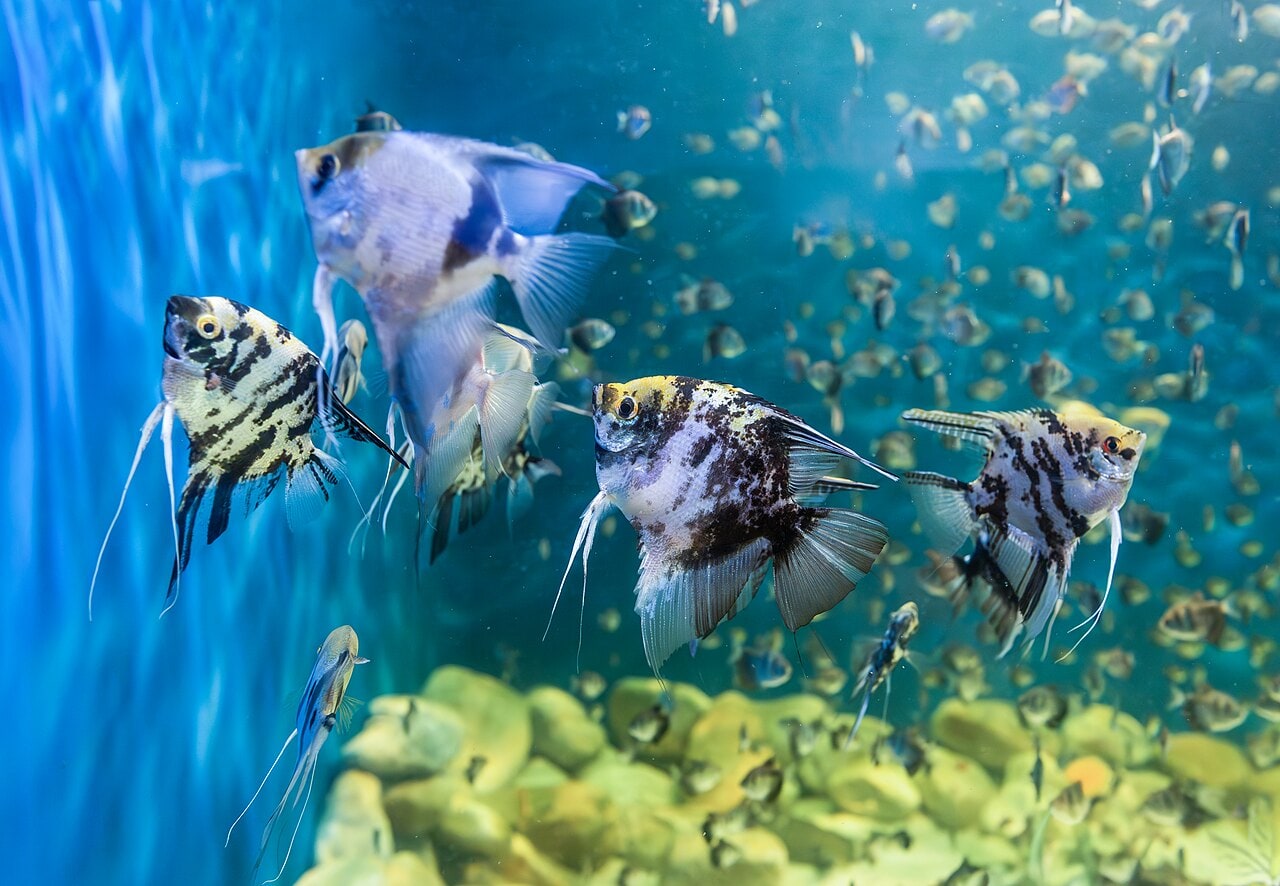
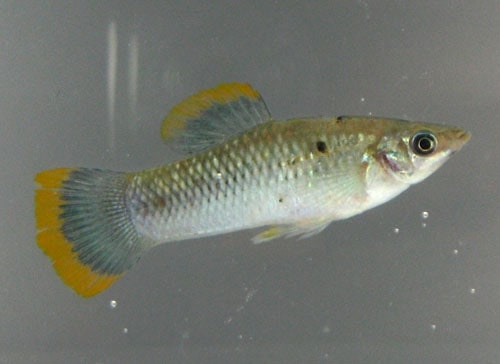
Risky. This mix is commonly discouraged for typical setups.
Compatibility score
Profile confidence: medium
How we decideFishori checks adult size and predation risk, behaviour, water requirements and tank needs before giving a verdict.
200L
Combined minimum footprint reference for these two species: about 200L (larger active fish often want more length).
Angels want softer Amazon-leaning water; most mollies do better hard and alkaline, and the honest overlap is a single point around pH 7.5. That is a chemistry clash, not a compromise band — one species lives outside its comfort zone permanently. Add the temperament gap (a territorial cichlid over busy livebearers) and the pairing carries more stacked risks than a community plan should. Keepers who force “community tap water” see molly stress or angel dullness long before an obvious fight.
Assessment details
Known incompatible pairing
Top issueSoft-leaning cichlid vs hard-water livebearer: the honest chemistry overlap is a single point, and the temperament gap stacks on top. Plan out of this pairing rather than manage it.
Compatible temperature range
Both fish can comfortably share similar water temperatures.
Narrow pH overlap
These fish can share water but their ideal pH ranges overlap only slightly. Aim to keep pH stable in the shared range.
“Known incompatible pairing”
Known incompatible pairing
Next steps
Concrete changes, not "research more" filler.
- •Keep them apart: mollies in a hard livebearer tank, angels in softer water. If you already own both, a long tank with a stable pH around 7.5 is survival, not suitability — treat rehoming one side as the real fix.
- •Provide plenty of hiding spots and visual breaks so Molly can escape if harassed.
Try instead
- →Build a species-only tank for the larger fish, or restock with fish too large to be eaten at adult sizes.
- Seriously Fish. Pterophyllum scalare
Primary: aquarium size, water chemistry, behaviour, and compatibility (URL verified in upgrade script; recheck if site content changes).
- FishBase. Pterophyllum scalare
Secondary: taxonomy, distribution, and maximum length in nature; cross-check with aquarium import lines and measured tank parameters.
- Wikipedia. Pterophyllum scalare
Secondary: general species context; verify all husbandry numbers against a dedicated aquarium care sheet and your test kit, not a single table row.
- Practical Fishkeeping. Angelfish fact files
Cross-check for tank size: 120 × 40 × 50 cm for a group; adults need a tank at least 50 cm tall.
- Seriously Fish. Poecilia sphenops
Supports: aquarium size, water chemistry, temperament and compatibility (primary care reference).
- FishBase. Poecilia sphenops
Supports: taxonomy and wild maximum size — translate to tank stocking, not a target number.
- Wikipedia. Poecilia sphenops
Supports: general species background and common-name orientation only.
Try this next
Build the full stocking list with Angelfish + Molly
Plan further
Check each species’ mates list, size the glass, then verify the full stock in the builder. Methodology explains how verdicts are produced.
Individual fish vary in personality. Fishori uses conservative hobby rules. Observe any new introduction closely, feed thoughtfully, and keep a quarantine or backup plan. This is not veterinary advice.
Profile data confidence: high. Checked against several solid care sources that mostly agree.