Compatibility brief
Can Cockatoo / crested Apistogramma live with Guppy?
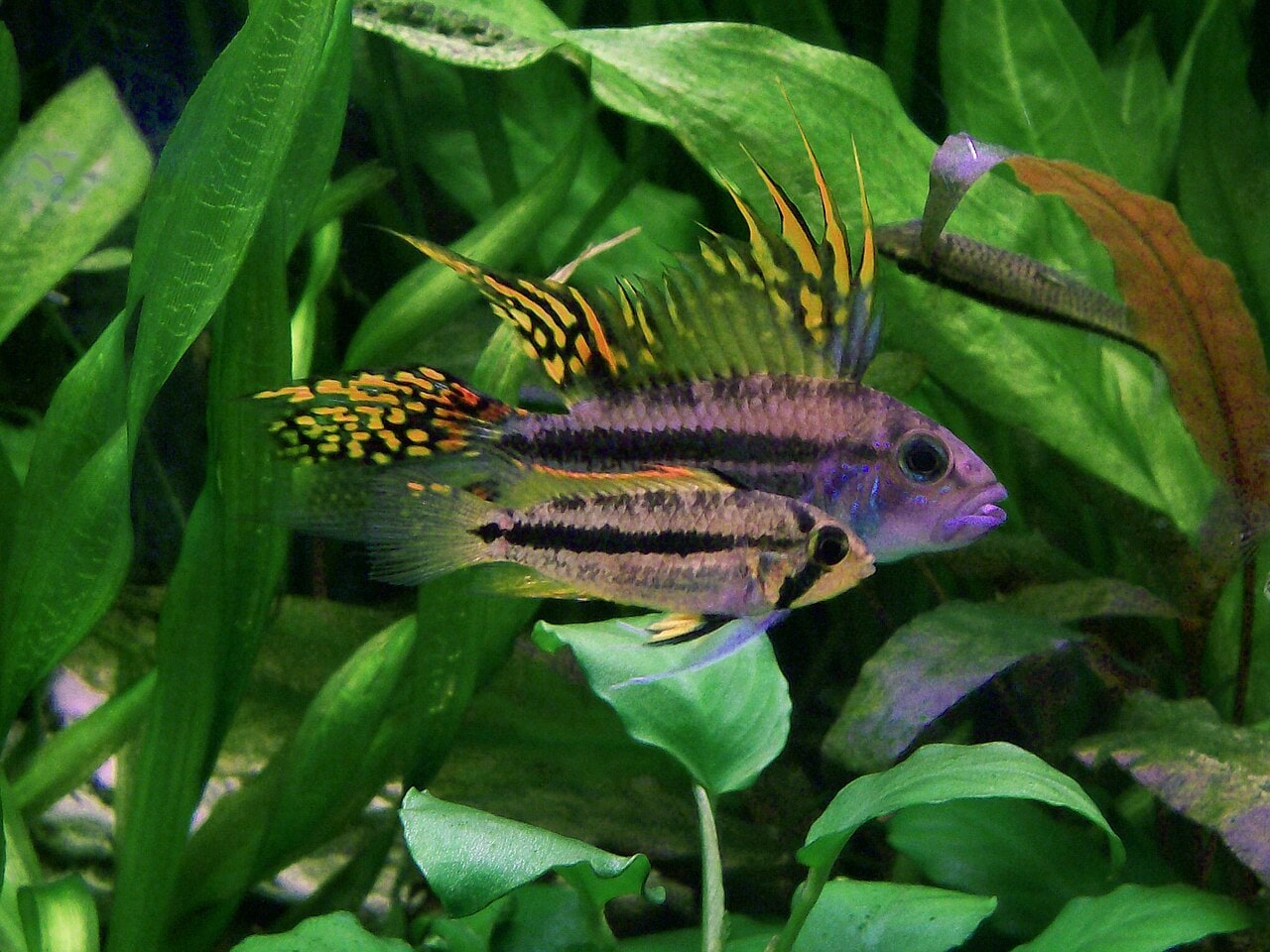
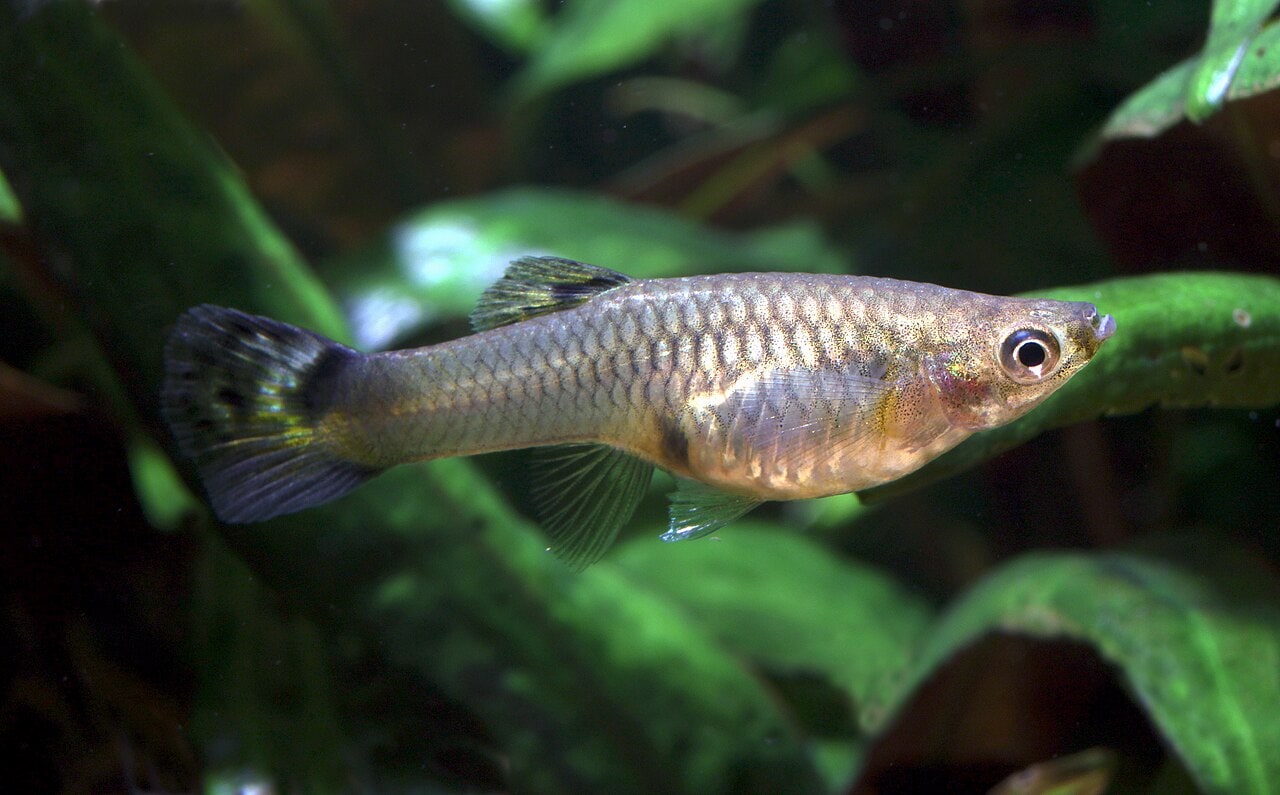
Only with the condition below.
Check total
This number is how the checks added up. It is not the chance these fish will be safe.
100L
At least 100 litres. That is the larger of the two published minimums. It is a volume, not the length of the tank.
Cockatoo / crested Apistogramma nips fins. Guppy has long fins you can see. Those fins are what gets bitten, even when the temperature and the pH match. Separate them if the fins stay torn.
Assessment details
Temperament difference
Top issueYou may see chasing. Give the calmer fish plants or wood to get behind. If it hides and stops eating, separate them.
Fin nipping risk
Cockatoo / crested Apistogramma is a known fin nipper and Guppy has long, flowing fins. Cockatoo / crested Apistogramma will likely harass Guppy.
Compatible temperature range
The ranges meet from 24 to 28 °C. Set the heater there. That is not the whole range of either fish.
Narrow pH overlap
These fish can share water but their ideal pH ranges overlap only slightly. Keep the pH test inside the overlap shown on this page.
“Temperament difference”
Temperament difference
Next steps
- •Provide plenty of hiding spots and visual breaks so Guppy can escape if harassed.
- •Avoid keeping Cockatoo / crested Apistogramma with long-finned fish like Guppy.
- Seriously Fish. Apistogramma cacatuoides
Care sheet for size, water, behaviour and tank mates.
- FishBase. Apistogramma cacatuoides
Secondary: taxonomy, distribution, and maximum length in nature; cross-check with aquarium import lines and measured tank parameters.
- Wikipedia. Apistogramma cacatuoides
Secondary: general species context; verify all husbandry numbers against a dedicated aquarium care sheet and your test kit, not a single table row.
- Seriously Fish. Poecilia reticulata
Care sheet for size, water, behaviour and tank mates.
- FishBase. Poecilia reticulata
Secondary: taxonomy, distribution, and maximum length in nature; cross-check with aquarium import lines and measured tank parameters.
- Wikipedia. Poecilia reticulata
Secondary: general species context; verify all husbandry numbers against a dedicated aquarium care sheet and your test kit, not a single table row.
- Wikipedia. Guppy
Encyclopaedia overview; use specialist aquarium sources for your stock's real temperature/pH/footprint needs.
Try this next
Check Cockatoo / crested Apistogramma and Guppy in one tank
After you add them, check that each fish still eats and that the fins are intact. This is not veterinary advice.
Profile data confidence: high. That mark is about the two profiles, not whether to keep these fish together. Checked against several solid care sources that mostly agree.