Species pairing: needs care (warning)
- Cockatoo / crested Apistogramma and Panda Corydoras: Temperament difference. Cockatoo / crested Apistogramma is semi-aggressive, while Panda Corydoras is peaceful. Expect chasing or stress unless the tank is large and heavily structured — monitor closely. Outcomes still depend on your tank shape, maintenance routine, and individual fish.
Temperament gap (warning)
- Cockatoo / crested Apistogramma (semi-aggressive) and Panda Corydoras (peaceful) — needs space, line-of-sight breaks, and observation.
Other notes
- Set the heater inside 24–26°C and check it with a thermometer.
- Plants and decor at different heights give the animals room to spread out.
- Shared temperature
- 24–26°C. The overlap is narrow.
- Shared pH
- 6.0–7.0
- Stocking estimate
- Well below Fishori's estimate. Fishori's stocking estimate is well below its reference for this volume.Load index 38 versus reference 100 for 100 L. The index multiplies adult length, quantity, a bioload weight and a territory factor. It is not a filter measurement.This is a Fishori estimate, not a welfare standard. For most small and medium fish it allows more animals than the RSPCA rule of thumb of 1.5–2 L of water per centimetre of fish, measured without the tail.
- Planning estimate
- 89 out of 100. A Fishori planning score, not a chance of success.
- Swim zones
- Profile swim zones only: top 0.0, middle 0.5, bottom 6.5. Each quantity is split across the zones on that profile. These are not observed positions.Fishori estimate: Cockatoo / crested Apistogramma and Panda Corydoras are all listed for the bottom, so that part of the tank may be crowded. It is not a group-size or tank-size problem.
- Pairs checked
- 1. RISKY: 0. Caution: 1.
This check uses each profile’s minimum tank size, group size, water overlap and pair rules. The score is an estimate. It does not measure your filter or how the animals will behave.
How the check worksLimitations
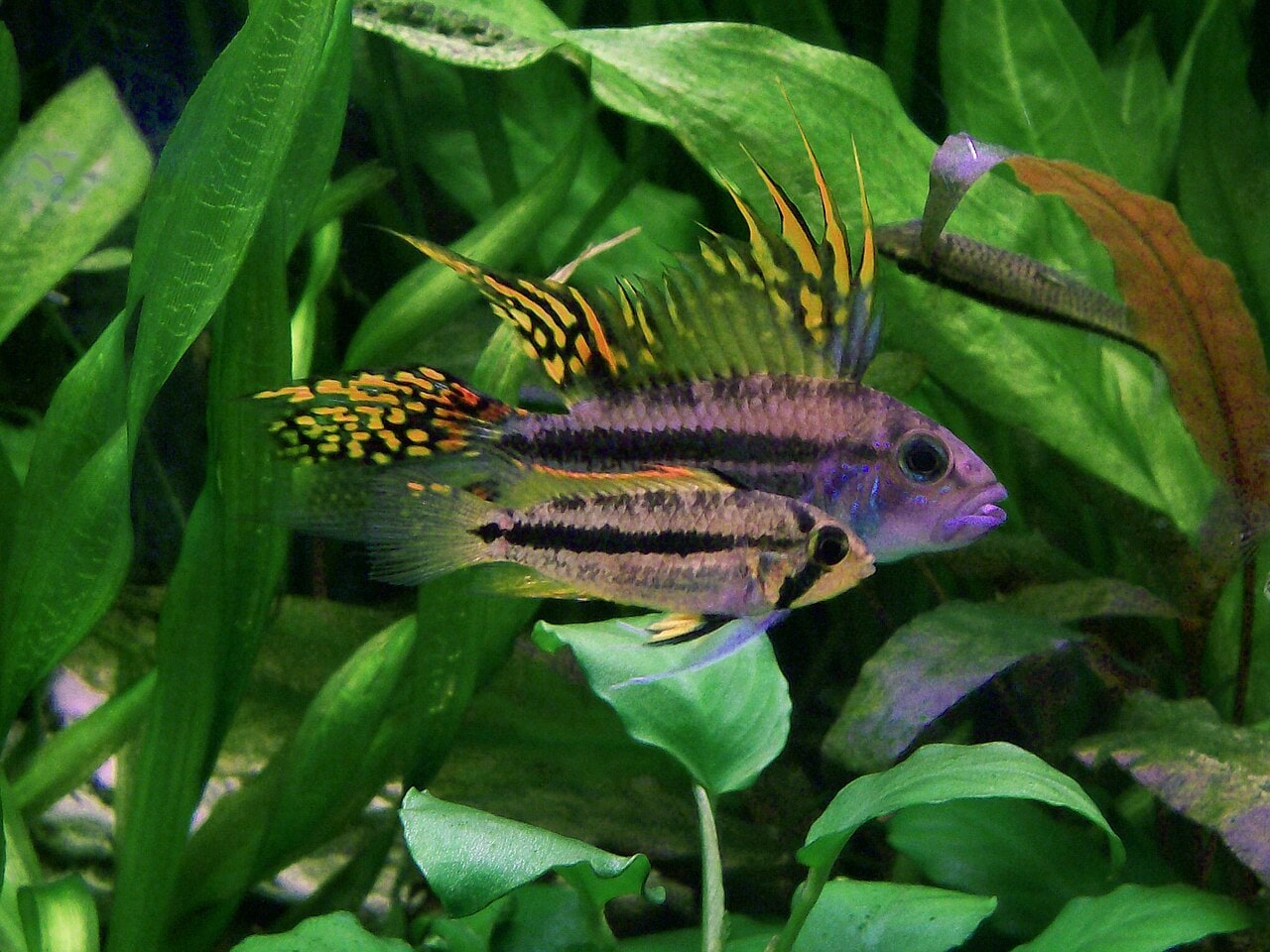 Cockatoo / crested Apistogramma
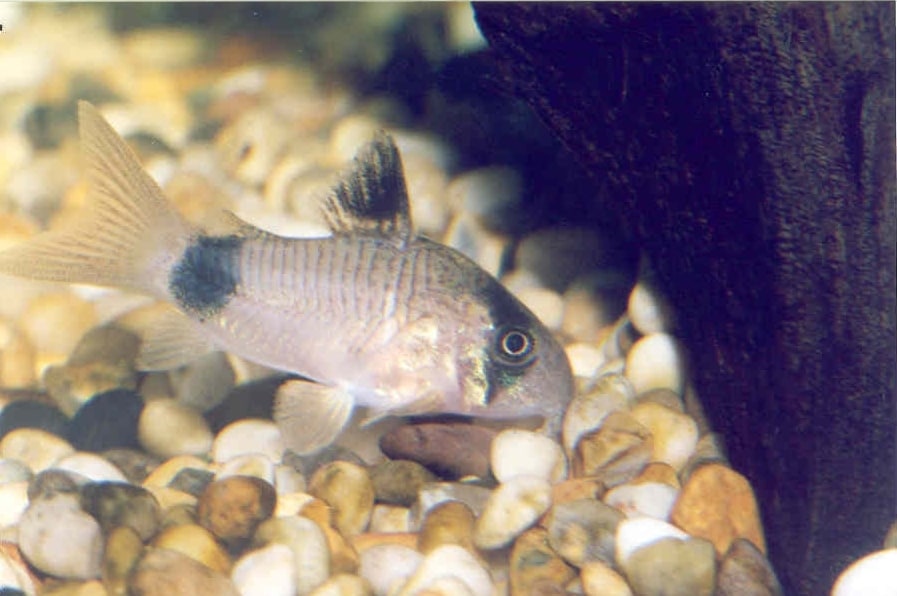 Panda Corydoras

