Compatibility brief
Can Amano Shrimp live with Otocinclus?
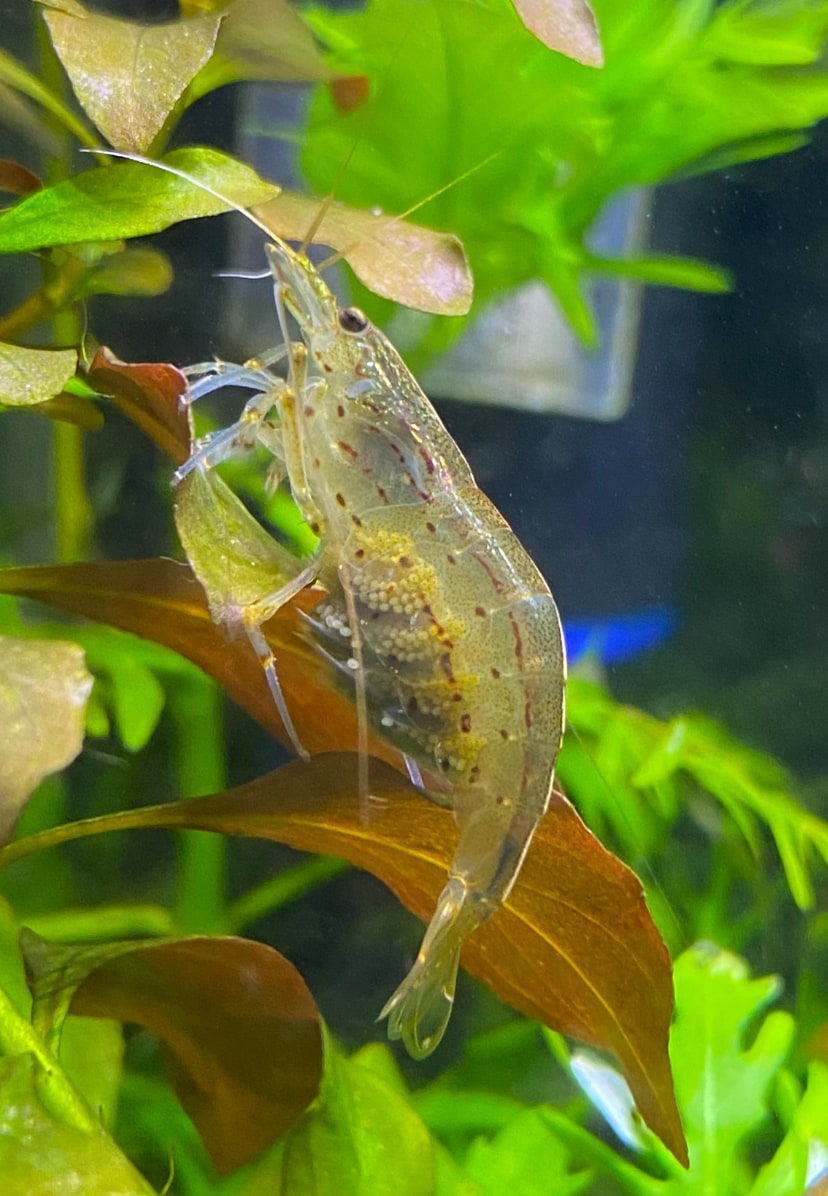
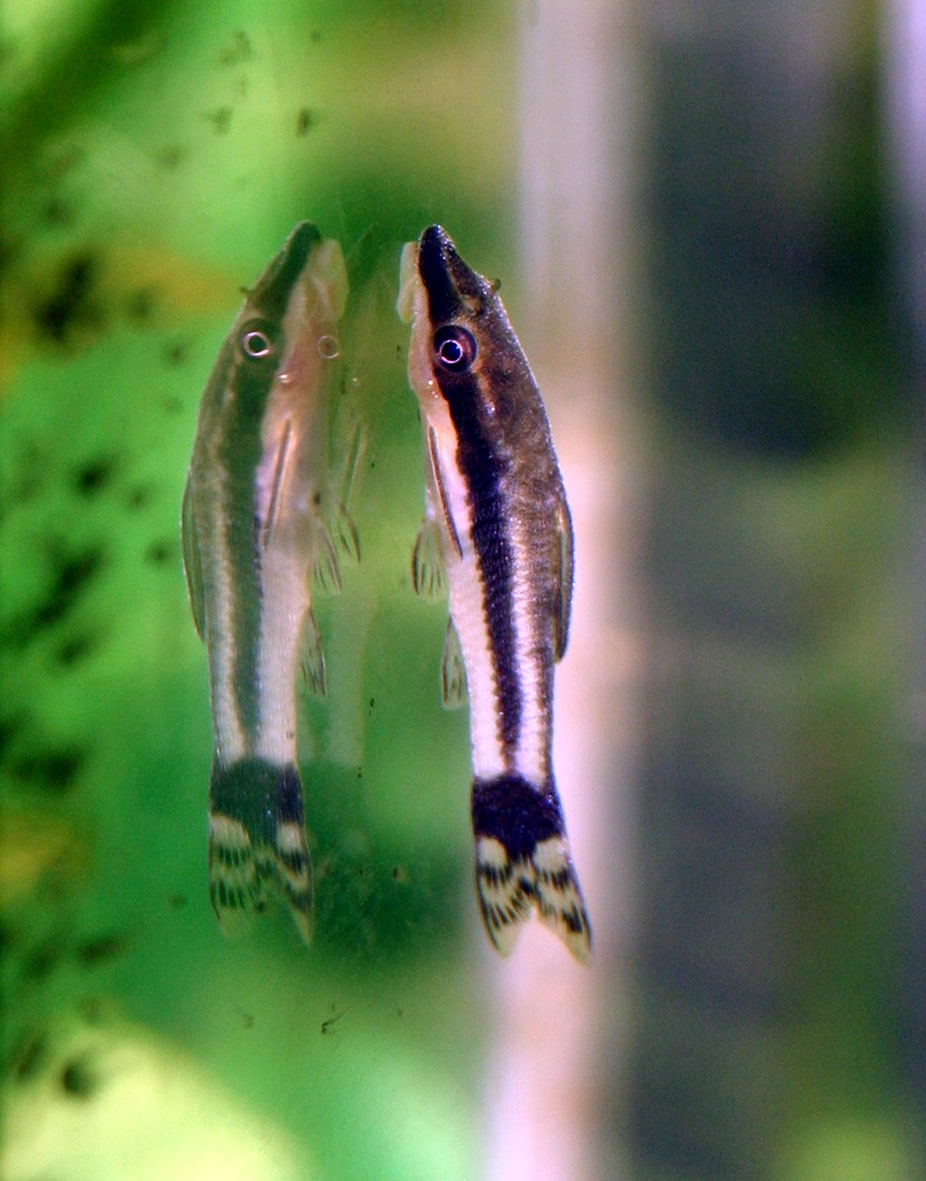
Yes, when the tank and the water suit both.
Check total
This number is how the checks added up. It is not the chance these fish will be safe.
60L
At least 60 litres. That is the larger of the two published minimums. It is a volume, not the length of the tank.
Both are peaceful grazers with little territory overlap: otos work algae on leaves, amanos work film on wood and substrate. The pairing is workable in a mature planted tank with real biofilm. It fails when people expect them to replace water changes or stock them into a brand-new sterile aquascape with nothing to eat.
Assessment details
Known compatible pairing
Both peaceful grazers. Otos work the algae on plant leaves, amanos work the substrate and decor. No territory or feeding conflict in a mature planted setup.
Compatible temperature range
The ranges meet from 20 to 27 °C. Set the heater there. That is not the whole range of either fish.
Data or identification limits
Top issueAt least one fish has common trade or ID ambiguity, so the numbers here may not match the individual in the shop.
“At least one fish has common trade or ID ambiguity, so the…”
Data or identification limits
Next steps
- •Add both only to established tanks with visible algae or biofilm, and supplement wafers so neither starves when the glass finally goes clean.
- •Amano Shrimp should be kept in a group of at least 5 for best health and behaviour.
- •Otocinclus should be kept in a group of at least 6 for best health and behaviour.
- LiveAquaria. Japonica / Amano shrimp (care profile)
Primary: major retailer invertebrate care page: temperature, pH, tank size, algae use, and tank-mate safety. Copy uses Caridina japonica; current valid name for the hobby Amano is C. multidentata. Treat the care numbers as a practical anchor, not a taxonomic guarantee.
- OATA. How to look after freshwater shrimp and snails
Secondary: trade-association care sheet (accessed 2026-10-20). Amano shrimp about 5 cm; roughly 20 litres, larger with fish; shrimp in groups of at least five; larvae need brackish water, so they rarely breed in home aquariums.
- Seriously Fish. Otocinclus macrospilus (Otocinclus ‘affinis’ / trade oto stand-in)
Primary stand-in: SF profile for O. macrospilus. Shop 'O. affinis'/'otocinclus' labels are often misidentified. Verify the fish against a good key, not a single import sticker.
- FishBase. Otocinclus affinis
Secondary: taxonomy, distribution, and maximum length in nature; cross-check with aquarium import lines and measured tank parameters.
- Wikipedia. Otocinclus affinis
Secondary: general species context; verify all husbandry numbers against a dedicated aquarium care sheet and your test kit, not a single table row.
- FishBase. Otocinclus vittatus
Taxonomy, distribution, and typical max length in natural/wild contexts (cross-check to aquarium import lines).
- Wikipedia. Otocinclus
Encyclopaedia overview; use specialist aquarium sources for your stock's real temperature/pH/footprint needs.
Try this next
Check Amano Shrimp and Otocinclus in one tank
After you add them, check that each fish still eats and that the fins are intact. This is not veterinary advice.
Profile data confidence: medium. That mark is about the two profiles, not whether to keep these fish together. Driven by the lower-confidence profile (Amano Shrimp): Typical care sources — trade names for this fish get mixed up, so verify the ID before you buy.