Should I buy it?
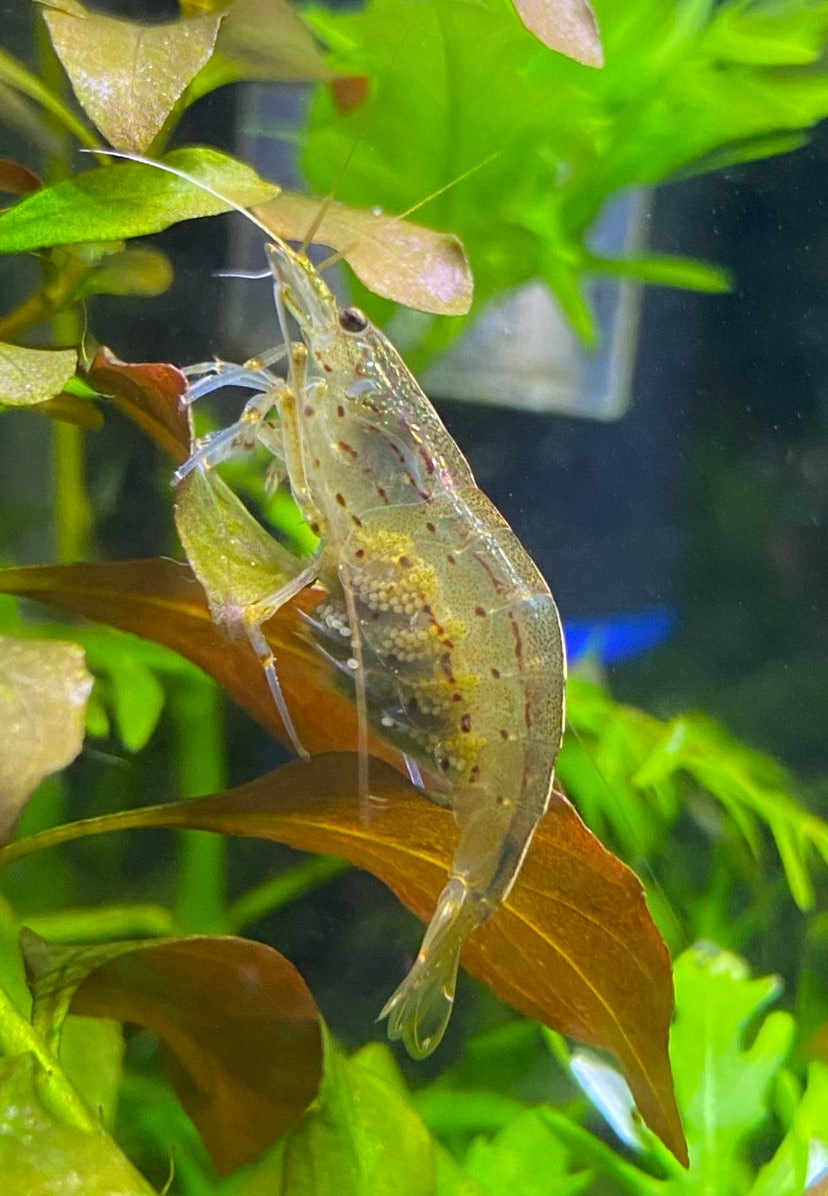
Amano Shrimp
Caridina multidentata
Also known as: japonica shrimp, Amano, Yamato (algae) shrimp
The best algae-eating shrimp in the hobby. Grows to 5 cm, largely predator-resistant at adult size, and does not breed in freshwater. Reliable long-term.
Amano Shrimp tank mates · 40L tank size hub
peaceful · beginner care
Sources & confidencemedium · partially verified · beginner: good
Typical care sources — trade names for this fish get mixed up, so verify the ID before you buy. Numbers here are a careful starting point. Your tap water, tank size, and habits decide the rest. How we evaluate.
Best for: Any established planted community tank 40L or more wanting real algae control alongside most peaceful community fish.
Avoid if: You keep pea puffers, large cichlids, or aggressive predators that will eat a 5 cm shrimp.
Common mistakeBuying two amano shrimp for algae control is the under-stocking error that disappoints every month. Five or more are needed for meaningful algae impact in a typical planted tank, and they still need supplemental food when the glass finally goes clear. A pair is a display idea, not an algae crew.
Top things that go wrong
- Shrimp & snails. Cherry shrimp and other dwarfs can coexist with peaceful small fish; baby shrimp are food for almost anything that finds them.
Common trade-name warning
This fish is often sold under different names or species variants. Care guidance is based on typical aquarium examples rather than a single exact species. Older books and shops still use Caridina japonica; the current valid name is often given as C. multidentata. Use care pages as practical guidance, not a passport name match.
What most shops don't tell you
- 1.Amanos are sold as the shrimp that will solve algae by themselves. They are excellent grazers in numbers, but they do not replace water changes, phosphate control, or light management. They also will not breed a freshwater colony for you the way cherries do. Buy them for labour in a mature planted tank, not as a magic eraser.
- 2.Buying three shrimp for a 60 L and expecting an algae-free tank. The working dose is closer to one amano per 5 to 10 L of planted surface.
- 3.Mistaking a moulted shell for a dead shrimp, then panicking over chemistry. A whole, hollow body on the substrate is a shed, not a death.
- 4.Shrimp are eaten by many fish, so keep with small peaceful tank mates only. Amanos are tougher than cherry shrimp but still die in trace copper, so skip copper-based snail killers and medications.
About this species
Amanos are 5 cm freshwater shrimp that graze algae and biofilm. Not a cleanup crew for a dirty tank, just a steady grazer in a mature, copper-free planted setup.
- Ghost Shrimp40L min · same group, comparable tank size
- Mystery Snail40L min · same group, comparable tank size
- Assassin Snail30L min · same group, comparable tank size
- Blue Dream Shrimp20L min · same group, similar adult size
- Cherry Shrimp20L min · same group, similar adult size
- Malaysian Trumpet Snail20L min · same group, similar adult size
- Nerite Snail20L min · same group, similar adult size
- Bamboo Shrimp80L min · same fish family
- Assassin Snailalso beginner peaceful, similar tank size
- Beckford Pencilfishalso beginner peaceful, similar tank size
- Black Neon Tetraalso beginner peaceful, similar tank size
- Black phantom tetraalso beginner peaceful, similar tank size
- Bloodfin tetraalso beginner peaceful, similar tank size
- Blue Dream Shrimpalso beginner peaceful, similar tank size
- Blue Dream Shrimp tank matesnames this fish as a conditional pairing — read the pair page conditions
- Cherry Shrimp tank mateslists this fish as a safe and recommended mate
- Malaysian Trumpet Snail tank matesnames this fish as a conditional pairing — read the pair page conditions
- Mystery Snail tank matesnames this fish as a conditional pairing — read the pair page conditions
- Nerite Snail tank matesnames this fish as a conditional pairing — read the pair page conditions
Plan grid
Key limits are above. Here: pH band, swim level, bioload, and activity.
Swim zones
Care snapshot
Quick compare before you buy. Not a score of how “good” the fish is.
- Beginner ease78
- Peacefulness90
- Community fit72
- Small-tank fit80
- Hardiness76
- Energy54
Numbers are deterministic planning indices from Fishori fields — not a scientific score of your individual fish.
Example setups
Starting points only. Run the pair checker for every fish you add.
Rough 90L+ layout: one calm centrepiece, 8–12 small tetras/rasboras, 6–8 corydoras-type bottom fish — verify every name in the pair checker before buying.
Safer directions include: Corydoras Catfish, Otocinclus.
Compatibility
Tank mates for Amano Shrimp
Usually safer (engine GOOD): Corydoras Catfish, Otocinclus. Conditional (CAUTION — read the pair page before buying): Betta, Cherry Barb, Dwarf Gourami, Neon Tetra, Tiger Barb. Avoid (RISKY): Jack Dempsey, Oscar. Every name links to a live pair check — the lists are a shortlist, not a stocking plan.
Usually safer
Open a pair page with this fish as the starting point.
Needs planning
Read the blocking rule on each pair page before experimenting.
Usually avoid
Do-not-stock combinations on conservative hobby rules.
Compare with
Run a real pair check: Amano Shrimp + Corydoras Catfish
Behaviour and temperament
Amano shrimp are completely peaceful and constantly busy. An amano grabs food and retreats rather than defending a territory, which is why groups work in planted tanks. They ignore fish that ignore them; pea puffers and large cichlids are predators, not neighbours. Two shrimp look decorative; five or more is when algae work becomes visible.
What sets them off
- Sudden crowding
- Poor water quality
Fin nipping: Not a habitual fin-nipper; stressed or crowded individuals can still test fins.
Predation: Not a predator toward similarly sized community fish; fry and dwarf shrimp are still fair game for most species.
Territory: Not strongly territorial, but still needs room so its working space does not overlap the next fish.
Planted tanks: good — easy plant ideas
In the glass: typical and warning signs
- A working group grazes hardscape and glass all day in a mature planted tank.
- They grab food and retreat rather than holding a defended territory.
- Limp shrimp after copper medication is poisoning, not mystery disease.
- Climbing lids in a sterile scape often means empty biofilm and hunger.
- None toward fish or cherries; they lose wafer contests to bolder tank mates.
- In-group crowding at one wafer is competition, not territorial war.
- Remove them from any tank dosed with copper-based meds.
- Add more amanos for algae work — two shrimp are a display, not a crew.
Fish behaviour can vary between individuals and tank setups. Always observe new fish closely after introduction.
Water, food, and grouping
Hardness
soft
Diet
herbivore
Amanos graze biofilm and algae, but a clean aquascape will starve them if you never supplement. Offer sinking wafers, blanched vegetables, or shrimp foods so the group is not dependent on glass film alone. Spread food so cherries or fish do not monopolise every piece. If amanos climb out or go limp after a copper treatment, that was medication, not mystery disease.
Shrimp & snails
Cherry shrimp and other dwarfs can coexist with peaceful small fish; baby shrimp are food for almost anything that finds them.
Keep at least 3, bought at the same time.
- Hold 20 to 28 °C steadily on a real thermometer, not the dial on the heater.
- Aim for pH 6.5 to 7.5 and a hardness you can re-test in two weeks. A one-time strip in the shop car park is not a water test.
- Footprint: short wide tanks and tall narrow tanks fish differently for the same volume. Match the tank shape to the swim pattern, not just the litre count.
- Tank volume meets or exceeds 40L published minimum for adults.
- You can stock at least 3 individuals (group welfare).
- Heater can hold 20–28°C without cooking cooler-water tank mates.
Explore and stocking hubs
Tank-mates hub, matching guides, category peers, and litre stocking lists around this species’ minimum tank.
Plan with tools
Check mates as pairs first, then add this fish in the tank builder for the full stocking.
Filtration & heating
A 40L minimum tank needs a filter rated for at least 160L/hr turnover and a heater to hold 20–28°C reliably.
Plant suggestions
Amano Shrimp does well in planted tanks. Plants compatible with 20–28°C and pH 6.5–7.5:
Research: partially verified · Confidence: medium · 2 linked source(s). We do not invent citations.
How Fishori evaluates compatibility (same logic as pair and tank tools).
- LiveAquaria. Japonica / Amano shrimp (care profile)
Primary: major retailer invertebrate care page: temperature, pH, tank size, algae use, and tank-mate safety. Copy uses Caridina japonica; current valid name for the hobby Amano is C. multidentata. Treat the care numbers as a practical anchor, not a taxonomic guarantee.
- FishBase. Caridina multidentata
Secondary: current scientific name and range context; compare with invertebrate-keeper guides when breeding or species confirmation matters.
Evidence notes
- Invertebrate databases are thinner than those for big Cyprinidae or cichlids; Seriously Fish lacked a retrievable C. multidentata profile, so LiveAquaria (still using the older epithet japonica in the title) is the best stable aquarium-facing URL. Name history (japonica vs multidentata) makes a single 'perfect' public page hard.
- Care numbers are cross-checked across the linked sources and biased toward the conservative end; compatibility reflects typical hobby experience, not a lab prediction. Method and full source policy: /methodology.
Featured compatibility checks
Curated pair pages for Amano Shrimp. Each opens a full verdict — not just a list label.
Common questions about Amano Shrimp
- How big do Amano Shrimp get?
- 5 cm — a big shrimp, and that is the point. An adult amano is too large for most community mouths, which is why it survives where cherry shrimp become food. Females run noticeably larger than males.
- What size tank does Amano Shrimp need?
- 40 litres covers a small working group, but the real sizing rule is grazing area — an amano crew is only as useful as the surfaces it can patrol. In 50 litres and up, five or six keep ahead of soft algae in a planted layout.
- Are Amano Shrimp aggressive?
- Amano shrimp are completely peaceful and constantly busy. An amano grabs food and retreats rather than defending a territory, which is why groups work in planted tanks. They ignore fish that ignore them; pea puffers and large cichlids are predators, not neighbours. Two shrimp look decorative; five or more is when algae work becomes visible.
- What is the most common mistake with Amano Shrimp?
- Buying two amano shrimp for algae control is the under-stocking error that disappoints every month. Five or more are needed for meaningful algae impact in a typical planted tank, and they still need supplemental food when the glass finally goes clear. A pair is a display idea, not an algae crew.
- What fish can live with Amano Shrimp?
- The Amano Shrimp profile lists Corydoras Catfish, Otocinclus among its safer pairings (engine-checked GOOD). Betta, Cherry Barb, Dwarf Gourami, Neon Tetra are conditional (CAUTION): workable only with the specific conditions on each pair page. Avoid Jack Dempsey, Oscar (RISKY). Run the pair checker for your exact water and tank size before stocking.