Should I buy it?
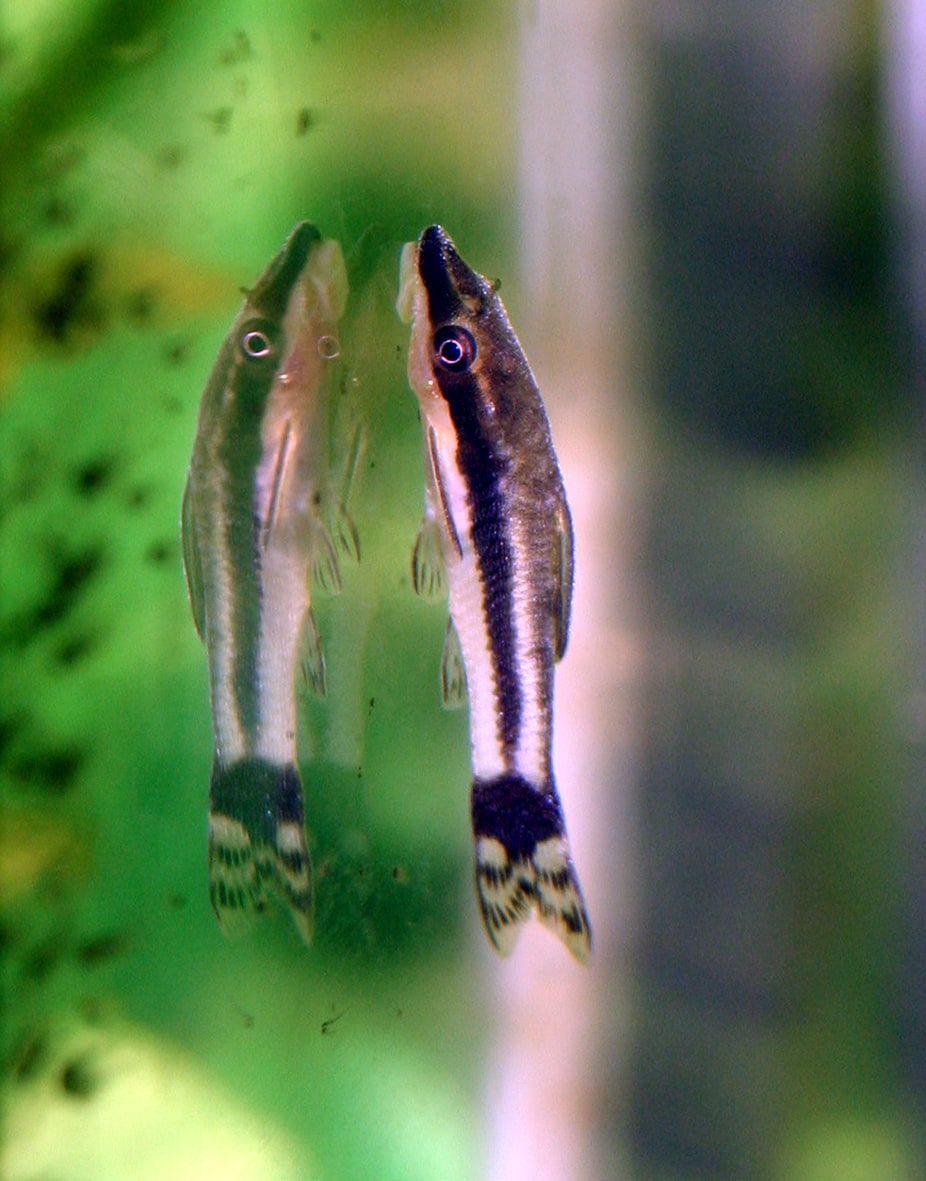
Otocinclus
Otocinclus spp. (trade: usually O. vittatus / O. macrospilus)
Also known as: oto, dwarf suckermouth
The true peaceful algae-eater. Extremely sensitive to new tanks and ammonia spikes. A high-mortality fish when added too early.
Otocinclus tank mates · 60L tank size hub
peaceful · intermediate care
Sources & confidencehigh · verified · beginner: caution
Checked against several solid care sources that mostly agree. Numbers here are a careful starting point. Your tap water, tank size, and habits decide the rest. How we evaluate.
Best for: Mature, well-cycled planted tanks 60L+ with a constant algae and biofilm supply.
Avoid if: Your tank is under 6 months old, you have aggressive cichlids, or you can't supply blanched veggies during algae droughts.
Common mistakeAdding otocinclus to a tank under two months old because the glass looks green is the classic starvation buy. There is not enough biofilm yet, and they waste away while the keeper blames “weak stock.” Cycle and mature the tank first, then add a group of four or more with a backup wafer habit.
Top things that go wrong
- Group welfare — not a solo display fish. Plan at least **6** together for normal behaviour; smaller groups often mean stress, colour loss, or nipping depending on species.
- Shrimp & snails. Cherry shrimp and other dwarfs can coexist with peaceful small fish; baby shrimp are food for almost anything that finds them.
Which oto is in the shop?
Almost all otos sold as 'Otocinclus affinis' are actually O. vittatus or O. macrospilus. Care is identical at hobby level, but the exact species on the label is usually wrong.
What most shops don't tell you
- 1.Shops sell otocinclus as the easy algae crew for any starter kit. They are peaceful grazers that need mature biofilm and a group, and they die quietly in sterile new tanks. Green glass in week three is not enough food for a month of oto hunger.
- 2.A trio in a brand new tank with no biofilm. A hungry oto is dead inside a fortnight.
- 3.Housing otos in hot brash cichlid tanks without a soft algae or vegetable plan.
- 4.A group of four or more, all from the same shop tank. Otos crash in a young setup or after a long transit without food. Drop in algae wafers or a blanched courgette ring during slow weeks.
About this species
Otocinclus are 4 to 5 cm catfish that graze algae and biofilm in mature planted tanks. Imports arrive thin from the shop and need biofilm waiting for them.
- Bristlenose Pleco80L min · same fish family
- Siamese Algae Eater100L min · same fish family
- Clown Pleco110L min · same fish family
- Royal pleco500L min · same fish family
- Common Pleco600L min · same fish family
- Adolfoi coryalso intermediate peaceful, similar tank size
- Bamboo Shrimpalso intermediate peaceful, similar tank size
- Black ruby barbalso intermediate peaceful, similar tank size
- Brown / hockey-stick pencilfishalso intermediate peaceful, similar tank size
- Cardinal Tetraalso intermediate peaceful, similar tank size
- Celebes Rainbowfishalso intermediate peaceful, similar tank size
- Amano Shrimp tank mateslists this fish as a safe and recommended mate
- Apistogramma Borellii tank matesnames this fish as a conditional pairing — read the pair page conditions
- Apistogramma Macmasteri tank matesnames this fish as a conditional pairing — read the pair page conditions
- Bamboo Shrimp tank matesnames this fish as a conditional pairing — read the pair page conditions
- Beckford Pencilfish tank matesnames this fish as a conditional pairing — read the pair page conditions
- Blue Dream Shrimp tank matesnames this fish as a conditional pairing — read the pair page conditions
- Celebes Rainbowfish tank matesnames this fish as a conditional pairing — read the pair page conditions
- Celestial Pearl Danio tank mateslists this fish as a safe and recommended mate
Plan grid
Key limits are above. Here: pH band, swim level, bioload, and activity.
Swim zones
Care snapshot
Quick compare before you buy. Not a score of how “good” the fish is.
- Beginner ease41
- Peacefulness90
- Community fit79
- Small-tank fit68
- Hardiness57
- Energy24
Numbers are deterministic planning indices from Fishori fields — not a scientific score of your individual fish.
Example setups
Starting points only. Run the pair checker for every fish you add.
Rough 90L+ layout: one calm centrepiece, 8–12 small tetras/rasboras, 6–8 corydoras-type bottom fish — verify every name in the pair checker before buying.
Safer directions include: Cherry Barb, Corydoras Catfish, Neon Tetra.
Prioritise 6+ of Otocinclus in 60L+ with filtration sized for messy feeding — add only mates that already pass pair checks with this species.
Compatibility
Tank mates for Otocinclus
Usually safer (engine GOOD): Cherry Barb, Corydoras Catfish, Neon Tetra. Conditional (CAUTION — read the pair page before buying): Guppy, Tiger Barb. Avoid (RISKY): Jack Dempsey, Oscar. Every name links to a live pair check — the lists are a shortlist, not a stocking plan.
Usually safer
Open a pair page with this fish as the starting point.
Needs planning
Read the blocking rule on each pair page before experimenting.
Usually avoid
Do-not-stock combinations on conservative hobby rules.
Compare with
Run a real pair check: Otocinclus + Cherry Barb
- Try Cherry Barb — open the pair check.
- Try Corydoras Catfish — open the pair check.
- Try Neon Tetra — open the pair check.
Behaviour and temperament
Otocinclus are peaceful, almost invisible community fish when the tank can feed them. They ignore midwater neighbours and get outcompeted by anything that vacuums wafers first. A lone oto is a red flag — buy a group and a mature tank together.
What sets them off
- Sudden crowding
- Poor water quality
Fin nipping: Not a habitual fin-nipper; stressed or crowded individuals can still test fins.
Predation: Not a predator toward similarly sized community fish; fry and dwarf shrimp are still fair game for most species.
Territory: Not strongly territorial, but still needs room so its working space does not overlap the next fish.
Planted tanks: good — easy plant ideas
In the glass: typical and warning signs
- A group rasps film on leaves and glass all day in a mature planted tank.
- Resting on leaves is normal; constant lying on bare sand can mean empty food.
- Hollow bellies within weeks of adding to a new tank means starvation, not “settling in.”
- Gasping after a big water change can be chemistry or oxygen — test before restocking.
- None toward fish; they lose wafer contests to cories and shrimp instead.
- In-group crowding at one wafer is competition, not territorial war.
- Remove surviving otos from any sterile, fish-heavy tank that cannot grow film.
- Do not add more otos to “finish the algae” — fix maturity and food first.
Fish behaviour can vary between individuals and tank setups. Always observe new fish closely after introduction.
Water, food, and grouping
Hardness
soft
Diet
herbivore
Otocinclus are biofilm and soft-algae grazers, not wafer vacuum cleaners for a new tank. In a mature planted aquarium they rasp film all day; when the glass runs clean they still need algae wafers or blanched vegetables so they do not starve. Drop food after lights dim, and keep a group so competition at a single wafer does not leave weaker fish empty.
Shrimp & snails
Cherry shrimp and other dwarfs can coexist with peaceful small fish; baby shrimp are food for almost anything that finds them.
Six is the honest minimum for settled grazing behaviour; fewer hide and starve.
- Hold 20 to 27 °C steadily on a real thermometer, not the dial on the heater.
- Aim for pH 6 to 7.5 and a hardness you can re-test in two weeks. A one-time strip in the shop car park is not a water test.
- Schooling species. Buy 4 or more from the same tank on the same day before adding any centrepiece fish.
- Tank volume meets or exceeds 60L published minimum for adults.
- You can stock at least 6 individuals (group welfare).
- Heater can hold 20–27°C without cooking cooler-water tank mates.
Explore and stocking hubs
Tank-mates hub, matching guides, category peers, and litre stocking lists around this species’ minimum tank.
Plan with tools
Check mates as pairs first, then add this fish in the tank builder for the full stocking.
Filtration & heating
A 60L minimum tank needs a filter rated for at least 240L/hr turnover and a heater to hold 20–27°C reliably.
Plant suggestions
Otocinclus does well in planted tanks. Plants compatible with 20–27°C and pH 6–7.5:
Research: verified · Confidence: high · 5 linked source(s). We do not invent citations.
How Fishori evaluates compatibility (same logic as pair and tank tools).
- Seriously Fish. Otocinclus macrospilus (Otocinclus ‘affinis’ / trade oto stand-in)
Primary stand-in: SF profile for O. macrospilus. Shop 'O. affinis'/'otocinclus' labels are often misidentified. Verify the fish against a good key, not a single import sticker.
- FishBase. Otocinclus affinis
Secondary: taxonomy, distribution, and maximum length in nature; cross-check with aquarium import lines and measured tank parameters.
- Wikipedia. Otocinclus affinis
Secondary: general species context; verify all husbandry numbers against a dedicated aquarium care sheet and your test kit, not a single table row.
- FishBase. Otocinclus vittatus
Taxonomy, distribution, and typical max length in natural/wild contexts (cross-check to aquarium import lines).
- Wikipedia. Otocinclus
Encyclopaedia overview; use specialist aquarium sources for your stock's real temperature/pH/footprint needs.
Evidence notes
- The Seriously Fish profile for the binomial in this record was successfully reached as the primary aquarium reference.
- FishBase contributes natural-range size and habitat context. Translate those numbers through your heater, your water report, and your tank footprint before stocking.
- Wikipedia is only cited if the article URL returned OK. Use it for orientation, not as the only care sheet for an import.
- All compatibility text reflects typical hobby experience and the Fishori model. Individual fish, shop stress, and the order tank mates are added in can still defy a single-paragraph label.
Featured compatibility checks
Curated pair pages for Otocinclus. Each opens a full verdict — not just a list label.
Common questions about Otocinclus
- How big do Otocinclus get?
- Just 4-5cm. They're prey-sized and need cover from any larger fish.
- What size tank does Otocinclus need?
- 60L+ for a group of 6+; otos are social and decline kept solo.
- Are Otocinclus aggressive?
- Otocinclus are peaceful, almost invisible community fish when the tank can feed them. They ignore midwater neighbours and get outcompeted by anything that vacuums wafers first. A lone oto is a red flag — buy a group and a mature tank together.
- Do Otocinclus need to be kept in a group?
- Six is the honest minimum for settled grazing behaviour; fewer hide and starve.
- What is the most common mistake with Otocinclus?
- Adding otocinclus to a tank under two months old because the glass looks green is the classic starvation buy. There is not enough biofilm yet, and they waste away while the keeper blames “weak stock.” Cycle and mature the tank first, then add a group of four or more with a backup wafer habit.
- What fish can live with Otocinclus?
- The Otocinclus profile lists Cherry Barb, Corydoras Catfish, Neon Tetra among its safer pairings (engine-checked GOOD). Guppy, Tiger Barb are conditional (CAUTION): workable only with the specific conditions on each pair page. Avoid Jack Dempsey, Oscar (RISKY). Run the pair checker for your exact water and tank size before stocking.