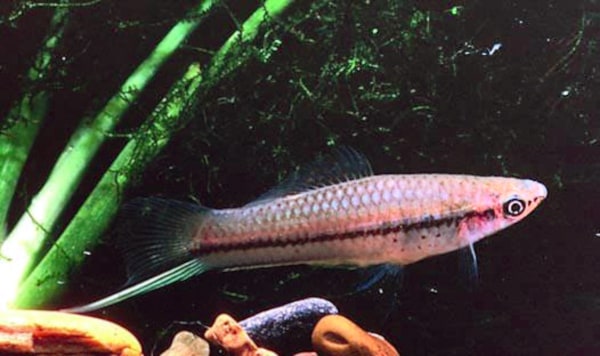
Should I buy it?
Swordtail
Xiphophorus hellerii
Also known as: xiphophorus helleri
Larger livebearer with the same hard-water needs as mollies. Males push each other in cramped tanks and the species jumps.
Swordtail tank mates · 80L tank size hub
semi-aggressive · beginner care
Sources & confidencehigh · verified · beginner: caution
Checked against several solid care sources that mostly agree. Numbers here are a careful starting point. Your tap water, tank size, and habits decide the rest. How we evaluate.
Best for: Larger livebearer community tanks 100L+ with lateral swim space.
Avoid if: You've got a small or short tank; only soft acidic water; or want a fish that stays under 6cm.
Common mistakeHousing two swordtail males in the same short tank is the dominance mistake that looks like random aggression. Males establish rank fast, and the weaker fish hides until it stops eating. Keep one male, or give a long footprint with heavy planting if you insist on several. Removing plants to make the tank look open usually makes the chasing worse.
Top things that go wrong
- Shrimp & snails. Shrimp are a gamble with this fish; some ignore them, some clear a colony in days.
What most shops don't tell you
- 1.Swordtails get sold beside platies as gentle livebearers for any community. Adult size and male rivalry are the parts of the label that shrink in the shop bag. A fish heading past ten centimetres with a sword other fish can nip is not a nano pet. Buy for adult length and male policy, not for the juvenile in the display.
- 2.Buying a single male and three females for a 60L. Adult swords need a 90 cm footprint, not a litre count alone.
- 3.Open-topped tanks. Swordtails jump and a startled male can clear an unlidded rim.
- 4.One male per tank unless the footprint is long. Multiple males harass each other. Hardy and prolific in hard tap water.
About this species
Swordtails are hard-water Central American livebearers. The male grows the sword on the lower tail and pushes other males in cramped tanks. Strong jumpers.
- Molly80L min · same group, comparable tank size
- Platy60L min · same fish family
- Endler's Livebearer40L min · same fish family
- Guppy40L min · same fish family
- Sailfin Molly120L min · same group, similar adult size
- Ghost Shrimpalso beginner semi-aggressive, similar tank size
- Kribensisalso beginner semi-aggressive, similar tank size
- Boesemani Rainbowfish tank matesnames this fish as a conditional pairing — read the pair page conditions
- Convict cichlid tank mateslists this fish as a safe and recommended mate
- Firemouth Cichlid tank mateslists this fish as a safe and recommended mate
- Opaline gourami tank mateslists this fish among its safer mates
Plan grid
Key limits are above. Here: pH band, swim level, bioload, and activity.
Swim zones
Care snapshot
Quick compare before you buy. Not a score of how “good” the fish is.
- Beginner ease63
- Peacefulness44
- Community fit22
- Small-tank fit60
- Hardiness79
- Energy54
Numbers are deterministic planning indices from Fishori fields — not a scientific score of your individual fish.
Example setups
Starting points only. Run the pair checker for every fish you add.
Avoid “one of everything” baskets — Swordtail belongs in a plan built around territory, line-of-sight breaks, and matched water chemistry.
Compatibility
Tank mates for Swordtail
No unconditional “safe” tank mates are listed for Swordtail — this shortlist has CAUTION pairings that need specific conditions and RISKY pairings to avoid. Conditional (CAUTION — read the pair page before buying): Betta, Cherry Barb, Guppy. Avoid (RISKY): Oscar. Every name links to a live pair check — the lists are a shortlist, not a stocking plan.
Usually safer
Open a pair page with this fish as the starting point.
None listed. Use the pair checker before mixing.
Needs planning
Read the blocking rule on each pair page before experimenting.
Usually avoid
Do-not-stock combinations on conservative hobby rules.
No safe-mate list on this record yet. Use the fish index to find species with similar care, then run a pair check before you buy.
Behaviour and temperament
Swordtails need length more than height, and rival males turn a short tank into a chase circuit. One male with several females is the calm default; two males in a compact footprint often means torn fins and a fish that stops eating. Brief chasing at feeding is normal; all-day pinning is a space or ratio problem. They are pushy at food time next to slow long-finned species even when the chart calls everyone peaceful.
What sets them off
- Crowding and limited territory
- Similar-looking fish in the same tank
- Spawning, for any breeding pair
Fin nipping: Not a habitual fin-nipper; stressed or crowded individuals can still test fins.
Predation: Not a predator toward similarly sized community fish; fry and dwarf shrimp are still fair game for most species.
Territory: Holds a patch (cave, corner, or surface). Break sight lines so neighbours can pass.
Planted tanks: good — easy plant ideas
In the glass: typical and warning signs
- Active midwater swimmer; males show the sword and chase briefly at feeding.
- Needs length more than height — a short tank turns them into corner-racers.
- Sword curling or colour fade after weeks in hard, dirty water.
- Females hiding all day when male pressure is too high.
- Male-to-male chasing is common; torn fins mean the tank is too short or male-heavy.
- Two males shredding each other → remove one or add length and plants.
- Tiger barbs and other nippers go for the sword first — fix the mix, not the swordtail.
Fish behaviour can vary between individuals and tank setups. Always observe new fish closely after introduction.
Water, food, and grouping
Hardness
medium-hard
Diet
omnivore
Swordtails are eager omnivores that get fat on endless flake while still looking hungry. Use a measured flake or pellet feed they finish quickly, plus vegetable matter — spirulina flake or blanched greens — so guts keep moving. Frozen food once or twice a week is plenty for colour and growth. If the sword looks dull and the belly soft, cut rich feeds before you add another treat.
Shrimp & snails
Shrimp are a gamble with this fish; some ignore them, some clear a colony in days.
Keep at least 3, bought at the same time.
Livebearers breed every few weeks. Plan sex ratios or a rehoming route before the first fry.
- Hold 20 to 28 °C steadily on a real thermometer, not the dial on the heater.
- Aim for pH 7 to 8 and a hardness you can re-test in two weeks. A one-time strip in the shop car park is not a water test.
- Footprint: short wide tanks and tall narrow tanks fish differently for the same volume. Match the tank shape to the swim pattern, not just the litre count.
- Tank volume meets or exceeds 80L published minimum for adults.
- You can stock at least 3 individuals (group welfare).
- Heater can hold 20–28°C without cooking cooler-water tank mates.
Explore and stocking hubs
Tank-mates hub, matching guides, category peers, and litre stocking lists around this species’ minimum tank.
Plan with tools
Check mates as pairs first, then add this fish in the tank builder for the full stocking.
Filtration & heating
A 80L minimum tank needs a filter rated for at least 320L/hr turnover and a heater to hold 20–28°C reliably.
Plant suggestions
Swordtail does well in planted tanks. Plants compatible with 20–28°C and pH 7–8:
Research: verified · Confidence: high · 3 linked source(s). We do not invent citations.
How Fishori evaluates compatibility (same logic as pair and tank tools).
- Seriously Fish. Xiphophorus hellerii
Supports: aquarium size, water chemistry, temperament and compatibility (primary care reference).
- FishBase. Xiphophorus hellerii
Supports: taxonomy and wild maximum size — translate to tank stocking, not a target number.
- Wikipedia. Xiphophorus hellerii
Supports: general species background and common-name orientation only.
Evidence notes
- Care numbers are cross-checked across the linked sources and biased toward the conservative end; compatibility reflects typical hobby experience, not a lab prediction. Method and full source policy: /methodology.
Featured compatibility checks
Curated pair pages for Swordtail. Each opens a full verdict — not just a list label.
Common questions about Swordtail
- How big do Swordtail get?
- Males reach 12-14cm including the sword; females 12cm+. Much larger than guppies/platies.
- What size tank does Swordtail need?
- 100L is the practical floor and 90 cm length gives a real run. Keep a tight lid; swordtails jump.
- Are Swordtail aggressive?
- Swordtails need length more than height, and rival males turn a short tank into a chase circuit. One male with several females is the calm default; two males in a compact footprint often means torn fins and a fish that stops eating. Brief chasing at feeding is normal; all-day pinning is a space or ratio problem. They are pushy at food time next to slow long-finned species even when the chart calls everyone peaceful.
- What is the most common mistake with Swordtail?
- Housing two swordtail males in the same short tank is the dominance mistake that looks like random aggression. Males establish rank fast, and the weaker fish hides until it stops eating. Keep one male, or give a long footprint with heavy planting if you insist on several. Removing plants to make the tank look open usually makes the chasing worse.
- What fish can live with Swordtail?
- This profile currently has no curated unconditional safe-mates shortlist for Swordtail. Other species may still return GOOD in the pair checker, so check the exact pair rather than treating this shortlist as exhaustive. Betta, Cherry Barb, Guppy are conditional (CAUTION): workable only with the specific conditions on each pair page. Avoid Oscar (RISKY). Run the pair checker for your exact water and tank size before stocking.