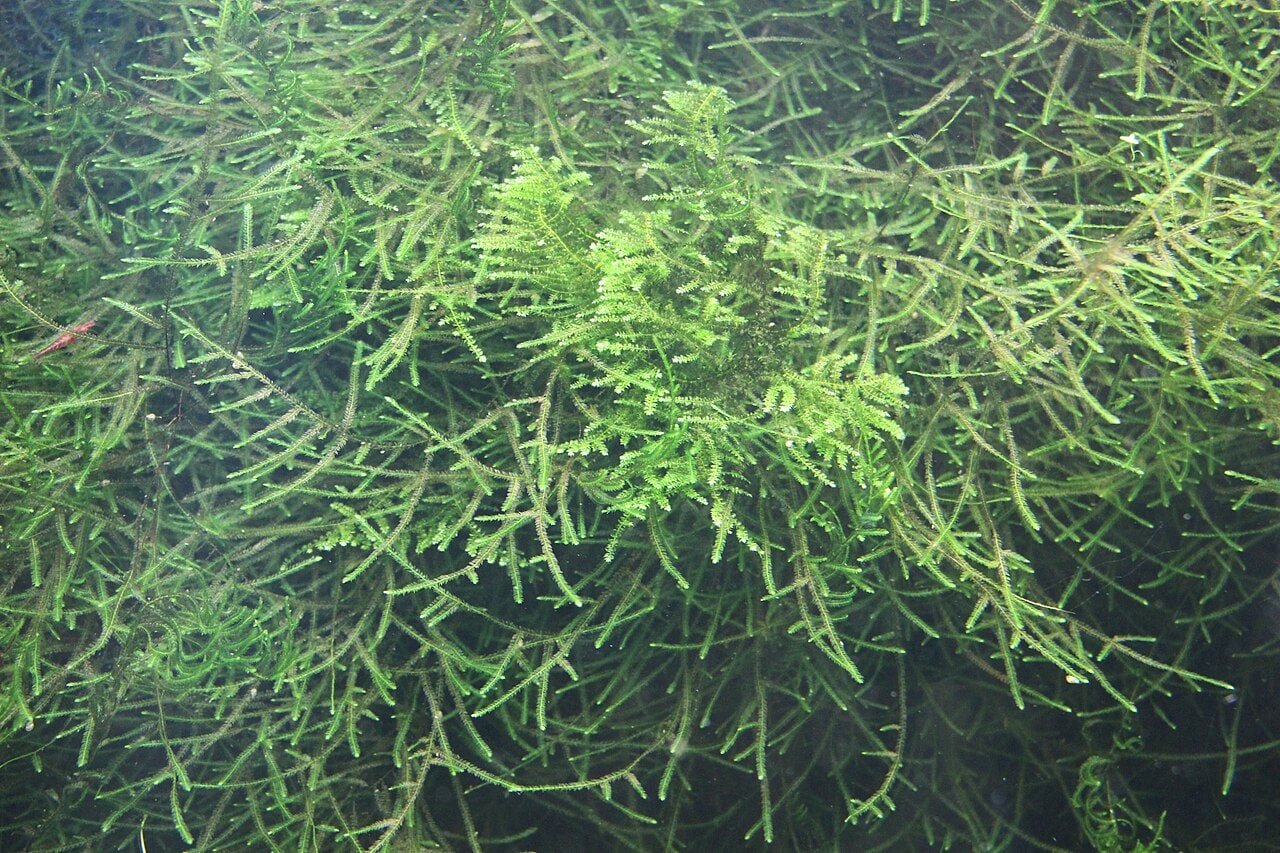
Photo by Xedoo (CC BY-SA 4.0). Wikimedia Commons
The same plant can look different under a brighter light, with fertiliser, with added CO2, or if the shop grew it out of the water.
Java Moss
Taxiphyllum barbieri
Also: Singapore Moss, Dubious Bladder Moss
Java Moss is one of the most forgiving aquarium plants available. It attaches to rocks, driftwood, and mesh, forming dense green mats that provide shelter for fry and invertebrates. Tolerates a wide range of temperatures and light levels.
The care figures are checked against the sources at the bottom of this page.
Care at a glance
Water parameters
Beginner guidance
Tie or superglue to surfaces; it will attach over a few weeks. No substrate needed. Trim occasionally to prevent it smothering other plants. Strong flow helps keep it clean.
Sources
- Taxiphyllum barbieri. Wikipedia — Species overview: taxonomy, native range (SE Asia), aquarium use, and attachment behaviour.
- Taxiphyllum barbieri. Flowgrow aquatic plant database — Care requirements: light, CO₂, temperature, and aquascape use compiled from keeper observations.
Same temperature and pH
This list is not a tank-mate verdict. It does not check whether they eat the plant or suit each other. They share this plant's temperature and pH.
Similar plants
- Anubiaseasy · low light · No added CO2
- Java Ferneasy · low light · No added CO2
- Amazon Swordeasy · medium light · CO2 helpful, not required
- Hornworteasy · low light · No added CO2
- Water Wisteriaeasy · medium light · CO2 helpful, not required
- Water Spriteeasy · medium light · No added CO2
Tank-size guides: 30-litre tank guide
Related plant guides
Easy aquarium plantsLow-light aquarium plantsPlants for shrimp tanks
Common questions about Java Moss
- Does Java Moss need CO2?
- No. Java Moss grows without added CO2. Adding carbon dioxide gas is listed as helpful, not required.
- What light does Java Moss need?
- Java Moss is listed for low light. A basic aquarium light is the level this page records.
- Is Java Moss beginner-friendly?
- Java Moss is listed as easy. It does not need added CO2. CO2 is helpful, not required. The light listed is low.
- Is Java Moss safe for shrimp?
- Yes. This page marks Java Moss as safe with shrimp. Rinse a shop plant before it goes in, because copper or pesticide can remain on the leaves.