Rainbowfish community — 100L
Boesemani rainbowfish, harlequin rasboras, and corydoras in a 100L: active, colourful, and straightforward to maintain for intermediate keepers.
Example at 100 litres
Verdict: RISKY
Boesemani Rainbowfish needs at least 150 L; this tank is 100 L.
Involved: Boesemani Rainbowfish (6 in this plan, profile minimum 150 L). Increase tank size to at least 150L, or remove Boesemani Rainbowfish from this plan. 20 fish across 3 species in 100 L. Shared temperature 24–26°C.
Notes on this example
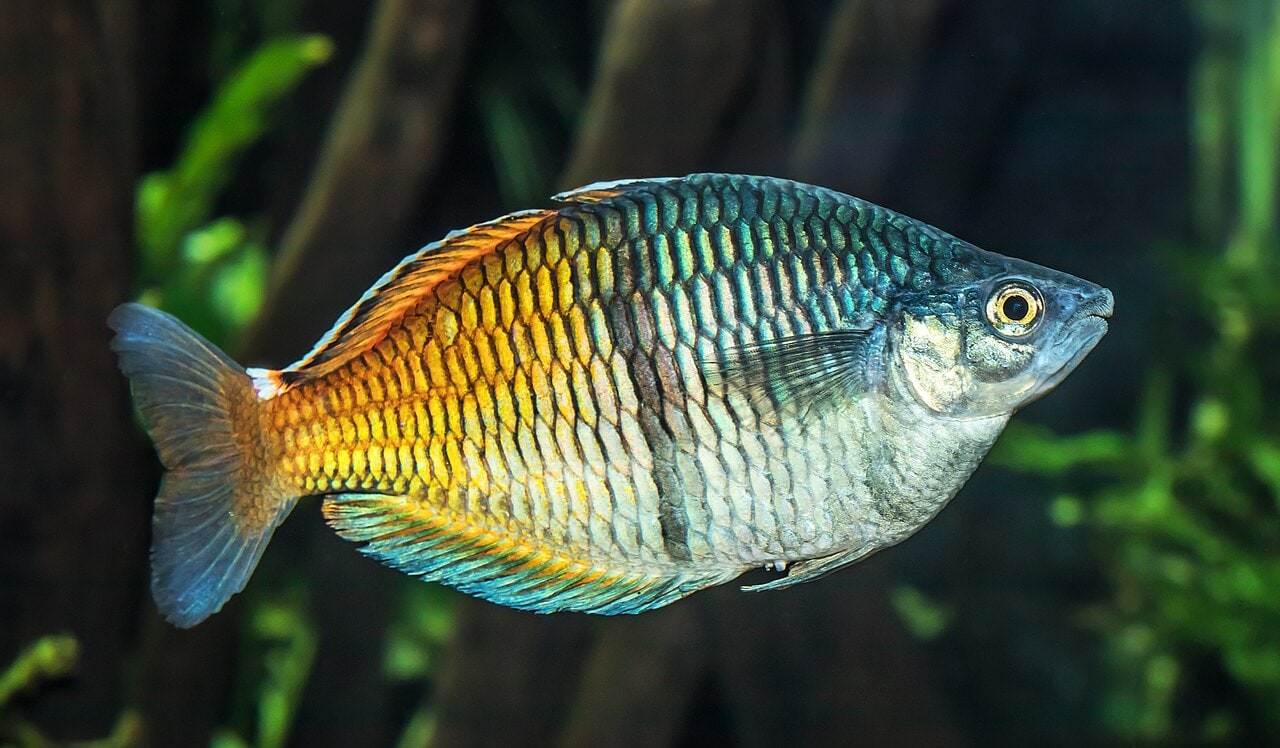
Rainbowfish are an underused group in the hobby. Boesemanis in full colour — electric blue front half, vivid yellow-orange rear — rank among the most striking freshwater fish available, and they are active, hardy, and straightforward to maintain compared with many similarly showy species. The reluctance of the hobby to embrace them more widely is largely a marketing failure.
Six boesemanis in 100L is workable if the tank has good length and you keep up with water changes. They are active swimmers that appreciate tank width, not just volume. A 100L aquarium with a 90cm footprint serves them better than a deep cube of the same volume. They are also fish that look progressively better as they mature — a juvenile boesemani is attractive; a two-year-old male in peak colour is exceptional.
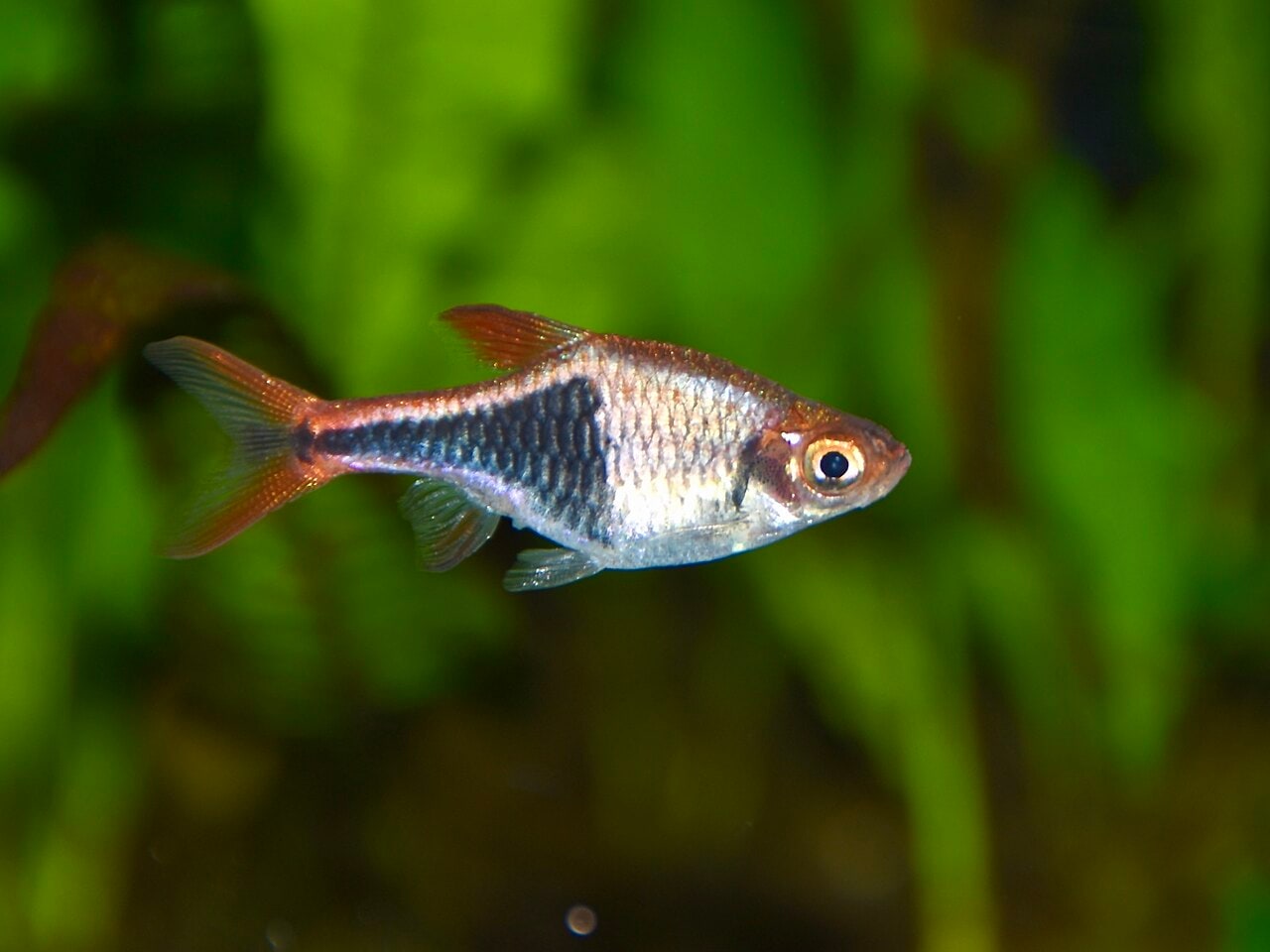
The harlequin rasboras are the community glue. They are peaceful with everything, mid-level swimmers, and their coppery-red bodies complement the boesemani colouration rather than competing with it. Eight harlequins in 100L is a comfortable group; they will school loosely with the boesemanis under low light or when startled.
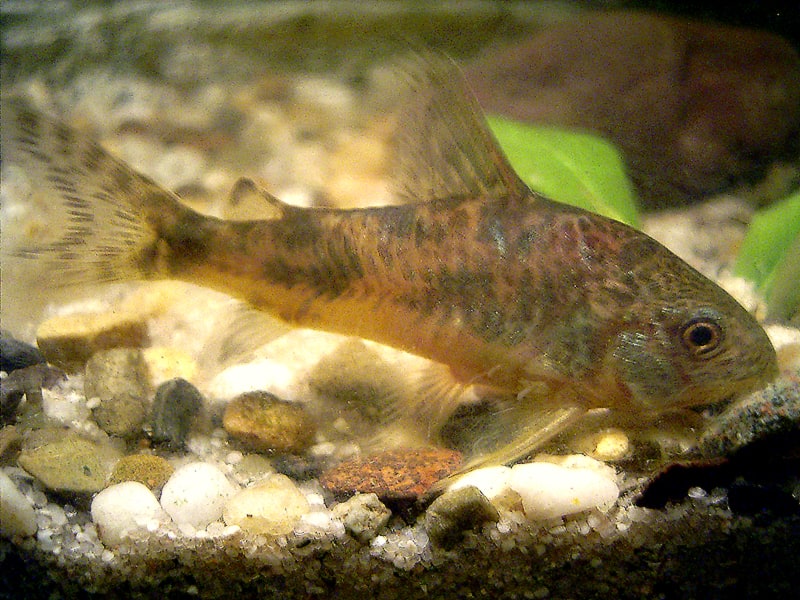
The corydoras at the bottom complete the zone distribution. They clean up any sinking food and their presence at the substrate reduces the pressure on the boesemanis to compete for floor-level scraps. Corydoras need their group — six minimum, eight is better.
Temperature 24–27°C, pH 7.0–7.5. Boesemanis want moderately hard, neutral to slightly alkaline water — this is different from the soft acid water a lot of fish prefer, and it is why this combination uses rasboras rather than cardinals or neons (which want the opposite water chemistry).
Pair checks in this setup
Change this example
The planner opens with these animals and this volume. You can change either.
 Boesemani Rainbowfish