Amazon community — 200L
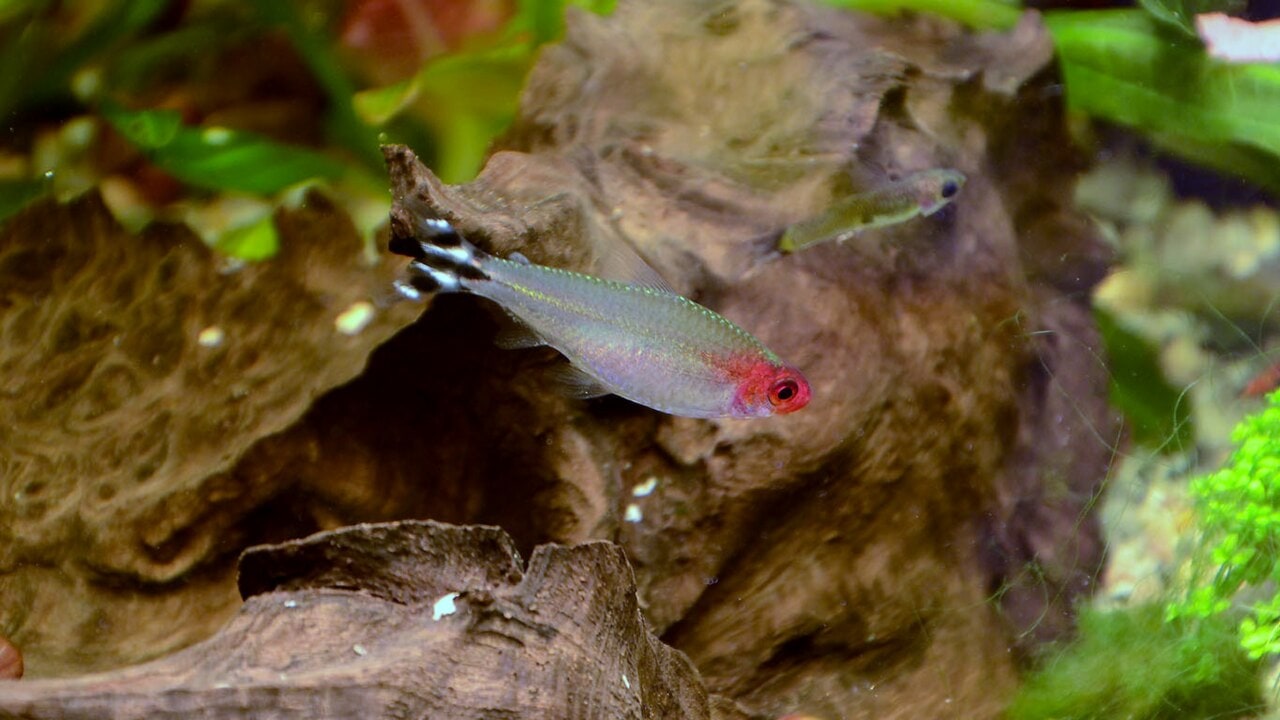
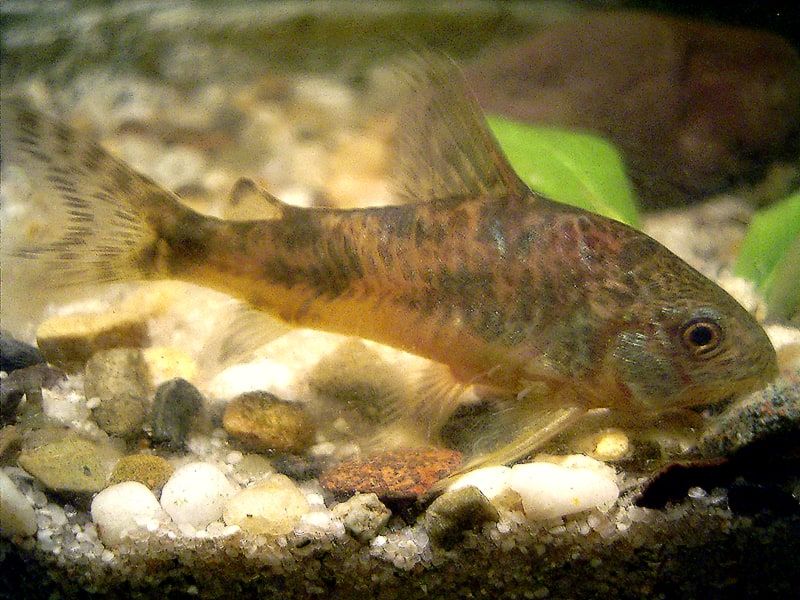
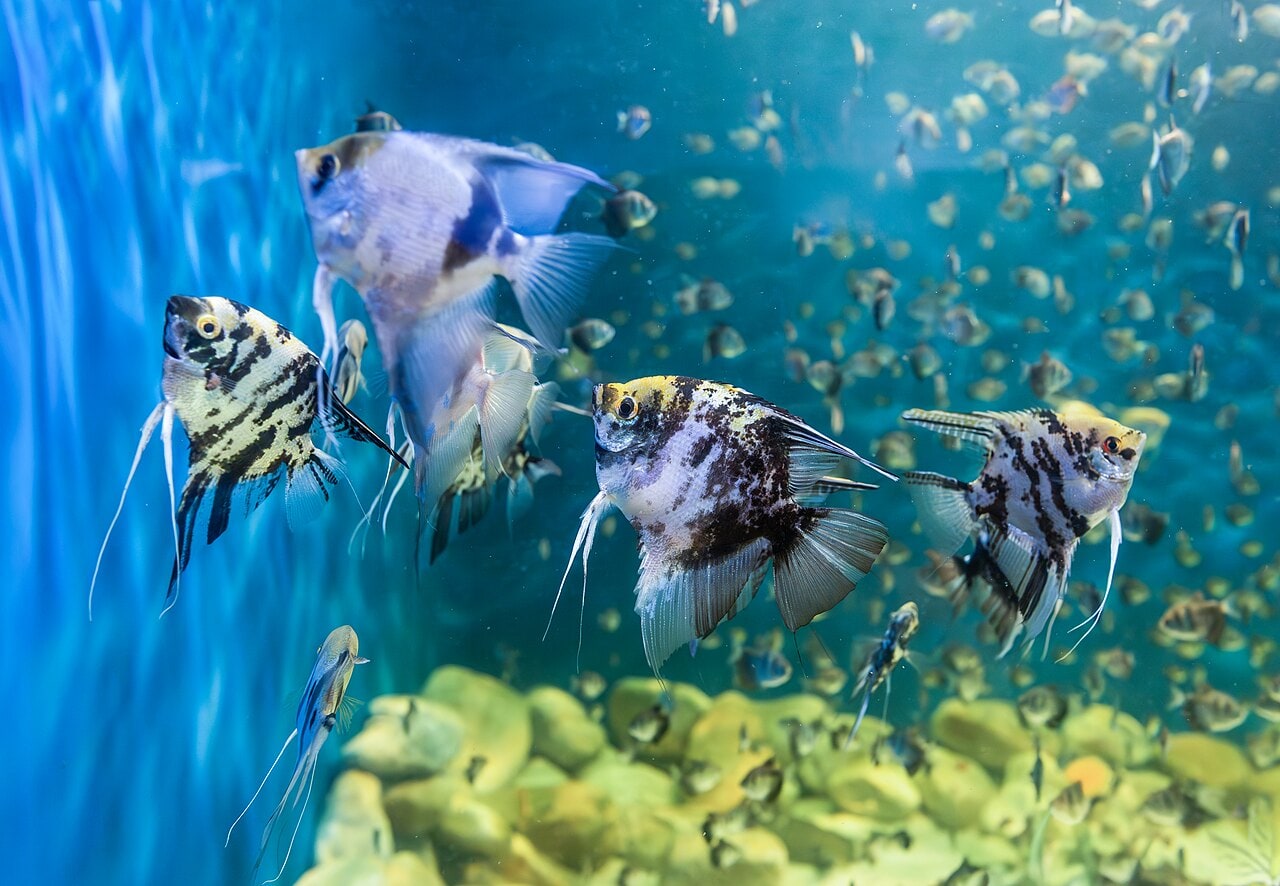
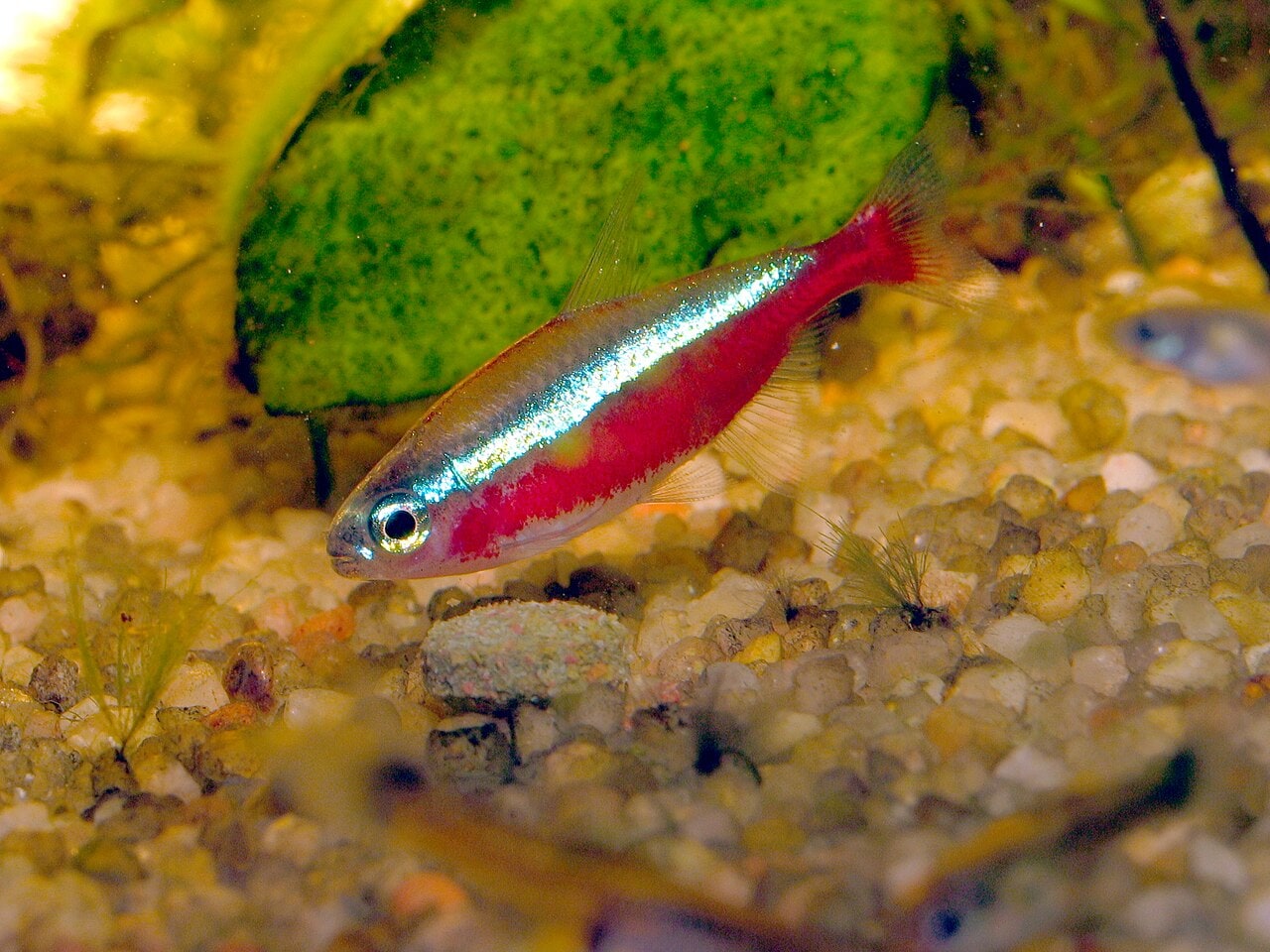
Cardinal tetras, rummy-nose tetras, corydoras, and angelfish in a 200L Amazon community — a classic combination that rewards patience and water quality.
Stocking — 200L
Stocking is near the practical ceiling — little headroom for growth, mistakes, or messy feeding days. Review supporting points next, then re-run the check.
**Primary issue:** Stocking is near the practical ceiling — little headroom for growth, mistakes, or messy feeding days. **Temperament spread or predators in the mix** — feeding order, territory, and observation matter more than in an all-peaceful list. 27 fish across 5 species in 200L. Shared temperature 24–26°C. Stocking: **near-limit** (load index 214 vs ref 200).
Why this setup works
This is the aquarium that turned a generation of hobbyists from casual to obsessed. Cardinals and rummy-nose schooling together in a large planted tank, angelfish hanging in the midwater like living ornaments, corydoras working the substrate below. It is difficult to watch for more than five minutes without revising your plans for the next tank.
The challenge is that this combination has a tension built into it: angelfish and cardinals are from the same rivers in the wild, but in an aquarium the relationship tilts toward predation once the angelfish grow beyond about 8cm. Cardinals are too large to swallow for most of the angelfish's adult life, but the risk at juvenile cardinal size is real. Add large or adult cardinals. Keep the angelfish pair — two adult angelfish in 200L is the sustainable limit before territorial pressure becomes a maintenance problem.
Rummy-nose tetras are one of the best early-warning indicators in a freshwater tank. Their nose flush from red to white under stress or water quality decline before most other species show obvious symptoms. A fading nose is your prompt to test the water and investigate.
Water parameters matter more for this combination than most: temperature 26–28°C, pH 5.5–6.8, very soft if you can manage it. Angelfish are more forgiving about hardness than cardinals, but both want warm, soft water. A RO blend or naturally soft source water is the path of least resistance.
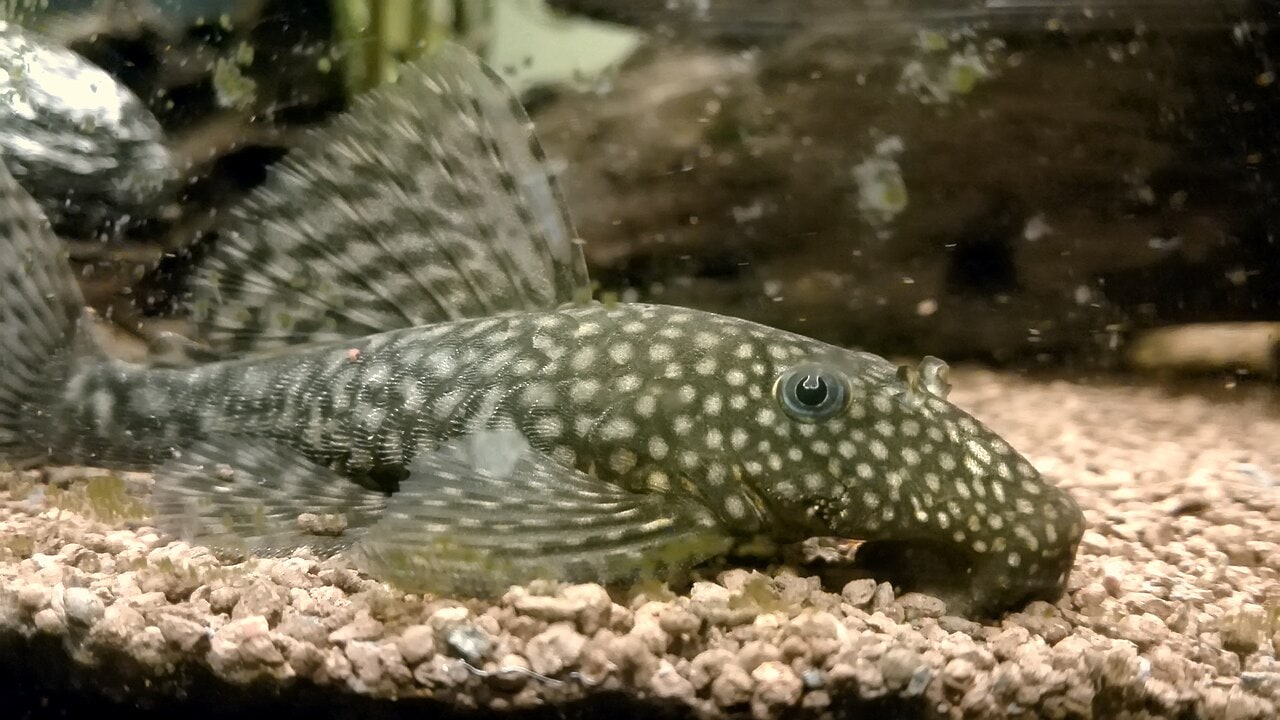
The bristlenose is there for algae control and does the job without competing with the corydoras for food — bristlenose graze wood and glass, corydoras scavenge the substrate. They occupy different spaces and leave each other alone. One bristlenose is enough in 200L.
Pair checks in this setup
- Cardinal Tetra + Rummy Nose Tetra
- Cardinal Tetra + Corydoras Catfish
- Cardinal Tetra + Angelfish
- Cardinal Tetra + Bristlenose Pleco
- Rummy Nose Tetra + Corydoras Catfish
- Rummy Nose Tetra + Angelfish
- Rummy Nose Tetra + Bristlenose Pleco
- Corydoras Catfish + Angelfish
- Corydoras Catfish + Bristlenose Pleco
- Angelfish + Bristlenose Pleco
Customise this stocking
Open the interactive editor pre-loaded with this setup, then add or swap species.
Other stocking scenarios
Open interactive editor ↓
Your stock
Stocking is near the practical ceiling — little headroom for growth, mistakes, or messy feeding days. Review supporting points next, then re-run the check.
One or more species profiles are only partially verified or need verification — treat numbers as planning guidance, not guarantees. At least one species has ID or trade-name ambiguity on file — plan for a typical trade example, not every shop label. Large species count increases behavioural variance compared with a 2–3 species plan. Several caution-level pair flags mean real outcomes depend on tank shape, cover, and individual fish. Elevated risk verdict — we bias toward safety; your reading of specialist sources still matters.
Pair compatibility for any two species · Fish library
Warnings
- Temperature overlap is narrow (24–26°C) — heater thermostat accuracy matters.
- pH overlap is tight — large water changes can swing chemistry outside the safe band.
- Stocking is approaching the practical limit for 200L (load index 214 / ref 200).
Water overlap
What every fish can share at the same time
Shared temperature: 24–26°C (narrow band)
Shared pH: 6.5–7.0 (tight overlap)
Shared temperature range for all species: 24–26°C.
Shared pH window: 6.5–7.0.
Stocking pressure
near limit
Load index 214 vs conservative reference 200 for 200L (adult cm × quantity × bioload weight × territory factor).
Swim-zone distribution
Fish-weighted zone use — top 0.0, middle 20.0, bottom 7.0 (relative biomass per level).
Most biomass leans toward one swim level — shy fish may feel exposed or outcompeted at feeding time.
Compatibility summary
Species pairing: needs care
warning· other- Cardinal Tetra + Angelfish: Cardinal Tetra + Angelfish: Temperament difference. Angelfish is semi-aggressive, while Cardinal Tetra is peaceful. Expect chasing or stress unless the tank is large and heavily structured — monitor closely. Outcomes still depend on your tank shape, maintenance routine, and individual fish.
- Cardinal Tetra + Bristlenose Pleco: Cardinal Tetra and Bristlenose Pleco: Identification or trade-name ambiguity for at least one side, so this is a cautious read, not a green light. Plan for adult sizes, a stable shared water window, and individual behaviour; verify against a second reference you trust.
- Rummy Nose Tetra + Corydoras Catfish: Rummy Nose Tetra + Corydoras Catfish: Narrow temperature overlap. Rummy Nose Tetra and Corydoras Catfish have only a narrow shared temperature range. Maintaining stable water temperature will be important. Outcomes still depend on your tank shape, maintenance routine, and individual fish.
- Rummy Nose Tetra + Angelfish: Rummy Nose Tetra + Angelfish: Temperament difference. Angelfish is semi-aggressive, while Rummy Nose Tetra is peaceful. Expect chasing or stress unless the tank is large and heavily structured — monitor closely. Outcomes still depend on your tank shape, maintenance routine, and individual fish.
- Rummy Nose Tetra + Bristlenose Pleco: Rummy Nose Tetra and Bristlenose Pleco: Identification or trade-name ambiguity for at least one side, so this is a cautious read, not a green light. Plan for adult sizes, a stable shared water window, and individual behaviour; verify against a second reference you trust.
- Corydoras Catfish + Angelfish: Corydoras Catfish + Angelfish: Temperament difference. Angelfish is semi-aggressive, while Corydoras Catfish is peaceful. Expect chasing or stress unless the tank is large and heavily structured — monitor closely. Outcomes still depend on your tank shape, maintenance routine, and individual fish.
- Corydoras Catfish + Bristlenose Pleco: Corydoras Catfish and Bristlenose Pleco: Identification or trade-name ambiguity for at least one side, so this is a cautious read, not a green light. Plan for adult sizes, a stable shared water window, and individual behaviour; verify against a second reference you trust.
- Angelfish + Bristlenose Pleco: Angelfish + Bristlenose Pleco: Caution advised. Still the usual South American pairing people actually keep. Angels midwater, bristlenose on wood below. The caution is angel territoriality in short tanks and nitrate load — give height, softwood, and real water changes, not a 60L cube. Outcomes still depend on your tank shape, maintenance routine, and individual fish.
Temperament gap
warning· temperament- Cardinal Tetra (peaceful) and Angelfish (semi-aggressive) — needs space, line-of-sight breaks, and observation.
- Rummy Nose Tetra (peaceful) and Angelfish (semi-aggressive) — needs space, line-of-sight breaks, and observation.
- Corydoras Catfish (peaceful) and Angelfish (semi-aggressive) — needs space, line-of-sight breaks, and observation.
- Angelfish (semi-aggressive) and Bristlenose Pleco (peaceful) — needs space, line-of-sight breaks, and observation.
Pairs checked: 10 · RISKY pair flags: 0 · CAUTION: 8
Fix this setup
Grouped by scenario — work through each block in order
Stocking pressure & filtration
- 1.Avoid adding more large or messy fish; keep a strict maintenance schedule.
Layout & swim zones
- 1.Add structure (caves, tall plants) and consider species that use under-represented zones.
Suggested swaps
- Single-biome community: e.g. soft-water South Americans together (tetras + corydoras + small gourami) — run the pair tool for every add-on.
- Species or centrepiece tank: one main species (or one compatible pair group) in a right-sized aquarium with dither fish from the same water profile — not random continent mixing.
Beginner difficulty
moderate
- Includes intermediate species — stable parameters matter.
- Several caution flags — needs experience reading fish behaviour.
- Stocking is heavy for the volume — needs reliable filtration and a steady water-change routine.
Fish behaviour varies. Fishori gives conservative planning guidance based on adult size, temperament, tank size and common aquarium care sources.