Should I buy it?
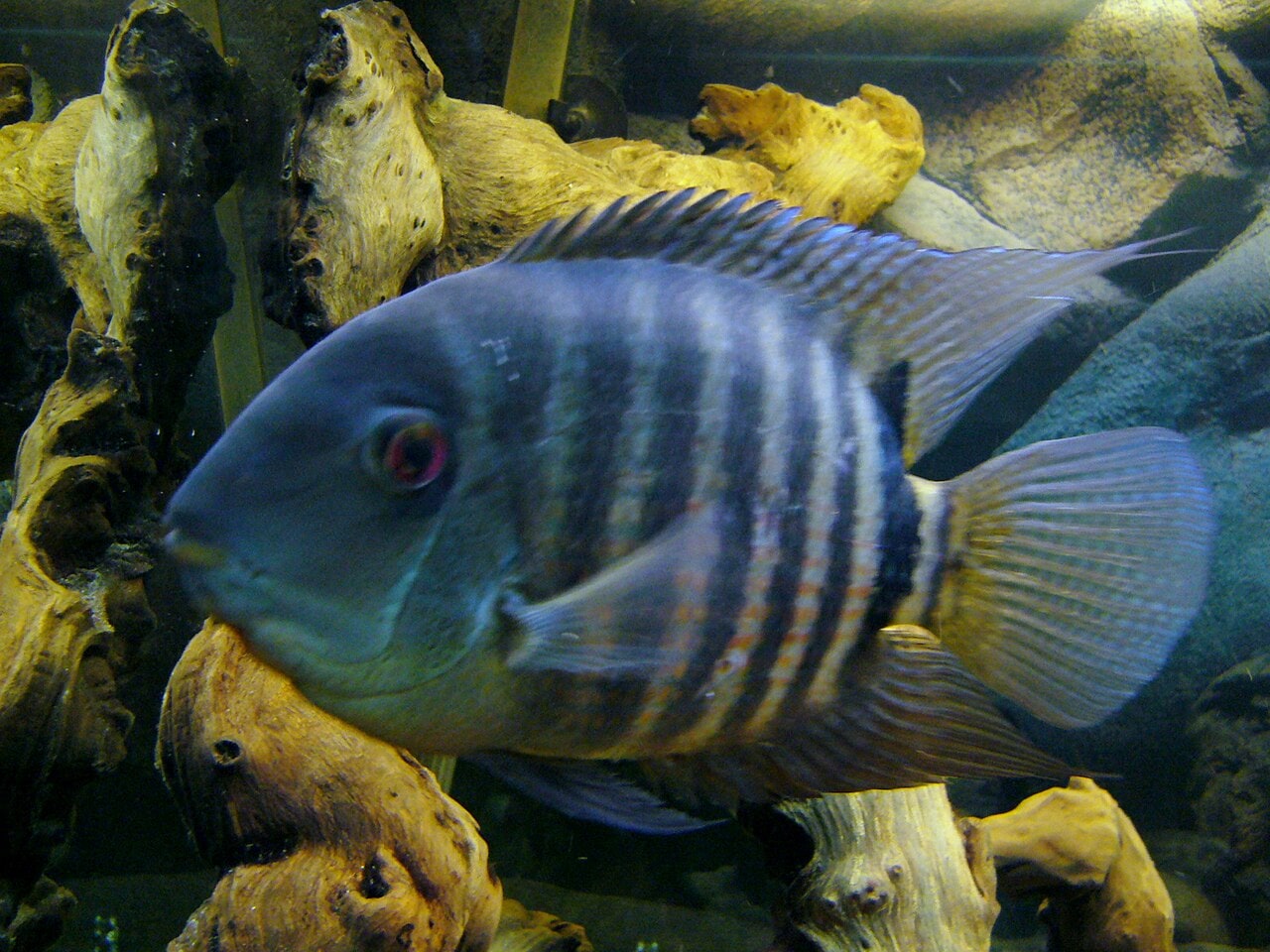
Severum
Heros efasciatus
Also known as: severum cichlid, green severum, heros severus (historic trade label), Banded cichlid
A large semi-aggressive cichlid at 20 cm that eats plants and needs space for a pair with territory. More peaceful than most New World cichlids of its size.
Severum tank mates · 250L tank size hub
semi-aggressive · intermediate care
Sources & confidencemedium · partially verified · beginner: caution
Typical care sources — trade names for this fish get mixed up, so verify the ID before you buy. Numbers here are a careful starting point. Your tap water, tank size, and habits decide the rest. How we evaluate.
Best for: South American cichlid setups 250L or more with a bonded pair and large robust companions.
Avoid if: Planted tanks (they eat plants systematically), small fish, or tanks under 200L.
Common mistakePutting a severum in a delicate planted show tank is how keepers invent methodical uprooting and missing stems within weeks. They eat and rearrange plants. Use tough attachments like Java fern or anubias on wood, or run a hardscape-first layout — aquascape carpets are not severum décor.
Top things that go wrong
- Mouth gap vs tiny tank mates. May eat tank mates small enough to fit the adult mouth — plan adult sizes, not shop sizes.
- Shrimp & snails. Not shrimp-safe — adults, fry, or both get eaten.
Common trade-name warning
This fish is often sold under different names or species variants. Care guidance is based on typical aquarium examples rather than a single exact species. Many tank-bred "severums" in shops track Heros efasciatus or colour/farm lines; true Heros severus is less often the default. Verify markings and breeding style if the label matters to you.
What most shops don't tell you
- 1.Myth: severums are gentle planted-community centrepieces that leave aquascapes alone if well fed on pellets daily. Reality: they eat and uproot soft plants methodically — plan tough attached plants or hardscape, plus serious litres, not a delicate carpet show tank.
- 2.Predation risk scales with gape, night feeding, and crowding. 'they grew up together' is a schedule, not a law.
- 3.Pair in 120 L with 50 neons. The neons are eventually snacks.
- 4.Fed a single protein line with no fresh veg, leading to bloat in some lines.
- 5.Vegetable and fibre in the diet; watch for redecorating, digging, and the usual large-cichlid nitrate story if underfiltered.
About this species
Severums are round-bodied South American cichlids that reach 18 to 25 cm and are popular in larger planted tanks. They take a wide pH range, but gape, bulk, and breeding aggression make tiny tetras a poor long-term dither in small volumes.
- African Cichlid200L min · same group, comparable tank size
- Convict cichlid200L min · same group, comparable tank size
- Discus200L min · same group, comparable tank size
- Firemouth Cichlid200L min · same group, comparable tank size
- Green Terror300L min · same group, comparable tank size
- Jack Dempsey200L min · same group, comparable tank size
- Keyhole cichlid200L min · same group, comparable tank size
- Oscar300L min · same group, comparable tank size
- Angelfishalso intermediate semi-aggressive, similar tank size
- Banded leporinusalso intermediate semi-aggressive, similar tank size
- Electric Blue Acaraalso intermediate semi-aggressive, similar tank size
- Firemouth Cichlidalso intermediate semi-aggressive, similar tank size
- Opaline gouramialso intermediate semi-aggressive, similar tank size
- Rainbow / red-tailed black sharkalso intermediate semi-aggressive, similar tank size
No reverse lookups listed yet.
Plan grid
Key limits are above. Here: pH band, swim level, bioload, and activity.
Swim zones
Care snapshot
Quick compare before you buy. Not a score of how “good” the fish is.
- Beginner ease22
- Peacefulness30
- Community fit12
- Small-tank fit27
- Hardiness54
- Energy24
Numbers are deterministic planning indices from Fishori fields — not a scientific score of your individual fish.
Example setups
Starting points only. Run the pair checker for every fish you add.
Avoid “one of everything” baskets — Severum belongs in a plan built around territory, line-of-sight breaks, and matched water chemistry.
Compatibility
Tank mates for Severum
No unconditional “safe” tank mates are listed for Severum — this shortlist has CAUTION pairings that need specific conditions and RISKY pairings to avoid. Conditional (CAUTION — read the pair page before buying): Angelfish, Bala / silver shark, Boesemani Rainbowfish, Corydoras Catfish, Dwarf Gourami. Avoid (RISKY): Chili Rasbora, Ember Tetra. Every name links to a live pair check — the lists are a shortlist, not a stocking plan.
Usually safer
Open a pair page with this fish as the starting point.
None listed. Use the pair checker before mixing.
Needs planning
Read the blocking rule on each pair page before experimenting.
Usually avoid
Do-not-stock combinations on conservative hobby rules.
No safe-mate list on this record yet. Use the fish index to find species with similar care, then run a pair check before you buy.
Behaviour and temperament
Severums are semi-aggressive large cichlids that stay calmer as carefully chosen singles or pairs in big footprint. They may eat small fish as adults. Stress and destruction rise when a growing severum shares a short planted community with nano livestock and soft stems.
What sets them off
- Crowding and limited territory
- Similar-looking fish in the same tank
- Spawning, for any breeding pair
Fin nipping: Not a habitual fin-nipper; stressed or crowded individuals can still test fins.
Predation: May eat tank mates small enough to fit the adult mouth — plan adult sizes, not shop sizes.
Territory: Holds a patch (cave, corner, or surface). Break sight lines so neighbours can pass.
Planted tanks: good — easy plant ideas
In the glass: typical and warning signs
- An adult patrols midwater and browses plants or wafers in a large tank.
- Digging and décor rearranging are normal ownership at size.
- Missing stems within a week usually mean plant choice failed, not random bad luck.
- Chronic pacing in a short tank means footprint failed before diet tweaks.
- Adults may eat mouth-sized fish and harass softer tank mates at spawn.
- Crowded short tanks make territorial streaks worse than the peaceful juvenile suggests.
- Switch to tough plants or hardscape before rehoming for 'plant killer' alone.
- Rehome nano fish before adult gape turns disappearances into a pattern.
Fish behaviour can vary between individuals and tank setups. Always observe new fish closely after introduction.
Water, food, and grouping
Hardness
soft
Diet
omnivore
Severums are large omnivore cichlids that take quality pellets, frozen foods, and plant matter — including the soft stems you hoped to keep. Feed deliberately for a growing herbivore-leaning appetite, match filtration to messy adults, and never pretend a two-hundred-fifty-litre class fish lives on leftover flake pinches alone.
Shrimp & snails
Not shrimp-safe — adults, fry, or both get eaten.
Severum is fine singly or as a researched pair — check behaviour before doubling up.
- Hold 24 to 30 °C steadily on a real thermometer, not the dial on the heater.
- Aim for pH 5.5 to 7.5 and a hardness you can re-test in two weeks. A one-time strip in the shop car park is not a water test.
- Footprint: short wide tanks and tall narrow tanks fish differently for the same volume. Match the tank shape to the swim pattern, not just the litre count.
- Tank volume meets or exceeds 250L published minimum for adults.
- Heater can hold 24–30°C without cooking cooler-water tank mates.
- No known fin-nippers paired with long-finned fish unless you accept documented risk.
- No tank mates small enough to fit the adult mouth gap for this species.
Explore and stocking hubs
Tank-mates hub, matching guides, category peers, and litre stocking lists around this species’ minimum tank.
Plan with tools
Check mates as pairs first, then add this fish in the tank builder for the full stocking.
Filtration & heating
A 250L minimum tank needs a filter rated for at least 1000L/hr turnover and a heater to hold 24–30°C reliably.
Plant suggestions
Severum does well in planted tanks. Plants compatible with 24–30°C and pH 5.5–7.5:
Research: partially verified · Confidence: medium · 3 linked source(s). We do not invent citations.
How Fishori evaluates compatibility (same logic as pair and tank tools).
- Seriously Fish. Heros efasciatus (striped / gold ‘severum’ in trade, primary care proxy)
Primary: aquarium size, water chemistry, behaviour, and community context for a Heros sp. with strong hobby coverage. Most tank-bred 'severums' in shops are this species or man-made colour lines close to it; compare with a true Heros severus (below) for breeding biology and colour.
- Practical Fishkeeping. Frequently asked questions on South American cichlids
Primary: editorial Q&A on South American cichlid communities; mentions severums in mixed-tank and compatibility thinking. Still not a one-page Heros severus monograph.
- FishBase. Heros severus
Secondary: formal species account for the binomial used in this record; the trade and Singapore farm lines often do not match wild-type severus, so this is a taxonomy anchor, not a guarantee your fish is a pure H. severus.
Evidence notes
- A dedicated Seriously Fish heros-severus URL was not found; the hobby and farm trade lean heavily to Heros efasciatus and hybrids labelled 'severum'. The SF H. efasciatus profile is therefore a pragmatic aquarium proxy, with FishBase tied to the literal binomial on the card. Expect mismatches if you are chasing wild-type or mouthbrooding biology.
- Practical Fishkeeping: magazine-level planning context; not a species data sheet. FishBase contributes natural-range size and habitat context. Translate those numbers through your heater, your water report, and your tank footprint before stocking.
- All compatibility text reflects typical hobby experience and the Fishori model. Individual fish, shop stress, and the order tank mates are added in can still defy a single-paragraph label.
Featured compatibility checks
Curated pair pages for Severum. Each opens a full verdict — not just a list label.
Common questions about Severum
- How big do Severum get?
- Severum adults run about 18–25 cm. In home tanks they usually land near 20 cm — plan space and filtration for that, not the juvenile in the shop bag.
- What size tank does Severum need?
- 250L is the planning floor for adult swimming space and bioload. A 300L+ tank is the more comfortable long-term footprint. Length and depth matter as much as raw litres for active or territorial fish.
- Are Severum aggressive?
- Severums are semi-aggressive large cichlids that stay calmer as carefully chosen singles or pairs in big footprint. They may eat small fish as adults. Stress and destruction rise when a growing severum shares a short planted community with nano livestock and soft stems.
- What is the most common mistake with Severum?
- Putting a severum in a delicate planted show tank is how keepers invent methodical uprooting and missing stems within weeks. They eat and rearrange plants. Use tough attachments like Java fern or anubias on wood, or run a hardscape-first layout — aquascape carpets are not severum décor.
- What fish can live with Severum?
- This profile currently has no curated unconditional safe-mates shortlist for Severum. Other species may still return GOOD in the pair checker, so check the exact pair rather than treating this shortlist as exhaustive. Angelfish, Bala / silver shark, Boesemani Rainbowfish, Corydoras Catfish are conditional (CAUTION): workable only with the specific conditions on each pair page. Avoid Chili Rasbora, Ember Tetra (RISKY). Run the pair checker for your exact water and tank size before stocking.