Plant guide
Plants for shrimp tanks
Shrimp tanks benefit from low-light plants that grow biofilm on their surfaces — this is the primary food source for baby shrimp. Java Moss and Marimo moss balls are the classic choices: both accumulate beneficial bacteria and micro-organisms on every surface, providing constant foraging. Anubias and Java Fern attached to hardscape give adult shrimp cover without sharp edges. All plants on this list are confirmed shrimp-safe with no toxic leaching risk.
9 low-light plants marked shrimp-safe — cover and biofilm first, then livestock.
How to read this list
Plant first, shrimp second. Mature the tank, build moss and cover, then add the colony. Even shrimp-safe plants can carry copper or pesticide residue from nurseries — rinse and quarantine hardscape plants before they go in.
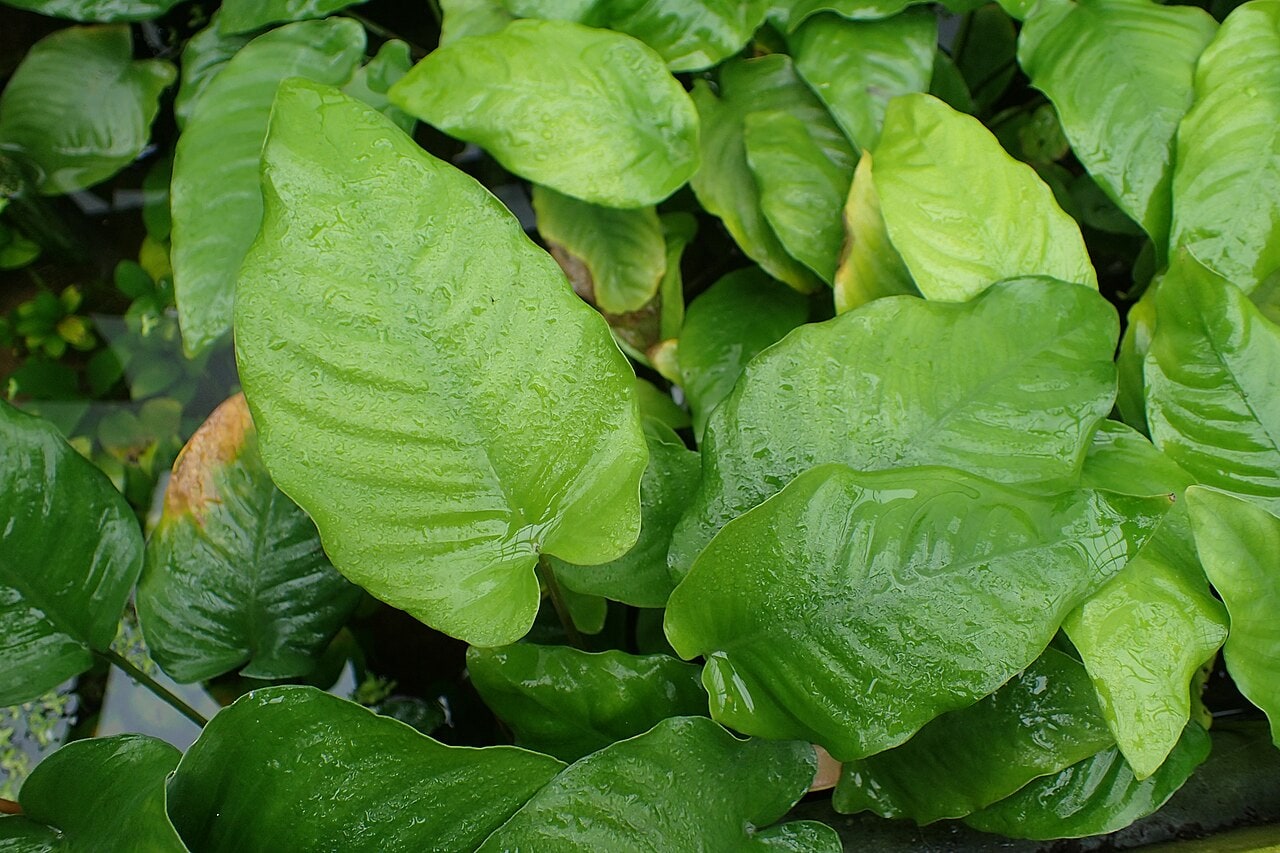
Anubias
Anubias barteri var. barteri
easylow lightNo CO2
Do not bury the rhizome, it will rot. Tie to wood or rock and allow roots to anchor naturally. Very low light suits it fine; algae on leaves is common in high-light tanks.
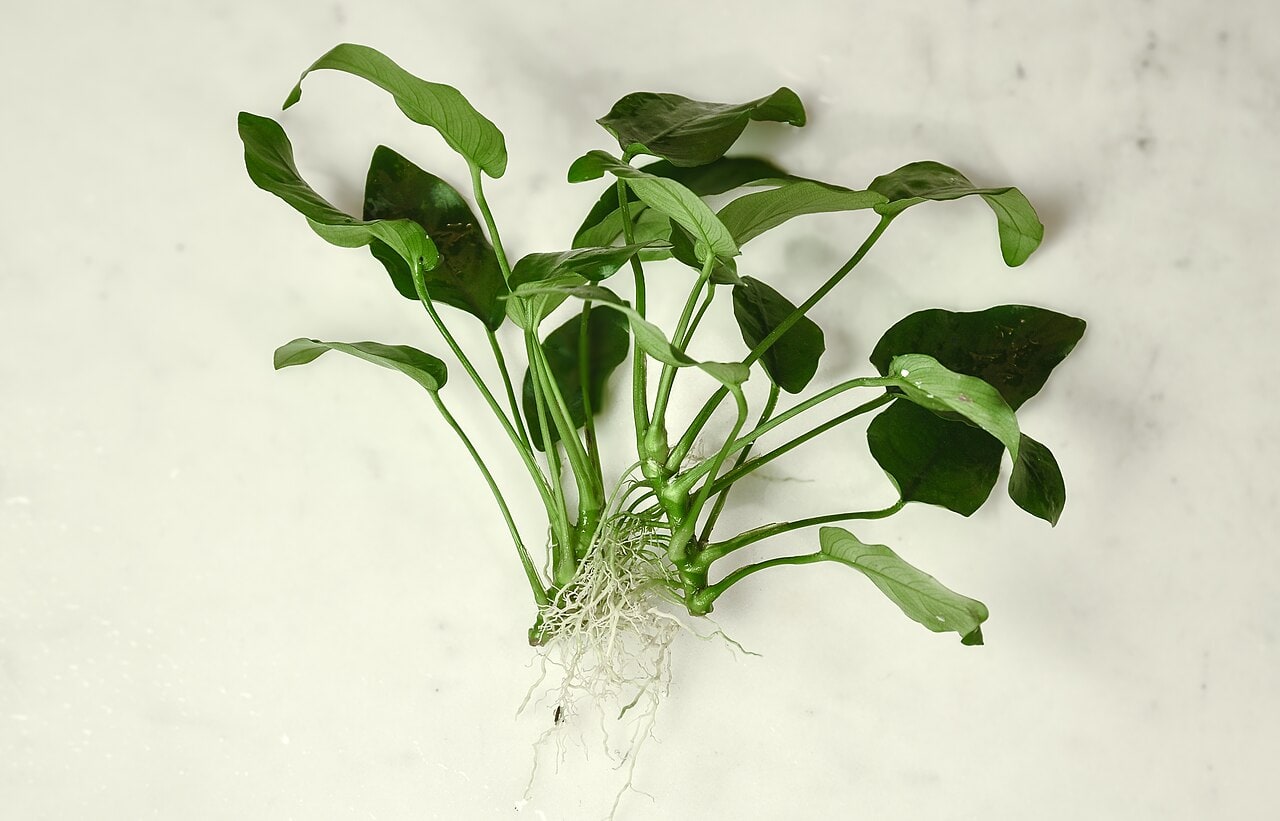
Anubias Nana
Anubias barteri var. nana
easylow lightNo CO2
Tie or superglue to hardscape; roots will grip the surface. Never bury the rhizome. Under very high light, algae may grow on the slow leaves, moderate light prevents this. Long-lived once established.
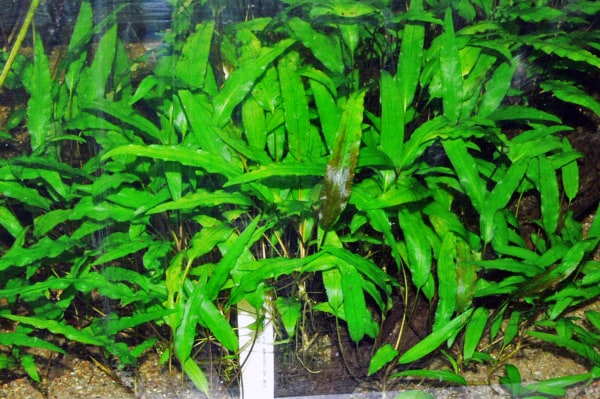
Cryptocoryne Wendtii
Cryptocoryne wendtii
easylow lightNo CO2
Expect melting leaves after purchase, do not uproot; wait for recovery. Root tabs help in inert substrate. Once established, it is very hardy. Spreads slowly to form a mid-tank cluster.
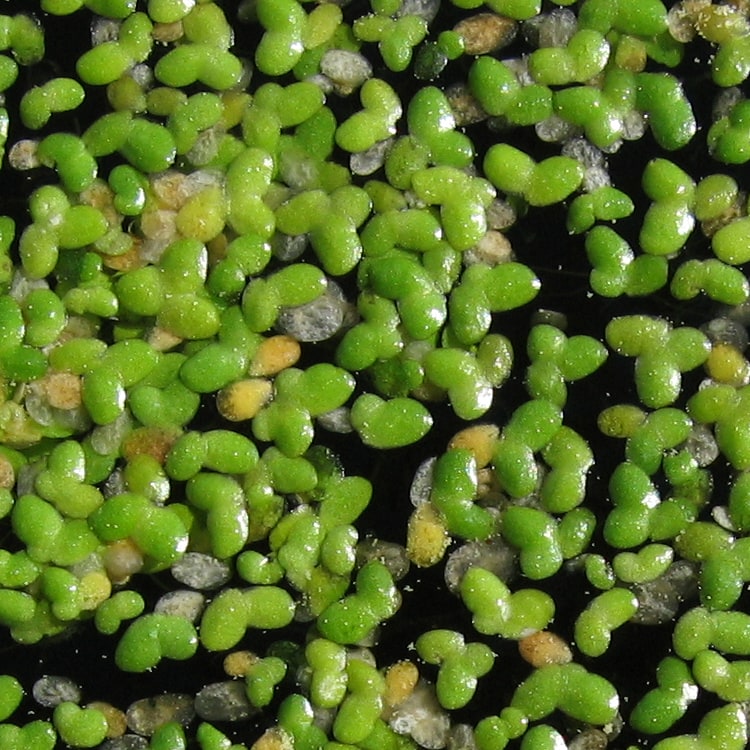
Duckweed
Lemna minor
easylow lightNo CO2
Good for tanks with goldfish or other herbivores that will eat it as food. Nearly impossible to fully eradicate, only introduce if you accept a permanent presence. Skimmer/overflow tanks spread it fast.
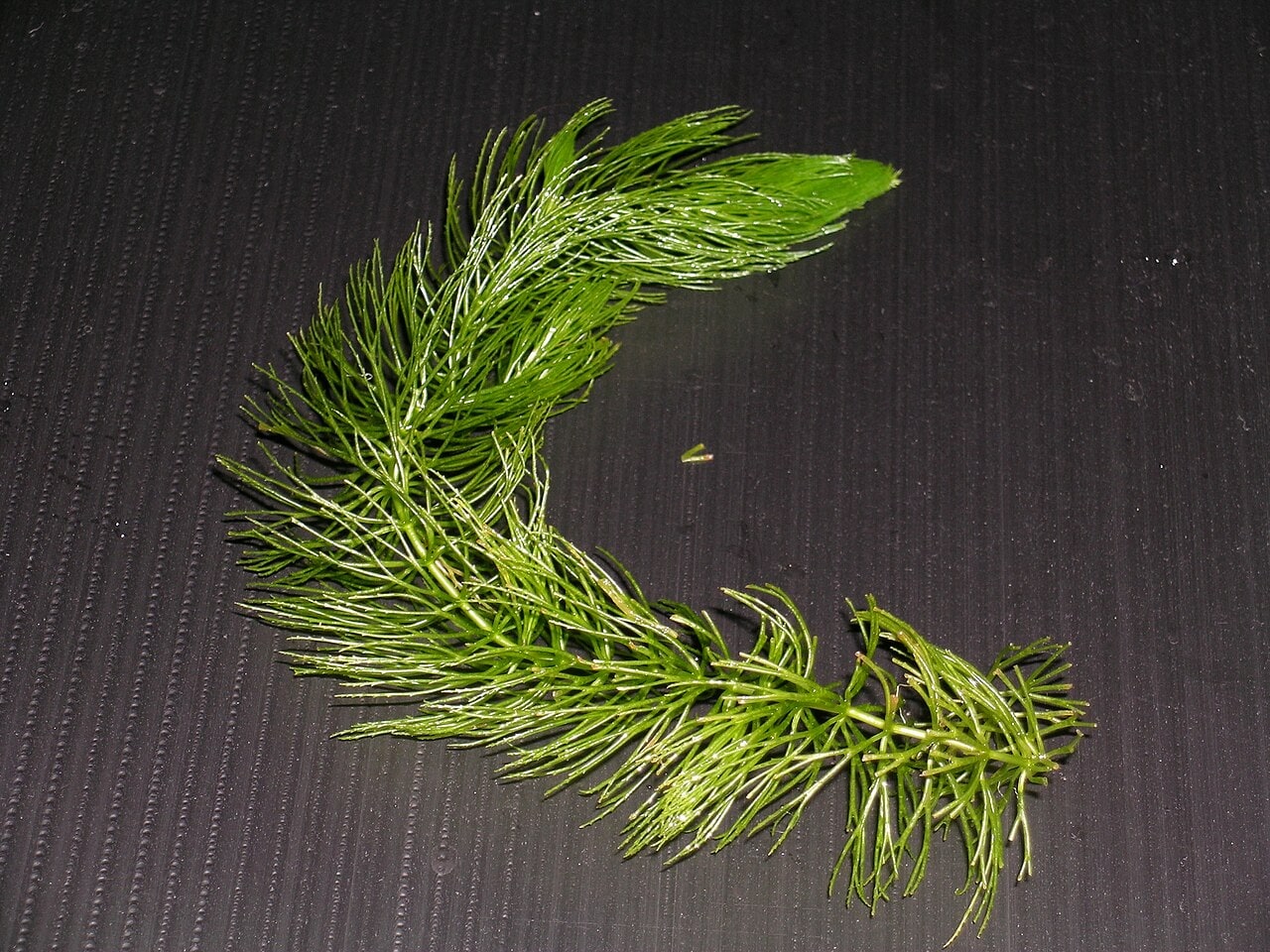
Hornwort
Ceratophyllum demersum
easylow lightNo CO2
Can be floated or loosely planted; will shed needles when conditions change. Trims frequently, cut the top growth and replant. Good for cycling tanks due to high nutrient uptake.
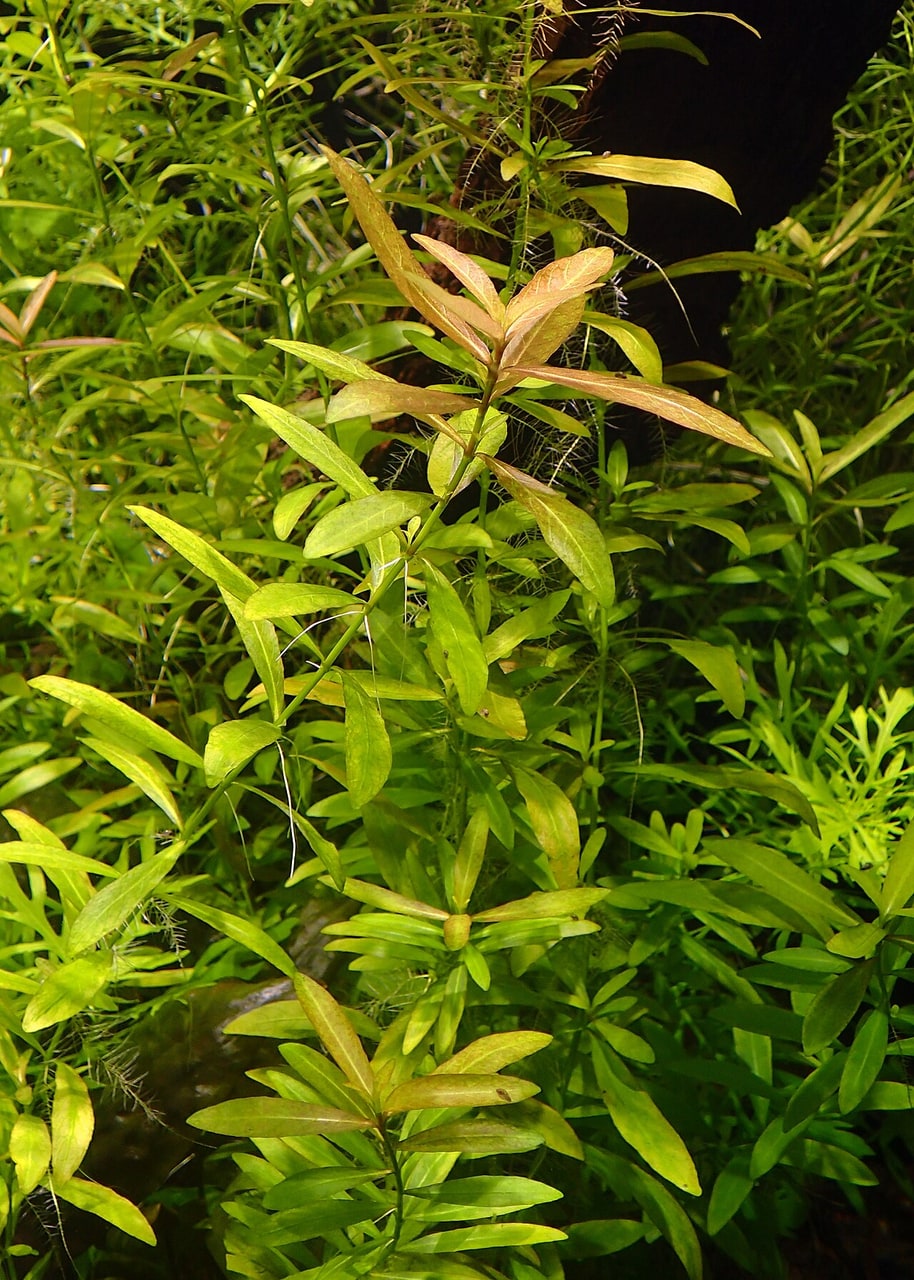
Hygrophila Polysperma
Hygrophila polysperma
easylow lightNo CO2
Almost impossible to kill. Trim frequently, it becomes a jungle fast. Plant cuttings directly in substrate. Good for giving a new tank a head start on nutrient cycling.
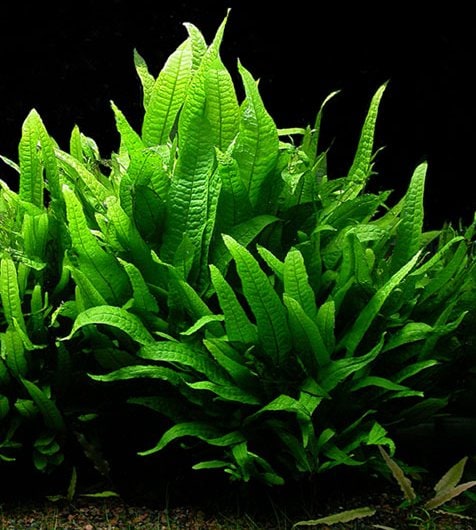
Java Fern
Microsorum pteropus
easylow lightNo CO2
Attach to driftwood with fishing line or plant-safe superglue; never bury the rhizome. Plantlets can be separated and reattached once they have a few roots.
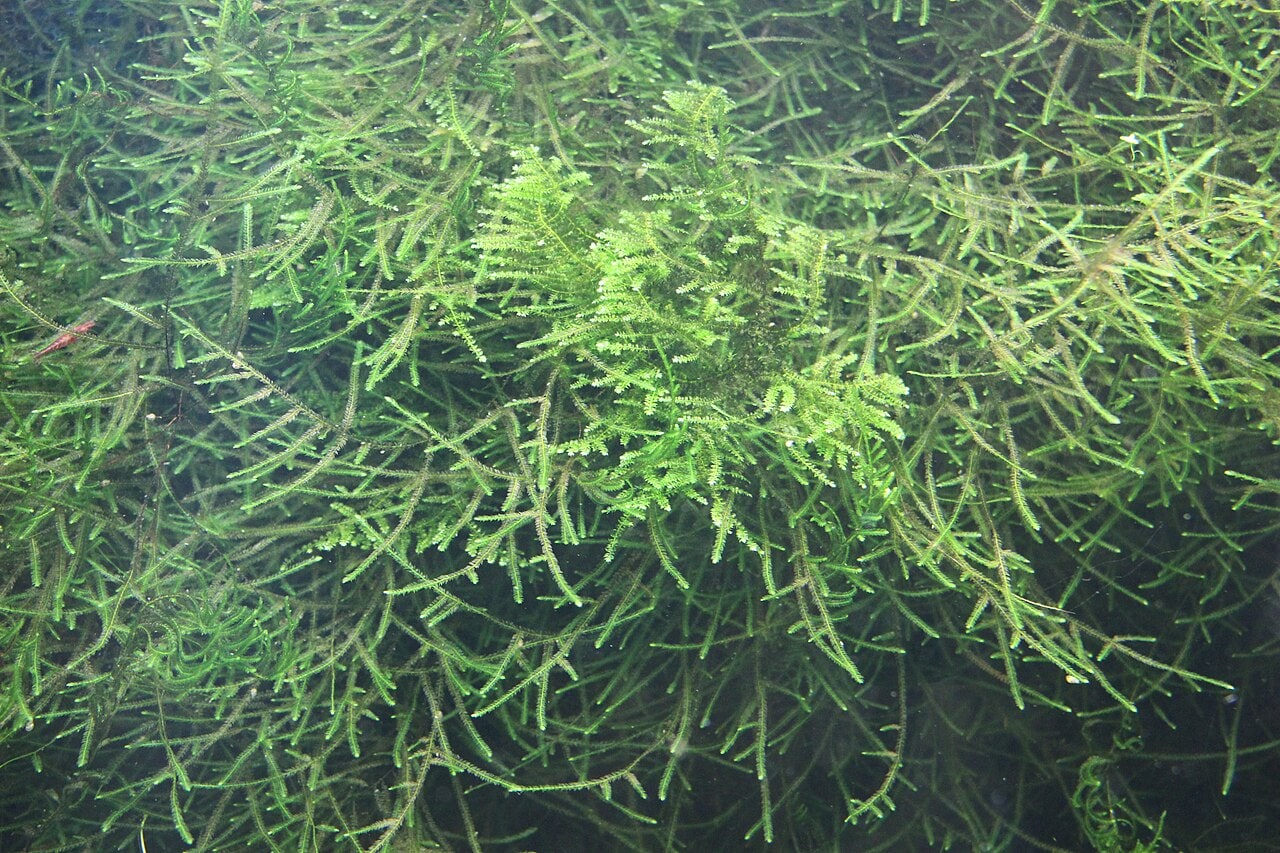
Java Moss
Taxiphyllum barbieri
easylow lightNo CO2
Tie or superglue to surfaces; it will attach over a few weeks. No substrate needed. Trim occasionally to prevent it smothering other plants. Strong flow helps keep it clean.
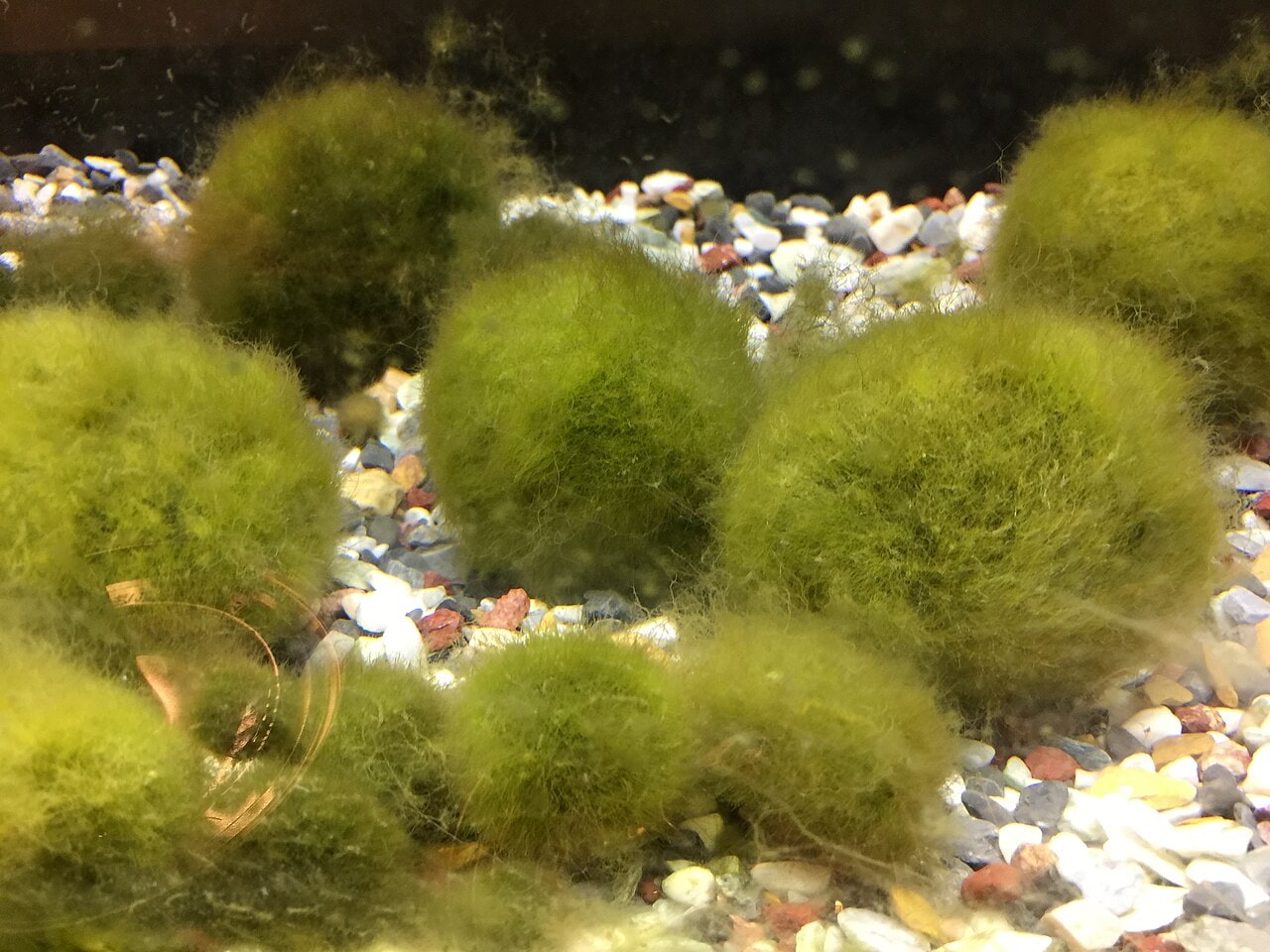
Marimo Moss Ball
Aegagropila linnaei
easylow lightNo CO2
Keep cool: they prefer temperatures below 25°C and may brown and decompose in tropical tanks above 28°C. Roll them gently once a week to maintain their round shape. Rinse in dechlorinated water if they smell. Do not keep with strong plant-eating fish.
Plan the hardscape next
Shortlist plants here, then set litres and livestock in the builder before you buy.
Need filtration context for a planted tank? See the filter size guide.
Pair with the shrimp-safe fish guide once the plants are established.
Other plant guides
Easy beginner aquarium plantsLow-light aquarium plantsAquarium carpet plantsPlants that grow without CO2Fast-growing aquarium plants
Plants for shrimp tanks — quick answers
- What does the “Plants for shrimp tanks” list include?
- 9 low-light plants marked shrimp-safe — cover and biofilm first, then livestock.
- How should I use this plant list before buying?
- Treat it as a shortlist from structured library fields, not a buy list. Open each profile for light, CO2, and placement, then plan hardscape and filtration before you add livestock.
- Which plants appear on this guide right now?
- Examples currently matching include Anubias, Anubias Nana, Cryptocoryne Wendtii, Duckweed, plus 5 more. Counts change as the library grows.