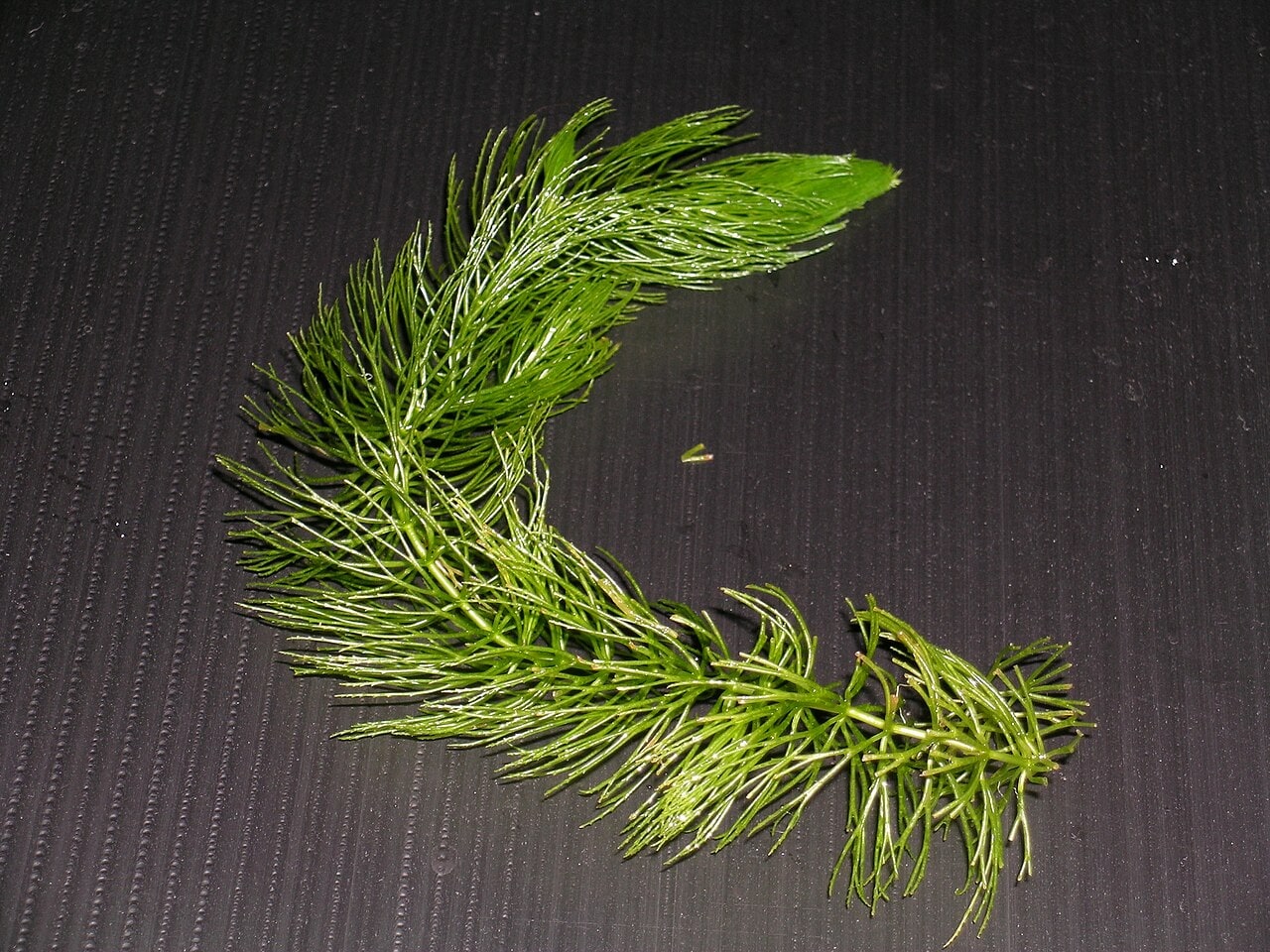
Photo by S.Tanaka (Public domain). Wikimedia Commons
The same plant can look different under a brighter light, with fertiliser, with added CO2, or if the shop grew it out of the water.
Hornwort
Ceratophyllum demersum
Also: Rigid Hornwort, Coontail
Hornwort is a fast-growing, rootless stem plant that can be floated or anchored in substrate. Highly effective at absorbing nitrates, making it a practical choice for new tanks or overstocked setups. Needle-like leaves shed readily, vacuum them up regularly.
The care figures are checked against the sources at the bottom of this page.
Care at a glance
Water parameters
Beginner guidance
Float it, or tuck it loosely into the gravel. It sheds needles when conditions change, so vacuum those up. Cut the top and replant it when you shorten it.
Cautions
- Needle shedding can clog filters in heavy quantities.
Sources
- Ceratophyllum demersum. Wikipedia — Worldwide distribution, growth biology, and use as oxygenating / floating plant.
- Ceratophyllum demersum. Flowgrow — Aquarium care notes, light requirements, and nutrient uptake observations.
Same temperature and pH
This list is not a tank-mate verdict. It does not check whether they eat the plant or suit each other. They share this plant's temperature and pH.
Similar plants
- Java Mosseasy · low light · CO2 helpful, not required
- Anubiaseasy · low light · No added CO2
- Java Ferneasy · low light · No added CO2
- Amazon Swordeasy · medium light · CO2 helpful, not required
- Water Wisteriaeasy · medium light · CO2 helpful, not required
- Water Spriteeasy · medium light · No added CO2
Tank-size guides: 30-litre tank guide
Related plant guides
Easy aquarium plantsLow-light aquarium plantsPlants for shrimp tanks
Common questions about Hornwort
- Does Hornwort need CO2?
- No. Hornwort is listed as growing without added CO2.
- What light does Hornwort need?
- Hornwort is listed for low light. A basic aquarium light is the level this page records.
- Is Hornwort beginner-friendly?
- Hornwort is listed as easy. It does not need added CO2. The light listed is low.
- Is Hornwort safe for shrimp?
- Yes. This page marks Hornwort as safe with shrimp. Rinse a shop plant before it goes in, because copper or pesticide can remain on the leaves.