Should I buy it?
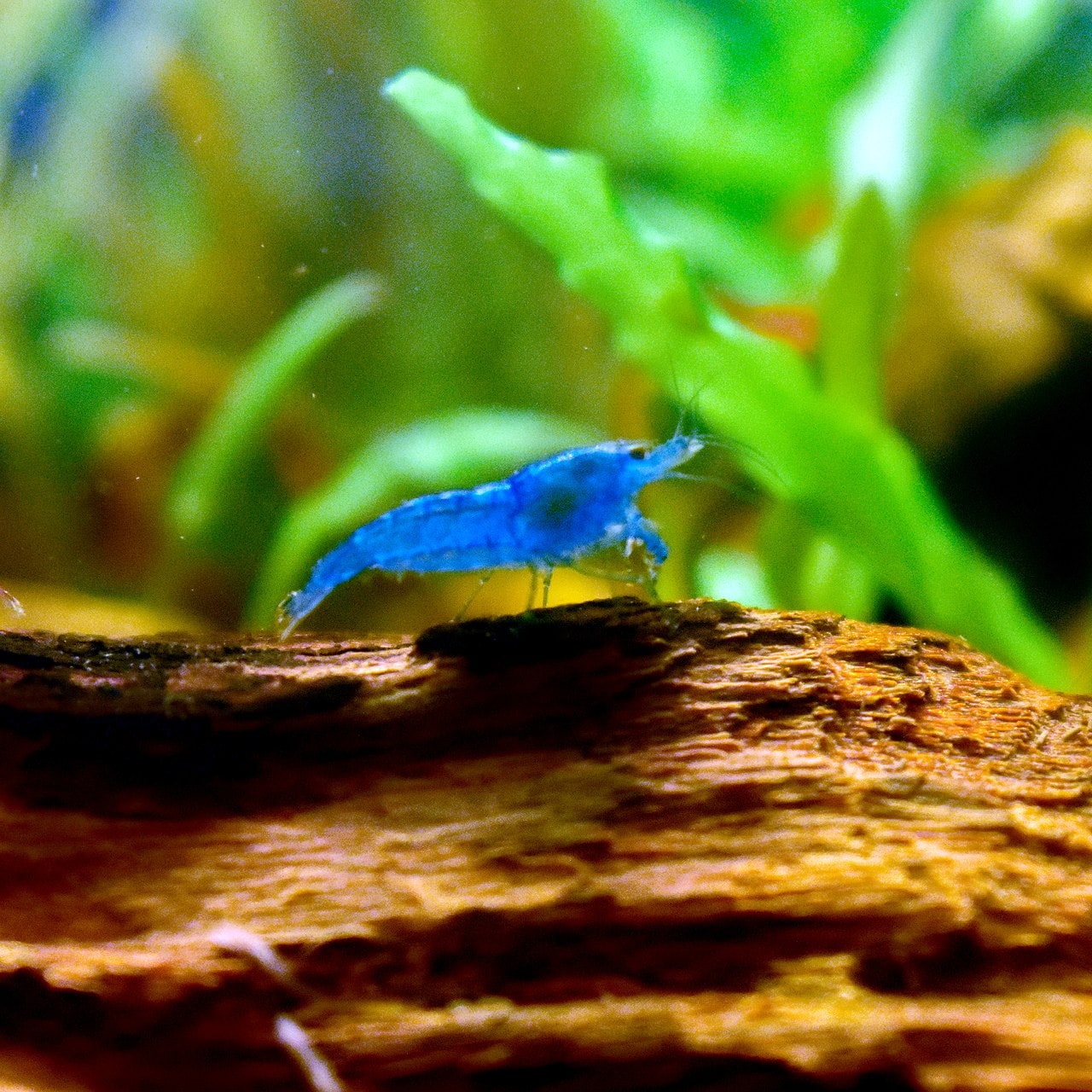
Blue Dream Shrimp
Neocaridina davidi
Also known as: blue velvet shrimp, blue jelly shrimp, blue cherry shrimp
Cherry shrimp in a different colour. Same care, same breeding, with the trade-off that any colour mixing kills the line within months.
Blue Dream Shrimp tank mates · 30L tank size hub
peaceful · beginner care
Sources & confidencemedium · partially verified · beginner: good
Typical care sources — real tanks still vary. Numbers here are a careful starting point. Your tap water, tank size, and habits decide the rest. How we evaluate.
Best for: Dedicated neocaridina planted nanos 20L or more where colour purity is the goal and no other neocaridina colour variants are present.
Avoid if: Your tank already has red, yellow, or other neocaridina. Cross-breeding destroys colour lines within a few generations.
Common mistakeAdding one or two blue dreams to an existing cherry shrimp tank is how keepers invent a muddy mixed colony within months. The lines cross and distinct colour fades. Keep colour lines separate, or accept brown hybrids — bag novelty is not a genetics plan for Neocaridina davidi.
Top things that go wrong
- Shrimp & snails. Compatible with snails and otocinclus. Must not be mixed with cherry shrimp or other Neocaridina colour lines.
What most shops don't tell you
- 1.Myth: blue dream shrimp mix fine with cherry shrimp in any community nano and stay bright blue forever. Reality: lines cross and colour washes out — keep dedicated colonies if you care about the blue, and feed more than leftover film alone.
- 2.Mixed with cherry shrimp in the same tank 'for variety'. The next generation washes out and the blue colour disappears within six months of breeding.
- 3.Bought at high-grade pricing for a fresh tank. Selected colour lines crash harder on ammonia spikes than mixed-line cherries, and an immature tank kills the colour before the colony settles.
- 4.Treat as cherry shrimp on every parameter except colour and price. The blue lines (blue dream, blue velvet, blue jelly) are slightly more sensitive than mixed-line cherries because the gene pool is narrower, so stable water matters a little more.
About this species
Blue dream is the same species as cherry shrimp (Neocaridina davidi), selectively bred for blue colour. Care and breeding are identical, with one extra rule: blue dream and cherry shrimp interbreed back to wild-type brown in two or three generations, so keep one colour line per tank.
- Malaysian Trumpet Snail20L min · same group, comparable tank size
- Nerite Snail20L min · same group, comparable tank size
- Assassin Snail30L min · same group, comparable tank size
- Amano Shrimp40L min · same group, similar adult size
- Mystery Snail40L min · same group, similar adult size
- Bamboo Shrimp80L min · same fish family
- Amano Shrimpalso beginner peaceful, similar tank size
- Assassin Snailalso beginner peaceful, similar tank size
- Beckford Pencilfishalso beginner peaceful, similar tank size
- Black Neon Tetraalso beginner peaceful, similar tank size
- Bloodfin tetraalso beginner peaceful, similar tank size
- Cherry Barbalso beginner peaceful, similar tank size
No reverse lookups listed yet.
Plan grid
Key limits are above. Here: pH band, swim level, bioload, and activity.
Swim zones
Care snapshot
Quick compare before you buy. Not a score of how “good” the fish is.
- Beginner ease78
- Peacefulness90
- Community fit68
- Small-tank fit100
- Hardiness76
- Energy54
Numbers are deterministic planning indices from Fishori fields — not a scientific score of your individual fish.
Example setups
Starting points only. Run the pair checker for every fish you add.
Match temperature and pH overlap with every tank mate, then verify adult size and group rules on pair pages — Fishori is biased toward boring, survivable plans.
Compatibility
Tank mates for Blue Dream Shrimp
Usually safer (engine GOOD): Harlequin Rasbora. Conditional (CAUTION — read the pair page before buying): Amano Shrimp, Betta, Corydoras Catfish, Dwarf Gourami, Ghost Shrimp. Avoid (RISKY): Angelfish, Cherry Shrimp, Pea Puffer. Every name links to a live pair check — the lists are a shortlist, not a stocking plan.
Usually safer
Open a pair page with this fish as the starting point.
Needs planning
Read the blocking rule on each pair page before experimenting.
Usually avoid
Do-not-stock combinations on conservative hobby rules.
Compare with
Run a real pair check: Blue Dream Shrimp + Harlequin Rasbora
Behaviour and temperament
Blue dream shrimp are peaceful toward fish and other shrimp when left alone in a mature nano. They do not defend territory. Stress shows as hiding, failed moults, and colour fade when copper, unstable water, or predatory fish share the glass without cover.
What sets them off
- Sudden crowding
- Poor water quality
Fin nipping: Not a habitual fin-nipper; stressed or crowded individuals can still test fins.
Predation: Not a predator toward similarly sized community fish; fry and dwarf shrimp are still fair game for most species.
Territory: Not strongly territorial, but still needs room so its working space does not overlap the next fish.
Planted tanks: excellent — easy plant ideas
In the glass: typical and warning signs
- A colony grazes biofilm and wafers across plants and hardscape after lights soften.
- Grazing in a group of ten or more is normal ownership for colour-line neocaridina.
- Mass hiding after a water change often means parameter swing or copper first.
- Failed moults usually mean stability and mineral balance failed before mystery disease.
- No malice toward fish; they are the ones at risk from puffers and large cichlids.
- Hungry colonies may sample soft plants if wafers never arrive.
- Isolate colour lines before chasing 'why did they go brown' genetics myths.
- Remove predatory fish at the first disappearance after moult.
Fish behaviour can vary between individuals and tank setups. Always observe new fish closely after introduction.
Water, food, and grouping
Hardness
medium
Diet
omnivore
Blue dream shrimp are omnivore scavengers that need biofilm, sinking wafers, and blanched vegetables in a mature colony of ten or more. A spotless sterile nano with no supplemental food starves them once the easy film is gone. Feed small portions, keep stable parameters, and never treat colour-line shrimp as unpaid glass polishers alone.
Shrimp & snails
Compatible with snails and otocinclus. Must not be mixed with cherry shrimp or other Neocaridina colour lines.
Ten or more to start a colour-stable colony. A trio rarely breeds visibly and the line dies out before it locks in.
- A mature tank running at least eight to twelve weeks with biofilm and stable parameters.
- No other Neocaridina colour line in the same tank. Keep blue dream as a single-colour colony.
- Ten or more from the same source on the same day. The colony stays a colony, not a thinning trio.
- Acceptance that the colony will breed and may need thinning to keep parameters steady.
- Tank volume meets or exceeds 20L published minimum for adults.
- You can stock at least 10 individuals (group welfare).
- Heater can hold 18–28°C without cooking cooler-water tank mates.
Explore and stocking hubs
Tank-mates hub, matching guides, category peers, and litre stocking lists around this species’ minimum tank.
Plan with tools
Check mates as pairs first, then add this fish in the tank builder for the full stocking.
Filtration & heating
A 20L minimum tank needs a filter rated for at least 80L/hr turnover and a heater to hold 18–28°C reliably.
Plant suggestions
Blue Dream Shrimp does well in planted tanks. Plants compatible with 18–28°C and pH 6.5–7.8:
Research: partially verified · Confidence: medium · 2 linked source(s). We do not invent citations.
How Fishori evaluates compatibility (same logic as pair and tank tools).
- Aquarium Co-Op. Neocaridina Colour Varieties
Primary: retailer guide covering blue dream, blue velvet, and other Neocaridina colour lines with breeding warnings on cross-colour mixing.
- Shrimp Wiki. Neocaridina Colour Genetics
Secondary: community reference on Neocaridina colour line stability and the wild-type reversion risk when colours are mixed.
Evidence notes
- Blue dream is a trade name for one of several selectively bred Neocaridina davidi colour lines. Other names (blue velvet, blue jelly) refer to slightly different shade ranges but the underlying species and care are the same.
- Cross-colour breeding reverts the colony to wild-type brown within two or three generations. A keeper who wants to keep the blue line clean cannot also keep cherries or yellows in the same tank.
Featured compatibility checks
Curated pair pages for Blue Dream Shrimp. Each opens a full verdict — not just a list label.
Common questions about Blue Dream Shrimp
- How big do Blue Dream Shrimp get?
- Blue Dream Shrimp adults reach about 2.5 cm. Shop fish look smaller; stock for the adult length.
- What size tank does Blue Dream Shrimp need?
- 20L is the planning floor for adult swimming space and bioload. A 30L+ tank is the more comfortable long-term footprint. Length and depth matter as much as raw litres for active or territorial fish.
- Are Blue Dream Shrimp aggressive?
- Blue dream shrimp are peaceful toward fish and other shrimp when left alone in a mature nano. They do not defend territory. Stress shows as hiding, failed moults, and colour fade when copper, unstable water, or predatory fish share the glass without cover.
- What is the most common mistake with Blue Dream Shrimp?
- Adding one or two blue dreams to an existing cherry shrimp tank is how keepers invent a muddy mixed colony within months. The lines cross and distinct colour fades. Keep colour lines separate, or accept brown hybrids — bag novelty is not a genetics plan for Neocaridina davidi.
- What fish can live with Blue Dream Shrimp?
- The Blue Dream Shrimp profile lists Harlequin Rasbora among its safer pairings (engine-checked GOOD). Amano Shrimp, Betta, Corydoras Catfish, Dwarf Gourami are conditional (CAUTION): workable only with the specific conditions on each pair page. Avoid Angelfish, Cherry Shrimp, Pea Puffer (RISKY). Run the pair checker for your exact water and tank size before stocking.