Should I buy it?
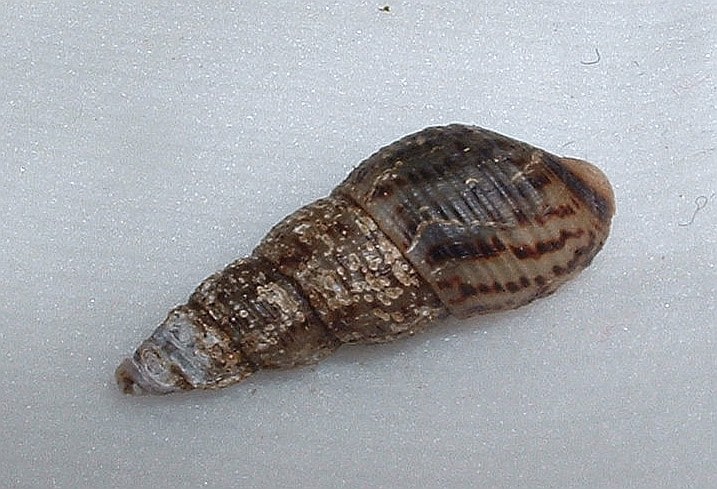
Malaysian Trumpet Snail
Melanoides tuberculata
Also known as: mts, trumpet snail, red-rim melania
A working substrate snail, not a pest. Population scales with overfeeding. The fix for too many MTS is less food, not more chemicals.
Malaysian Trumpet Snail tank mates · 30L tank size hub
peaceful · beginner care
Sources & confidencemedium · partially verified · beginner: excellent
Typical care sources — real tanks still vary. Numbers here are a careful starting point. Your tap water, tank size, and habits decide the rest. How we evaluate.
Best for: Any planted tank wanting passive substrate aeration. Particularly useful in sand-bottom setups where they prevent anaerobic compaction.
Avoid if: You dislike snails. There is no reliable way to keep one or two; they breed to food supply and are very difficult to eliminate without chemicals.
Common mistakeTrying to wipe out Malaysian trumpet snails with assassin snails while still overfeeding is how keepers invent a bounce-back boom within weeks. The population tracks leftover food in the sand. Fix feeding first — assassins alone do not solve a food surplus in a messy tank.
Top things that go wrong
- Shrimp & snails. Compatible with shrimp and most other snails except assassins. Often introduced accidentally with plants from another tank.
What most shops don't tell you
- 1.Myth: Malaysian trumpet snails can be permanently eliminated with assassin snails while you keep overfeeding the display tank. Reality: populations rebound hard with leftover food — control feeding first, or accept a working cleanup colony that tracks how much you dump into the sand.
- 2.Adding assassin snails to 'control' the MTS. Assassins eat the small ones and the population stabilises around the larger snails the assassins cannot crack, with no real reduction.
- 3.Overfeeding then panicking at the snail count. Cutting the feed by a third over a fortnight halves the visible MTS without removing a single snail.
- 4.Beneficial in a planted substrate. The population self-regulates against food supply, so a tank with disciplined feeding holds 30 MTS comfortably and a tank that overfeeds builds 300. Reduce numbers by reducing feed, not by chasing snails with tweezers.
About this species
Malaysian trumpet snails are small cone-shelled livebearing snails that burrow in the substrate during the day and surface at night. They aerate sand and gravel, clean up uneaten food, and breed live young so the population builds quietly until the keeper notices it.
- Blue Dream Shrimp20L min · same group, comparable tank size
- Cherry Shrimp20L min · same group, comparable tank size
- Nerite Snail20L min · same group, comparable tank size
- Amano Shrimp40L min · same group, similar adult size
- Ghost Shrimp40L min · same group, similar adult size
- Mystery Snail40L min · same group, similar adult size
- Bamboo Shrimp80L min · same fish family
- Amano Shrimpalso beginner peaceful, similar tank size
- Beckford Pencilfishalso beginner peaceful, similar tank size
- Black Neon Tetraalso beginner peaceful, similar tank size
- Bloodfin tetraalso beginner peaceful, similar tank size
- Blue Dream Shrimpalso beginner peaceful, similar tank size
- Cherry Barbalso beginner peaceful, similar tank size
No reverse lookups listed yet.
Plan grid
Key limits are above. Here: pH band, swim level, bioload, and activity.
Swim zones
Care snapshot
Quick compare before you buy. Not a score of how “good” the fish is.
- Beginner ease82
- Peacefulness90
- Community fit72
- Small-tank fit100
- Hardiness76
- Energy24
Numbers are deterministic planning indices from Fishori fields — not a scientific score of your individual fish.
Example setups
Starting points only. Run the pair checker for every fish you add.
Rough 90L+ layout: one calm centrepiece, 8–12 small tetras/rasboras, 6–8 corydoras-type bottom fish — verify every name in the pair checker before buying.
Safer directions include: Corydoras Catfish, Harlequin Rasbora.
Compatibility
Tank mates for Malaysian Trumpet Snail
Usually safer (engine GOOD): Corydoras Catfish, Harlequin Rasbora. Conditional (CAUTION — read the pair page before buying): Amano Shrimp, Cherry Shrimp, Neon Tetra. Avoid (RISKY): Assassin Snail, Clown Loach, Pea Puffer, Yoyo Loach. Every name links to a live pair check — the lists are a shortlist, not a stocking plan.
Usually safer
Open a pair page with this fish as the starting point.
Needs planning
Read the blocking rule on each pair page before experimenting.
Usually avoid
Do-not-stock combinations on conservative hobby rules.
Compare with
Run a real pair check: Malaysian Trumpet Snail + Corydoras Catfish
Behaviour and temperament
Malaysian trumpet snails are peaceful scavengers and spend much of the day buried in the substrate. They do not harass fish or shrimp. Stress for the keeper is a population boom from overfeeding, not snail aggression toward tank mates in the community.
What sets them off
- Sudden crowding
- Poor water quality
Fin nipping: Not a habitual fin-nipper; stressed or crowded individuals can still test fins.
Predation: Not a predator toward similarly sized community fish; fry and dwarf shrimp are still fair game for most species.
Territory: Not strongly territorial, but still needs room so its working space does not overlap the next fish.
Planted tanks: excellent — easy plant ideas
In the glass: typical and warning signs
- Snails bury in sand by day and emerge to graze leftovers after lights soften.
- Steady low numbers in a lean-fed tank are normal ownership.
- Explosive population growth almost always means overfeeding first.
- Mass die-offs after chemical 'treatments' crash water quality — avoid them.
- No malice toward fish or shrimp.
- Assassin snails prey on them but will not fix a food surplus alone.
- Cut feeding before adding predators to 'solve' a boom.
- Siphon and reduce leftovers the same week numbers spike.
Fish behaviour can vary between individuals and tank setups. Always observe new fish closely after introduction.
Water, food, and grouping
Hardness
medium-hard
Diet
omnivore
Malaysian trumpet snails are omnivore scavengers that process leftover food and detritus in the substrate of planted tanks. They do not replace filtration or excuse chronic overfeeding by the keeper. If you want a controlled population, feed the fish less and offer wafers only when the colony looks thin — algae alone is not a population plan.
Shrimp & snails
Compatible with shrimp and most other snails except assassins. Often introduced accidentally with plants from another tank.
A starting cluster of five seeds the colony. The population then sets itself based on food supply.
- Sand or fine gravel substrate for burrowing. Coarse pebbles trap them on the surface and limit the benefit.
- Acceptance that the population builds with feeding and shrinks when feeding is disciplined.
- No assassin snails, yoyo loaches, or clown loaches in the same tank if you want the colony to stay healthy.
- Tank volume meets or exceeds 20L published minimum for adults.
- Heater can hold 18–30°C without cooking cooler-water tank mates.
Explore and stocking hubs
Tank-mates hub, matching guides, category peers, and litre stocking lists around this species’ minimum tank.
Plan with tools
Check mates as pairs first, then add this fish in the tank builder for the full stocking.
Filtration & heating
A 20L minimum tank needs a filter rated for at least 80L/hr turnover and a heater to hold 18–30°C reliably.
Plant suggestions
Malaysian Trumpet Snail does well in planted tanks. Plants compatible with 18–30°C and pH 7–8.5:
Research: partially verified · Confidence: medium · 2 linked source(s). We do not invent citations.
How Fishori evaluates compatibility (same logic as pair and tank tools).
- Seriously Fish. Melanoides tuberculata
Primary: species page covering range, livebearing reproduction, and substrate aeration behaviour.
- Aquarium Co-Op. Trumpet Snails in Planted Tanks
Secondary: retailer write-up on the population-vs-feeding cycle and benefits in planted substrates.
Evidence notes
- MTS are livebearers, not egg-layers, so there are no visible egg clutches to scrape off and no easy way to slow reproduction except by reducing feed.
- A population that explodes is a feeding signal, not a snail problem. Keepers who treat the snails first and feeding second see the population rebuild within weeks.
Featured compatibility checks
Curated pair pages for Malaysian Trumpet Snail. Each opens a full verdict — not just a list label.
Common questions about Malaysian Trumpet Snail
- How big do Malaysian Trumpet Snail get?
- Malaysian Trumpet Snail adults reach about 2.5 cm. Shop fish look smaller; stock for the adult length.
- What size tank does Malaysian Trumpet Snail need?
- 20L is the planning floor for adult swimming space and bioload. Length and depth matter as much as raw litres for active or territorial fish.
- Are Malaysian Trumpet Snail aggressive?
- Malaysian trumpet snails are peaceful scavengers and spend much of the day buried in the substrate. They do not harass fish or shrimp. Stress for the keeper is a population boom from overfeeding, not snail aggression toward tank mates in the community.
- What is the most common mistake with Malaysian Trumpet Snail?
- Trying to wipe out Malaysian trumpet snails with assassin snails while still overfeeding is how keepers invent a bounce-back boom within weeks. The population tracks leftover food in the sand. Fix feeding first — assassins alone do not solve a food surplus in a messy tank.
- What fish can live with Malaysian Trumpet Snail?
- The Malaysian Trumpet Snail profile lists Corydoras Catfish, Harlequin Rasbora among its safer pairings (engine-checked GOOD). Amano Shrimp, Cherry Shrimp, Neon Tetra are conditional (CAUTION): workable only with the specific conditions on each pair page. Avoid Assassin Snail, Clown Loach, Pea Puffer, Yoyo Loach (RISKY). Run the pair checker for your exact water and tank size before stocking.