Should I buy it?
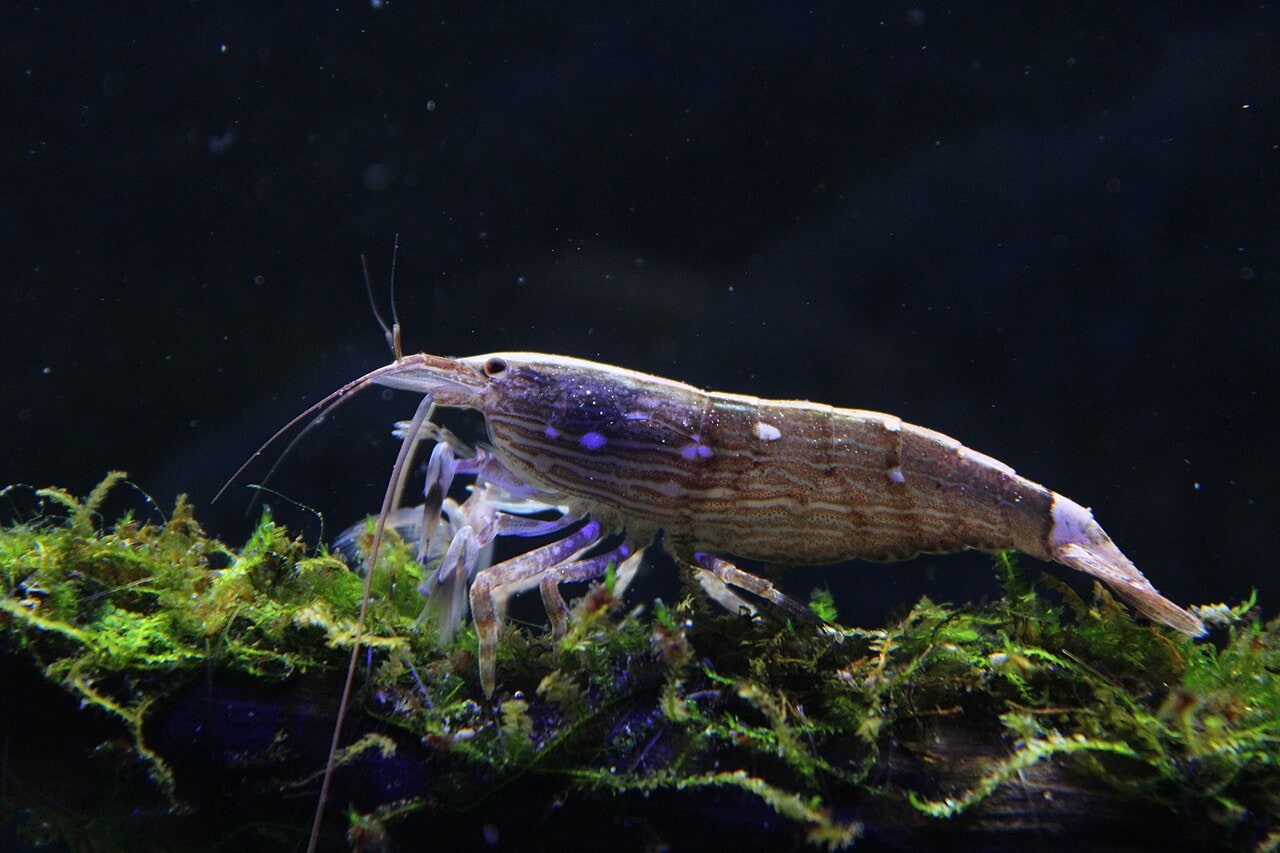
Bamboo Shrimp
Atyopsis moluccensis
Also known as: wood shrimp, fan shrimp, asian fan shrimp, singapore flower shrimp
A spectacular filter-feeding shrimp for a mature planted tank with real flow. Starves quietly in low-flow tanks. Not a beginner shrimp despite the peaceful tag.
Bamboo Shrimp tank mates · 80L tank size hub
peaceful · intermediate care
Sources & confidencemedium · partially verified · beginner: caution
Typical care sources — real tanks still vary. Numbers here are a careful starting point. Your tap water, tank size, and habits decide the rest. How we evaluate.
Best for: Mature planted tanks 80L or more with areas of detectable current that allow filter feeding.
Avoid if: Your tank is under six months old, lacks consistent algae and biofilm, or has no medium-flow zone.
Common mistakeParking bamboo shrimp in a still or low-flow tank is how keepers invent slow starvation that looks like laziness. They need current across the fans. Add flow, feed into that current, and confirm the fans open at feeding time — décor alone does not feed them.
Top things that go wrong
- Shrimp & snails. Compatible with other shrimp and snails. Will not threaten anything; the question is whether the tank feeds them at all.
What most shops don't tell you
- 1.Myth: bamboo shrimp are easy decorative cleanup shrimp for any still planted nano. Reality: they are filter feeders that need moving water and deliberate feeding into the current — without flow they starve while looking ornamental Plan the husbandry before the shop impulse buy.
- 2.Adult bamboo shrimp moult dramatically and look dead for hours afterwards. The pale empty shell on the substrate is the shed, not the shrimp.
- 3.Bought for a low-flow planted nano with no powerhead. The shrimp climbs the highest point looking for current that is not there, then starves in three to four months.
- 4.Fed pellets that fall to the substrate. Bamboos feed from the water column. Food on the floor goes to fish and snails, not the shrimp.
- 5.Not a beginner shrimp despite the peaceful tag. Bamboos starve in clean low-flow tanks because there is nothing in the water column for them to filter. They need real flow over a perch, finely powdered food, and a mature tank with biofilm in the water. A bare 40L with a sponge filter kills them in months.
About this species
Bamboo shrimp are the largest dwarf shrimp in the hobby, reaching 9 cm. They are filter feeders. The two front legs unfold into feather fans and the shrimp sits on a high perch in the current, combing particulate food out of the flow. A bamboo shrimp picking at the substrate is starving.
- Amano Shrimp40L min · same fish family
- Ghost Shrimp40L min · same fish family
- Mystery Snail40L min · same fish family
- Assassin Snail30L min · same fish family
- Blue Dream Shrimp20L min · same fish family
- Cherry Shrimp20L min · same fish family
- Malaysian Trumpet Snail20L min · same fish family
- Nerite Snail20L min · same fish family
- Adolfoi coryalso intermediate peaceful, similar tank size
- Black ruby barbalso intermediate peaceful, similar tank size
- Bolivian Ramalso intermediate peaceful, similar tank size
- Brown / hockey-stick pencilfishalso intermediate peaceful, similar tank size
- Cardinal Tetraalso intermediate peaceful, similar tank size
- Celebes Rainbowfishalso intermediate peaceful, similar tank size
No reverse lookups listed yet.
Plan grid
Key limits are above. Here: pH band, swim level, bioload, and activity.
Swim zones
Care snapshot
Quick compare before you buy. Not a score of how “good” the fish is.
- Beginner ease38
- Peacefulness90
- Community fit79
- Small-tank fit60
- Hardiness54
- Energy24
Numbers are deterministic planning indices from Fishori fields — not a scientific score of your individual fish.
Example setups
Starting points only. Run the pair checker for every fish you add.
Rough 90L+ layout: one calm centrepiece, 8–12 small tetras/rasboras, 6–8 corydoras-type bottom fish — verify every name in the pair checker before buying.
Safer directions include: Cherry Barb, Corydoras Catfish, Harlequin Rasbora.
Compatibility
Tank mates for Bamboo Shrimp
Usually safer (engine GOOD): Cherry Barb, Corydoras Catfish, Harlequin Rasbora, Neon Tetra. Conditional (CAUTION — read the pair page before buying): Clown Loach, Dwarf Gourami, Otocinclus. Avoid (RISKY): Jack Dempsey, Oscar, Pea Puffer. Every name links to a live pair check — the lists are a shortlist, not a stocking plan.
Usually safer
Open a pair page with this fish as the starting point.
Needs planning
Read the blocking rule on each pair page before experimenting.
Usually avoid
Do-not-stock combinations on conservative hobby rules.
Compare with
Run a real pair check: Bamboo Shrimp + Cherry Barb
Behaviour and temperament
Bamboo shrimp are peaceful toward fish and other shrimp when left alone. They do not defend territory. Stress shows as permanently closed fans and weight loss when flow and food never arrive, not as aggression toward tank mates Plan the husbandry before the shop impulse buy.
What sets them off
- Sudden crowding
- Poor water quality
Fin nipping: Not a habitual fin-nipper; stressed or crowded individuals can still test fins.
Predation: Not a predator toward similarly sized community fish; fry and dwarf shrimp are still fair game for most species.
Territory: Not strongly territorial, but still needs room so its working space does not overlap the next fish.
Planted tanks: good — easy plant ideas
In the glass: typical and warning signs
- Fans open into current on wood or rock while the shrimp holds station.
- Dramatic moults leave a pale empty shell — that shed is not a dead shrimp.
- Closed fans for days in still water usually mean flow and feeding failed.
- Sudden losses after copper meds mean chemistry compatibility failed.
- None toward fish; they are targets for puffers and large predators instead.
- They do not hunt cherry shrimp the way some ghost shrimp do.
- Increase flow and target-feed before rehoming a 'failing' bamboo shrimp.
- Remove predators that treat large shrimp as food.
Fish behaviour can vary between individuals and tank setups. Always observe new fish closely after introduction.
Water, food, and grouping
Hardness
medium
Diet
omnivore
Bamboo shrimp are filter feeders that spread fan arms in moving water to catch fine particles. Without flow and supplemental powders or crushed foods in the current, they starve quietly for weeks. Feed where the fans can intercept food, keep an 80L+ mature system, and never treat still water as a shrimp spa.
Shrimp & snails
Compatible with other shrimp and snails. Will not threaten anything; the question is whether the tank feeds them at all.
One or two in an 80L. Bamboos do not need company and competition for filter-feeding perches wastes food.
- Real flow. A powerhead or canister return rated for at least 6 to 8 turnovers an hour aimed across a perch.
- Powdered or suspension food (golden pearls, dust feeds, baby brine shrimp). Pellets and flakes alone are not enough.
- A mature tank running at least three months with steady biofilm. A new tank with sterile water starves a filter feeder fast.
- Hides at the substrate level for moulting weeks when the shrimp stays out of the open.
- Tank volume meets or exceeds 80L published minimum for adults.
- Heater can hold 22–28°C without cooking cooler-water tank mates.
Explore and stocking hubs
Tank-mates hub, matching guides, category peers, and litre stocking lists around this species’ minimum tank.
Plan with tools
Check mates as pairs first, then add this fish in the tank builder for the full stocking.
Filtration & heating
A 80L minimum tank needs a filter rated for at least 320L/hr turnover and a heater to hold 22–28°C reliably.
Plant suggestions
Bamboo Shrimp does well in planted tanks. Plants compatible with 22–28°C and pH 6.5–7.5:
Research: partially verified · Confidence: medium · 2 linked source(s). We do not invent citations.
How Fishori evaluates compatibility (same logic as pair and tank tools).
- Seriously Fish. Atyopsis moluccensis
Primary: species page covering Southeast Asian range, filter-feeding biology, and the planktonic larval stage that blocks freshwater breeding.
- Practical Fishkeeping. Bamboo Shrimp Care
Secondary: editor write-up on tank size, flow, feeding strategies, and the moulting cycle.
Evidence notes
- Bamboo shrimp will not breed in freshwater. Larvae need brackish water for the planktonic stage, then return to freshwater as juveniles. Aquarium specimens are wild-caught.
- Filter feeding works in the right tank. A bamboo shrimp parked in the outflow of a canister filter in a planted 100L lives for years; the same shrimp in a low-flow nano starves within months even with target feeding.
Featured compatibility checks
Curated pair pages for Bamboo Shrimp. Each opens a full verdict — not just a list label.
Common questions about Bamboo Shrimp
- How big do Bamboo Shrimp get?
- Bamboo Shrimp adults reach about 9 cm. Shop fish look smaller; stock for the adult length.
- What size tank does Bamboo Shrimp need?
- 80L is the planning floor for adult swimming space and bioload. A 100L+ tank is the more comfortable long-term footprint. Length and depth matter as much as raw litres for active or territorial fish.
- Are Bamboo Shrimp aggressive?
- Bamboo shrimp are peaceful toward fish and other shrimp when left alone. They do not defend territory. Stress shows as permanently closed fans and weight loss when flow and food never arrive, not as aggression toward tank mates Plan the husbandry before the shop impulse buy.
- What is the most common mistake with Bamboo Shrimp?
- Parking bamboo shrimp in a still or low-flow tank is how keepers invent slow starvation that looks like laziness. They need current across the fans. Add flow, feed into that current, and confirm the fans open at feeding time — décor alone does not feed them.
- What fish can live with Bamboo Shrimp?
- The Bamboo Shrimp profile lists Cherry Barb, Corydoras Catfish, Harlequin Rasbora, Neon Tetra among its safer pairings (engine-checked GOOD). Clown Loach, Dwarf Gourami, Otocinclus are conditional (CAUTION): workable only with the specific conditions on each pair page. Avoid Jack Dempsey, Oscar, Pea Puffer (RISKY). Run the pair checker for your exact water and tank size before stocking.