Should I buy it?
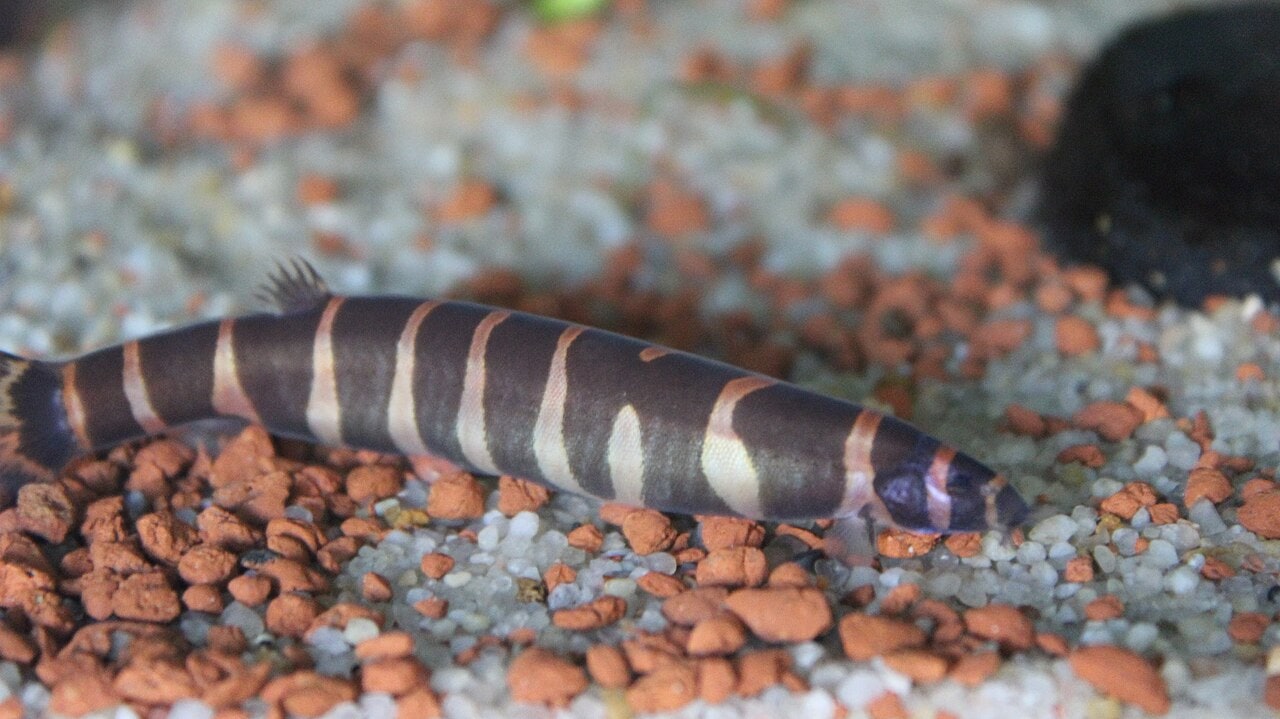
Kuhli Loach
Pangio kuhlii
Also known as: kuhli, coolie / leopard types
Eel-like nocturnal bottom fish that hides through daylight. Hardy in sand-bottomed planted tanks once a group of five trusts the layout, but you may not see them for weeks at a stretch.
Kuhli Loach tank mates · 80L tank size hub
peaceful · beginner care
Sources & confidencemedium · partially verified · beginner: good
Typical care sources — real tanks still vary. Numbers here are a careful starting point. Your tap water, tank size, and habits decide the rest. How we evaluate.
Best for: Mature planted tanks 80L or more with sand substrate, cave structure, and patient owners.
Avoid if: You wanted a visible focal fish; you have sharp gravel; or you can't keep at least 5 together.
Common mistakeBuying one or two kuhlis and expecting daytime displays is how keepers invent invisible expensive fish. A solo kuhli hides permanently; a group of five or more starts using open sand within weeks. Soft substrate and real caves matter as much as the headcount on the bag.
Top things that go wrong
- Shrimp & snails. Cherry shrimp and other dwarfs can coexist with peaceful small fish; baby shrimp are food for almost anything that finds them.
What most shops don't tell you
- 1.Myth: one or two kuhli loaches will entertain a community all day as cleanup crew. Reality: they are shy nocturnal schoolers that need a real group and soft sand — a token pair stays buried and never becomes the show fish people bought.
- 2.Buying one or two as accents. Kuhlis only emerge in groups of four or more, and a singleton hides for years.
- 3.Coarse gravel substrate. They burrow constantly, and sharp grit shreds the body before it shows on the outside.
- 4.Keep in groups of at least 4. They are shy and nocturnal. Provide hiding places. Use sand substrate as they enjoy burrowing. They will eat sinking pellets.
About this species
Kuhli loaches are eel-like, nocturnal bottom dwellers with yellow and brown banding. They burrow into substrate and hide in caves by day.
- Hillstream Loach100L min · same group, similar adult size
- Zebra Loach120L min · same group, similar adult size
- Dojo / weather loach150L min · same fish family
- Yoyo Loach200L min · same fish family
- Clown Loach400L min · same fish family
- Amano Shrimpalso beginner peaceful, similar tank size
- Assassin Snailalso beginner peaceful, similar tank size
- Beckford Pencilfishalso beginner peaceful, similar tank size
- Black Neon Tetraalso beginner peaceful, similar tank size
- Black phantom tetraalso beginner peaceful, similar tank size
- Bloodfin tetraalso beginner peaceful, similar tank size
No reverse lookups listed yet.
Plan grid
Key limits are above. Here: pH band, swim level, bioload, and activity.
Swim zones
Care snapshot
Quick compare before you buy. Not a score of how “good” the fish is.
- Beginner ease78
- Peacefulness90
- Community fit72
- Small-tank fit64
- Hardiness76
- Energy24
Numbers are deterministic planning indices from Fishori fields — not a scientific score of your individual fish.
Example setups
Starting points only. Run the pair checker for every fish you add.
Match temperature and pH overlap with every tank mate, then verify adult size and group rules on pair pages — Fishori is biased toward boring, survivable plans.
Compatibility
Tank mates for Kuhli Loach
Usually safer (engine GOOD): Harlequin Rasbora. Conditional (CAUTION — read the pair page before buying): Guppy, Neon Tetra, Tiger Barb. Avoid (RISKY): Jack Dempsey, Oscar. Every name links to a live pair check — the lists are a shortlist, not a stocking plan.
Usually safer
Open a pair page with this fish as the starting point.
Needs planning
Read the blocking rule on each pair page before experimenting.
Usually avoid
Do-not-stock combinations on conservative hobby rules.
Compare with
Run a real pair check: Kuhli Loach + Harlequin Rasbora
Behaviour and temperament
Kuhli loaches are strictly peaceful and shy. They emerge at dusk and after dark, and they stay hidden through the day in bright, bare tanks. A proper group on soft sand settles into a foraging rhythm that a lone fish rarely shows. They do not police midwater neighbours.
What sets them off
- Sudden crowding
- Poor water quality
Fin nipping: Not a habitual fin-nipper; stressed or crowded individuals can still test fins.
Predation: Not a predator toward similarly sized community fish; fry and dwarf shrimp are still fair game for most species.
Territory: Not strongly territorial, but still needs room so its working space does not overlap the next fish.
Planted tanks: excellent — easy plant ideas
In the glass: typical and warning signs
- A group of five or more works soft sand after lights soften and after feeding.
- Daytime hiding under caves and leaf litter is normal ownership, not illness.
- A lone kuhli that never appears usually needs more of its own kind and softer substrate.
- Torn barbels on sharp gravel mean substrate failure before a mystery infection.
- None toward tank mates; they lose contests rather than start them.
- In-group writhing piles at food are competition, not fighting.
- Increase group size before adding another bottom species to ‘draw them out.’
- Move them off gravel onto sand if barbels look damaged after a few months.
Fish behaviour can vary between individuals and tank setups. Always observe new fish closely after introduction.
Water, food, and grouping
Hardness
soft
Diet
omnivore
Kuhli loaches are nocturnal bottom omnivores that miss midwater flake entirely. Sinking wafers, frozen bloodworm, and leftover pellets that actually reach the sand matter. Feed after lights soften so the group emerges, and keep a colony so competition at one wafer does not leave shy fish empty.
Shrimp & snails
Cherry shrimp and other dwarfs can coexist with peaceful small fish; baby shrimp are food for almost anything that finds them.
Five is the working minimum; six or more transforms confidence — singles hide permanently.
- Hold 24 to 30 °C steadily on a real thermometer, not the dial on the heater.
- Aim for pH 5.5 to 7 and a hardness you can re-test in two weeks. A one-time strip in the shop car park is not a water test.
- Schooling species. Buy 4 or more from the same tank on the same day before adding any centrepiece fish.
- Tank volume meets or exceeds 70L published minimum for adults.
- You can stock at least 5 individuals (group welfare).
- Heater can hold 24–30°C without cooking cooler-water tank mates.
Explore and stocking hubs
Tank-mates hub, matching guides, category peers, and litre stocking lists around this species’ minimum tank.
Plan with tools
Check mates as pairs first, then add this fish in the tank builder for the full stocking.
Filtration & heating
A 70L minimum tank needs a filter rated for at least 280L/hr turnover and a heater to hold 24–30°C reliably.
Plant suggestions
Kuhli Loach does well in planted tanks. Plants compatible with 24–30°C and pH 5.5–7:
Research: partially verified · Confidence: medium · 2 linked source(s). We do not invent citations.
How Fishori evaluates compatibility (same logic as pair and tank tools).
- Loaches Online. Pangio kuhlii (coolie / kuhli loach)
Primary: loach-specific care and behaviour notes, including grouping; legacy spelling/URLs vary (kuhli vs kuhlii) because taxonomy in older texts is inconsistent.
- FishBase. Pangio kuhlii
Secondary: taxonomy, distribution, and maximum length in nature; cross-check with aquarium import lines and measured tank parameters.
Evidence notes
- No stable Seriously Fish species page was found at the time of curation; Loaches Online is the primary stand-in, with FishBase for taxonomic and length context. Pangio kuhli vs P. kuhlii name churn makes URL discovery awkward.
- FishBase contributes natural-range size and habitat context. Translate those numbers through your heater, your water report, and your tank footprint before stocking.
- All compatibility text reflects typical hobby experience and the Fishori model. Individual fish, shop stress, and the order tank mates are added in can still defy a single-paragraph label.
Featured compatibility checks
Curated pair pages for Kuhli Loach. Each opens a full verdict — not just a list label.
Common questions about Kuhli Loach
- How big do Kuhli Loach get?
- 8 to 10 cm, slim. Low bioload in groups of six or more.
- What size tank does Kuhli Loach need?
- 80L or more is realistic. Smaller works with dense hides, but they want sand to burrow into.
- Are Kuhli Loach aggressive?
- Kuhli loaches are strictly peaceful and shy. They emerge at dusk and after dark, and they stay hidden through the day in bright, bare tanks. A proper group on soft sand settles into a foraging rhythm that a lone fish rarely shows. They do not police midwater neighbours.
- Do Kuhli Loach need to be kept in a group?
- Five is the working minimum; six or more transforms confidence — singles hide permanently.
- What is the most common mistake with Kuhli Loach?
- Buying one or two kuhlis and expecting daytime displays is how keepers invent invisible expensive fish. A solo kuhli hides permanently; a group of five or more starts using open sand within weeks. Soft substrate and real caves matter as much as the headcount on the bag.
- What fish can live with Kuhli Loach?
- The Kuhli Loach profile lists Harlequin Rasbora among its safer pairings (engine-checked GOOD). Guppy, Neon Tetra, Tiger Barb are conditional (CAUTION): workable only with the specific conditions on each pair page. Avoid Jack Dempsey, Oscar (RISKY). Run the pair checker for your exact water and tank size before stocking.