Should I buy it?
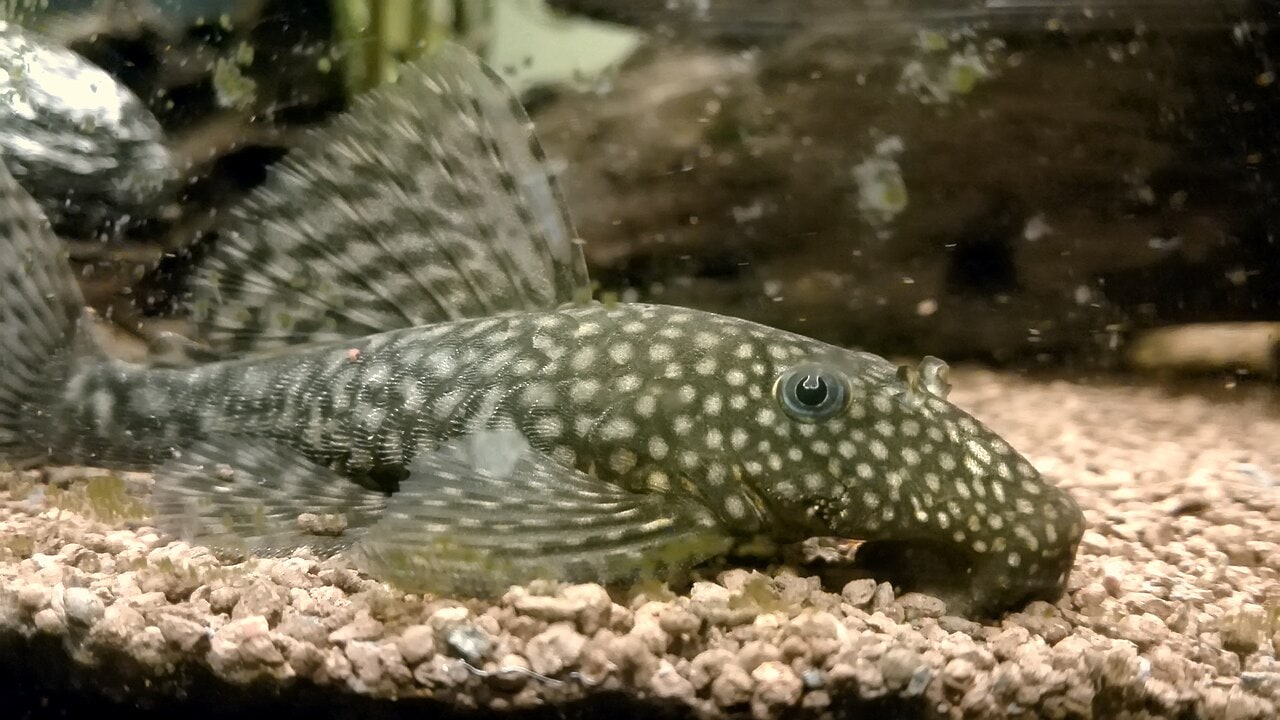
Bristlenose Pleco
Ancistrus sp.
Also known as: bristlenose, bushynose pleco, ancistrus, Ancistrus (bushy nose types)
The pleco you should buy. Stays under 12 cm, grazes algae honestly, and fits a planted 80L+ community tank.
Bristlenose Pleco tank mates · 80L tank size hub
peaceful · beginner care
Sources & confidencemedium · partially verified · beginner: good
Typical care sources — trade names for this fish get mixed up, so verify the ID before you buy. Numbers here are a careful starting point. Your tap water, tank size, and habits decide the rest. How we evaluate.
Best for: Almost any community tank 80L+ wanting algae control and a calm bottom-dweller.
Avoid if: You need actual algae elimination (snails or otocinclus do that job too), or you cannot supply driftwood for them to rasp.
Common mistakeSkipping driftwood is the mistake that defines poor bristlenose ownership. Without wood to rasp, fish lose condition and face higher bloat risk even if wafers are offered. Add real wood before you add the fish, and keep a cave the male can claim. Algae alone will not carry them.
Top things that go wrong
- Shrimp & snails. Cherry shrimp and other dwarfs can coexist with peaceful small fish; baby shrimp are food for almost anything that finds them.
Common trade-name warning
This fish is often sold under different names or species variants. Care guidance is based on typical aquarium examples rather than a single exact species. Bristlenose imports are often unnamed Ancistrus lines; L-number and colour forms vary, so treat size and behaviour as a range, not a single taxon.
What most shops don't tell you
- 1.Bristlenoses are sold as the small pleco that will keep the aquarium tidy. They help with some algae, but they are wood-rasping herbivores first, and common plecos are a different animal entirely. Do not buy them as a substitute for water changes or as a guarantee of clean glass. Buy them as a calm bottom fish that needs wood and wafers.
- 2.Algae growth alone in a new tank. A small bristlenose starves in weeks without daily wafers.
- 3.Keeping one to fix a big-pleco waste problem. Water changes and stocking discipline fix waste, not another fish.
- 4.The right pleco for community tanks. Stays under 15 cm. Provide driftwood for fibre. One male per tank, or one male with several females, to keep cave fights down.
About this species
Bristlenose plecos stay under 15 cm and graze algae and biofilm honestly. Adult males grow bristles on the snout. Females stay smooth-faced.
- Otocinclus60L min · same fish family
- Siamese Algae Eater100L min · same group, similar adult size
- Clown Pleco110L min · same fish family
- Royal pleco500L min · same fish family
- Amano Shrimpalso beginner peaceful, similar tank size
- Beckford Pencilfishalso beginner peaceful, similar tank size
- Black Neon Tetraalso beginner peaceful, similar tank size
- Black phantom tetraalso beginner peaceful, similar tank size
- Bloodfin tetraalso beginner peaceful, similar tank size
- Bronze corydorasalso beginner peaceful, similar tank size
- American Flagfish tank matesnames this fish as a conditional pairing — read the pair page conditions
- Celebes Rainbowfish tank matesnames this fish as a conditional pairing — read the pair page conditions
- Columbian Tetra tank matesnames this fish as a conditional pairing — read the pair page conditions
- Denison's / red-line torpedo barb tank mateslists this fish as a safe and recommended mate
- Electric Blue Acara tank matesnames this fish as a conditional pairing — read the pair page conditions
- Golden Wonder Killifish tank matesnames this fish as a conditional pairing — read the pair page conditions
- Kribensis tank matesnames this fish as a conditional pairing — read the pair page conditions
- Pea Puffer tank matesnames this fish as a conditional pairing — read the pair page conditions
Plan grid
Key limits are above. Here: pH band, swim level, bioload, and activity.
Swim zones
Care snapshot
Quick compare before you buy. Not a score of how “good” the fish is.
- Beginner ease78
- Peacefulness82
- Community fit59
- Small-tank fit60
- Hardiness76
- Energy24
Numbers are deterministic planning indices from Fishori fields — not a scientific score of your individual fish.
Example setups
Starting points only. Run the pair checker for every fish you add.
Avoid “one of everything” baskets — Bristlenose Pleco belongs in a plan built around territory, line-of-sight breaks, and matched water chemistry.
Compatibility
Tank mates for Bristlenose Pleco
No unconditional “safe” tank mates are listed for Bristlenose Pleco — this shortlist has CAUTION pairings that need specific conditions and RISKY pairings to avoid. Conditional (CAUTION — read the pair page before buying): Common Pleco. Avoid (RISKY): Jack Dempsey, Oscar. Every name links to a live pair check — the lists are a shortlist, not a stocking plan.
Usually safer
Open a pair page with this fish as the starting point.
None listed. Use the pair checker before mixing.
Needs planning
Read the blocking rule on each pair page before experimenting.
Usually avoid
Do-not-stock combinations on conservative hobby rules.
No safe-mate list on this record yet. Use the fish index to find species with similar care, then run a pair check before you buy.
Behaviour and temperament
Bristlenose plecos are peaceful with other species and spend most of the day on wood and glass. Males fight other males over caves and driftwood, so one male per tank — or clear separate territories — is the practical rule. They are not a full algae-elimination service; they rasp wood and graze, then need prepared foods. Night activity is normal; daytime hiding is not laziness.
What sets them off
- Sudden crowding
- Poor water quality
Fin nipping: Not a habitual fin-nipper; stressed or crowded individuals can still test fins.
Predation: Not a predator toward similarly sized community fish; fry and dwarf shrimp are still fair game for most species.
Territory: Holds a patch (cave, corner, or surface). Break sight lines so neighbours can pass.
Planted tanks: good — easy plant ideas
In the glass: typical and warning signs
- Wood-grazer that owns a cave by day and works surfaces at night.
- Males bristle up and hold a territory; females are quieter.
- Sunken belly and no biofilm left — starving in a spotless tank.
- Torn fins after male-male fights in a small tank.
- Males spar over caves; one cave for two males is a fight.
- Two males shredding each other → second cave or remove one.
- Not a community bully; if fish are damaged, look elsewhere first.
Fish behaviour can vary between individuals and tank setups. Always observe new fish closely after introduction.
Water, food, and grouping
Hardness
soft
Diet
herbivore
Bristlenoses need sinking wafers and vegetable matter even when the glass looks green. Driftwood rasping is part of digestion, not optional décor. Offer wafers after lights-out and confirm the fish is eating, because midwater leftovers will not feed a bottom grazer. Protein-only diets invite digestive trouble in these loricariids.
Shrimp & snails
Cherry shrimp and other dwarfs can coexist with peaceful small fish; baby shrimp are food for almost anything that finds them.
Bristlenose Pleco is fine singly or as a researched pair — check behaviour before doubling up.
- Hold 20 to 27 °C steadily on a real thermometer, not the dial on the heater.
- Aim for pH 6.5 to 7.5 and a hardness you can re-test in two weeks. A one-time strip in the shop car park is not a water test.
- Footprint: short wide tanks and tall narrow tanks fish differently for the same volume. Match the tank shape to the swim pattern, not just the litre count.
- Tank volume meets or exceeds 80L published minimum for adults.
- Heater can hold 20–27°C without cooking cooler-water tank mates.
Explore and stocking hubs
Tank-mates hub, matching guides, category peers, and litre stocking lists around this species’ minimum tank.
Plan with tools
Check mates as pairs first, then add this fish in the tank builder for the full stocking.
Filtration & heating
A 80L minimum tank needs a filter rated for at least 320L/hr turnover and a heater to hold 20–27°C reliably.
Plant suggestions
Bristlenose Pleco does well in planted tanks. Plants compatible with 20–27°C and pH 6.5–7.5:
Research: partially verified · Confidence: medium · 2 linked source(s). We do not invent citations.
How Fishori evaluates compatibility (same logic as pair and tank tools).
- Planet Catfish. Genus Ancistrus (bristlenose and relatives)
Supports: catfish care at genus/species level where a single binomial is unreliable.
- FishBase. Ancistrus cirrhosus (representative bristlenose)
Supports: taxonomy and wild maximum size — translate to tank stocking, not a target number.
Evidence notes
- Bristlenose is usually sold as Ancistrus sp. (mixed lines); Planet Catfish is used at genus level, with FishBase as a representative named species for wild-size context only.
- Care numbers are cross-checked across the linked sources and biased toward the conservative end; compatibility reflects typical hobby experience, not a lab prediction. Method and full source policy: /methodology.
Featured compatibility checks
Curated pair pages for Bristlenose Pleco. Each opens a full verdict — not just a list label.
Common questions about Bristlenose Pleco
- How big do Bristlenose Pleco get?
- Around 12–15 cm. Manageable for life in a typical community tank, unlike common plecos that hit 45 cm.
- What size tank does Bristlenose Pleco need?
- 80L+ is realistic. Bristlenose adults still print noticeable waste. Small tanks fail when stocking is squeezed in too tight.
- Are Bristlenose Pleco aggressive?
- Bristlenose plecos are peaceful with other species and spend most of the day on wood and glass. Males fight other males over caves and driftwood, so one male per tank — or clear separate territories — is the practical rule. They are not a full algae-elimination service; they rasp wood and graze, then need prepared foods. Night activity is normal; daytime hiding is not laziness.
- What is the most common mistake with Bristlenose Pleco?
- Skipping driftwood is the mistake that defines poor bristlenose ownership. Without wood to rasp, fish lose condition and face higher bloat risk even if wafers are offered. Add real wood before you add the fish, and keep a cave the male can claim. Algae alone will not carry them.
- What fish can live with Bristlenose Pleco?
- This profile currently has no curated unconditional safe-mates shortlist for Bristlenose Pleco. Other species may still return GOOD in the pair checker, so check the exact pair rather than treating this shortlist as exhaustive. Common Pleco is conditional (CAUTION): workable only with the specific conditions on its pair page. Avoid Jack Dempsey, Oscar (RISKY). Run the pair checker for your exact water and tank size before stocking.