Should I buy it?
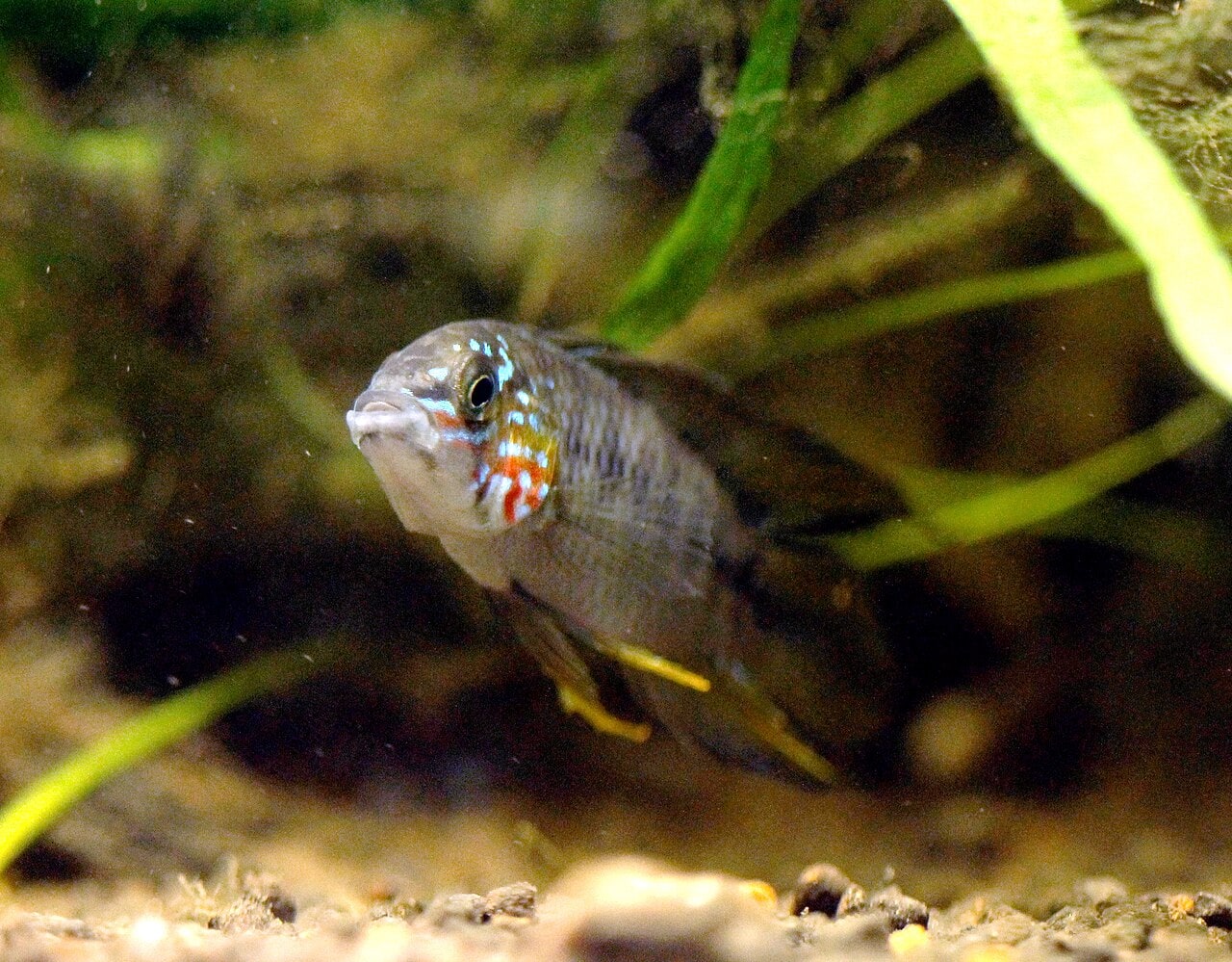
Apistogramma Borellii
Apistogramma borellii
Also known as: umbrella cichlid, yellow dwarf cichlid, borelli's apisto
The cool-water dwarf cichlid. Soft water and a pair-bonded setup gets the colour and the spawns. Skip the trio and any other cichlid in the same tank.
Apistogramma Borellii tank mates · 80L tank size hub
semi-aggressive · intermediate care
Sources & confidencehigh · partially verified · beginner: caution
Checked against several solid care sources that mostly agree. Numbers here are a careful starting point. Your tap water, tank size, and habits decide the rest. How we evaluate.
Best for: Soft-water planted community tanks 80L or more at 22–26 °C for experienced dwarf-cichlid keepers after colour and occasional spawning.
Avoid if: Your tap water is hard alkaline, you run the tank above 26 °C, or this is your first cichlid.
Common mistakeHousing two male borellii in one tank because the colour looked good in the shop is how keepers invent a permanently beaten fish. Males fight until one stops eating. Keep a single male with females as a harem, or give a true pair with broken sight lines — not a second male “for company.”
Top things that go wrong
- Shrimp & snails. Shrimp are a gamble with this fish; some ignore them, some clear a colony in days.
What most shops don't tell you
- 1.Myth: borellii are peaceful nano community cichlids that share any planted tank. Reality: they are dwarf cichlids that claim caves and punish rival males — soft water and a harem plan matter more than a “peaceful” shop label next to a second male.
- 2.Buying a pair, then adding a 'spare' male as a third option. The dominant male evicts the new fish into a corner within 48 hours.
- 3.Keeping in hard alkaline water because the shop tank looked fine. Wild borellii live in soft acidic water and farmed lines decline over months on hard tap.
- 4.Easier than agassizii and cacatuoides on water chemistry, but still a dwarf cichlid that defends a flat-rock spawning site. A pair in an 80L with cover lines and dither tetras above is the workable plan. Two males in the same tank without 120cm of length pin one of them in a corner.
About this species
Borellii are the cool-water apisto. Males show yellow on the body with red-and-blue trim on the unpaired fins. The species comes from the Paraguay basin and tolerates room-temperature 20 to 26 C, where most apistos want 26 to 29. That makes borellii the dwarf cichlid for unheated tanks in temperate rooms.
- Agassiz’s dwarf cichlid80L min · same group, comparable tank size
- Apistogramma Trifasciata80L min · same group, comparable tank size
- German Blue Ram80L min · same group, comparable tank size
- Apistogramma Macmasteri100L min · same group, similar adult size
- Checkerboard cichlid100L min · same group, similar adult size
- Cockatoo / crested Apistogramma100L min · same group, similar adult size
- Kribensis100L min · same fish family
- Bolivian Ram110L min · same group, similar adult size
- Agassiz’s dwarf cichlidalso intermediate semi-aggressive, similar tank size
- American Flagfishalso intermediate semi-aggressive, similar tank size
- Apistogramma Macmasterialso intermediate semi-aggressive, similar tank size
- Apistogramma Trifasciataalso intermediate semi-aggressive, similar tank size
- Cockatoo / crested Apistogrammaalso intermediate semi-aggressive, similar tank size
- Golden Wonder Killifishalso intermediate semi-aggressive, similar tank size
No reverse lookups listed yet.
Plan grid
Key limits are above. Here: pH band, swim level, bioload, and activity.
Swim zones
Care snapshot
Quick compare before you buy. Not a score of how “good” the fish is.
- Beginner ease38
- Peacefulness44
- Community fit22
- Small-tank fit60
- Hardiness54
- Energy54
Numbers are deterministic planning indices from Fishori fields — not a scientific score of your individual fish.
Example setups
Starting points only. Run the pair checker for every fish you add.
Avoid “one of everything” baskets — Apistogramma Borellii belongs in a plan built around territory, line-of-sight breaks, and matched water chemistry.
Compatibility
Tank mates for Apistogramma Borellii
No unconditional “safe” tank mates are listed for Apistogramma Borellii — this shortlist has CAUTION pairings that need specific conditions and RISKY pairings to avoid. Conditional (CAUTION — read the pair page before buying): Common Pleco, Corydoras Catfish, Dwarf Gourami, Harlequin Rasbora, Otocinclus. Avoid (RISKY): Jack Dempsey, Oscar. Every name links to a live pair check — the lists are a shortlist, not a stocking plan.
Usually safer
Open a pair page with this fish as the starting point.
None listed. Use the pair checker before mixing.
Needs planning
Read the blocking rule on each pair page before experimenting.
Usually avoid
Do-not-stock combinations on conservative hobby rules.
No safe-mate list on this record yet. Use the fish index to find species with similar care, then run a pair check before you buy.
Behaviour and temperament
Apistogramma borellii are semi-aggressive dwarf cichlids that stay calm toward midwater schoolers and lean hard on rival males near caves. A single male with females is the plan that fails least often. Stress shows as continuous chasing when two males share sight lines in an 80L footprint.
What sets them off
- spawning site
- rival males
- small tank length
Fin nipping: Not a habitual fin-nipper; stressed or crowded individuals can still test fins.
Predation: Not a predator toward similarly sized community fish; fry and dwarf shrimp are still fair game for most species.
Territory: Holds a patch (cave, corner, or surface). Break sight lines so neighbours can pass.
Planted tanks: excellent — easy plant ideas
In the glass: typical and warning signs
- A male holds caves and flares at rivals while females forage the leaf litter.
- Courtship and fry guarding are normal ownership, not a reason to break the pair up immediately.
- A subordinate male that never feeds is losing a fight, not catching a mystery disease.
- Washed-out colour in hard alkaline water usually means chemistry before diet brand.
- Two males in sight of each other will often fight to injury.
- Spawn defence can temporarily push peaceful tetras out of the bottom third.
- Remove the losing male the same day fins tear or appetite collapses.
- Rehome the borellii if the tank cannot give soft water, cover, and a single-male plan.
Fish behaviour can vary between individuals and tank setups. Always observe new fish closely after introduction.
Water, food, and grouping
Hardness
soft
Diet
carnivore
Apistogramma borellii are small bottom carnivores that take frozen foods and fine sinking pellets once settled. Flake that never reaches the sand leaves them thin while midwater fish look fine. Offer baby brine, daphnia, or bloodworm a few times a week after lights soften, and confirm the pair actually reaches the food under leaf litter or caves.
Shrimp & snails
Shrimp are a gamble with this fish; some ignore them, some clear a colony in days.
One bonded pair per tank under 200L. Two males do not work without 120 cm of length and heavy planting.
- An 80L tank or larger with at least 80 cm of length so a pair can hold opposite ends.
- Soft, slightly acidic to neutral water (pH 6.0 to 7.5, soft). Tanks with hard tap need RO mixing.
- Live or frozen food source. Borellii take pellets reluctantly and breed only on a varied live/frozen diet.
- Flat rocks or coconut-shell caves for spawning sites.
- Tank volume meets or exceeds 80L published minimum for adults.
- Heater can hold 20–26°C without cooking cooler-water tank mates.
Explore and stocking hubs
Tank-mates hub, matching guides, category peers, and litre stocking lists around this species’ minimum tank.
Plan with tools
Check mates as pairs first, then add this fish in the tank builder for the full stocking.
Filtration & heating
A 80L minimum tank needs a filter rated for at least 320L/hr turnover and a heater to hold 20–26°C reliably.
Plant suggestions
Apistogramma Borellii does well in planted tanks. Plants compatible with 20–26°C and pH 6–7.5:
Research: partially verified · Confidence: high · 2 linked source(s). We do not invent citations.
How Fishori evaluates compatibility (same logic as pair and tank tools).
- Seriously Fish. Apistogramma borellii
Primary: detailed species page on temperature range (notable for low end), Paraguay/Argentine origin, pair-bonding behaviour, and tank setup.
- Practical Fishkeeping. Apistogramma Borellii Profile
Secondary: editor overview covering colour variants (opal, blue), feeding (live/frozen preferred), and community-tank compatibility caveats.
Evidence notes
- Borellii is one of the few apistos that tolerates 20 to 22 C steadily, which makes it a candidate for the rare unheated planted tank in a temperate house. Other apistos sulk and stop spawning below 25 C.
- Two males in a tank under 120 cm of length nearly always end with one fish pinned in a corner. The species needs sight breaks, not just litres, to spread aggression.
Featured compatibility checks
Curated pair pages for Apistogramma Borellii. Each opens a full verdict — not just a list label.
Common questions about Apistogramma Borellii
- How big do Apistogramma Borellii get?
- Apistogramma Borellii adults reach about 6 cm. Shop fish look smaller; stock for the adult length.
- What size tank does Apistogramma Borellii need?
- 80L is the planning floor for adult swimming space and bioload. A 100L+ tank is the more comfortable long-term footprint. Length and depth matter as much as raw litres for active or territorial fish.
- Are Apistogramma Borellii aggressive?
- Apistogramma borellii are semi-aggressive dwarf cichlids that stay calm toward midwater schoolers and lean hard on rival males near caves. A single male with females is the plan that fails least often. Stress shows as continuous chasing when two males share sight lines in an 80L footprint.
- What is the most common mistake with Apistogramma Borellii?
- Housing two male borellii in one tank because the colour looked good in the shop is how keepers invent a permanently beaten fish. Males fight until one stops eating. Keep a single male with females as a harem, or give a true pair with broken sight lines — not a second male “for company.”
- What fish can live with Apistogramma Borellii?
- This profile currently has no curated unconditional safe-mates shortlist for Apistogramma Borellii. Other species may still return GOOD in the pair checker, so check the exact pair rather than treating this shortlist as exhaustive. Common Pleco, Corydoras Catfish, Dwarf Gourami, Harlequin Rasbora are conditional (CAUTION): workable only with the specific conditions on each pair page. Avoid Jack Dempsey, Oscar (RISKY). Run the pair checker for your exact water and tank size before stocking.