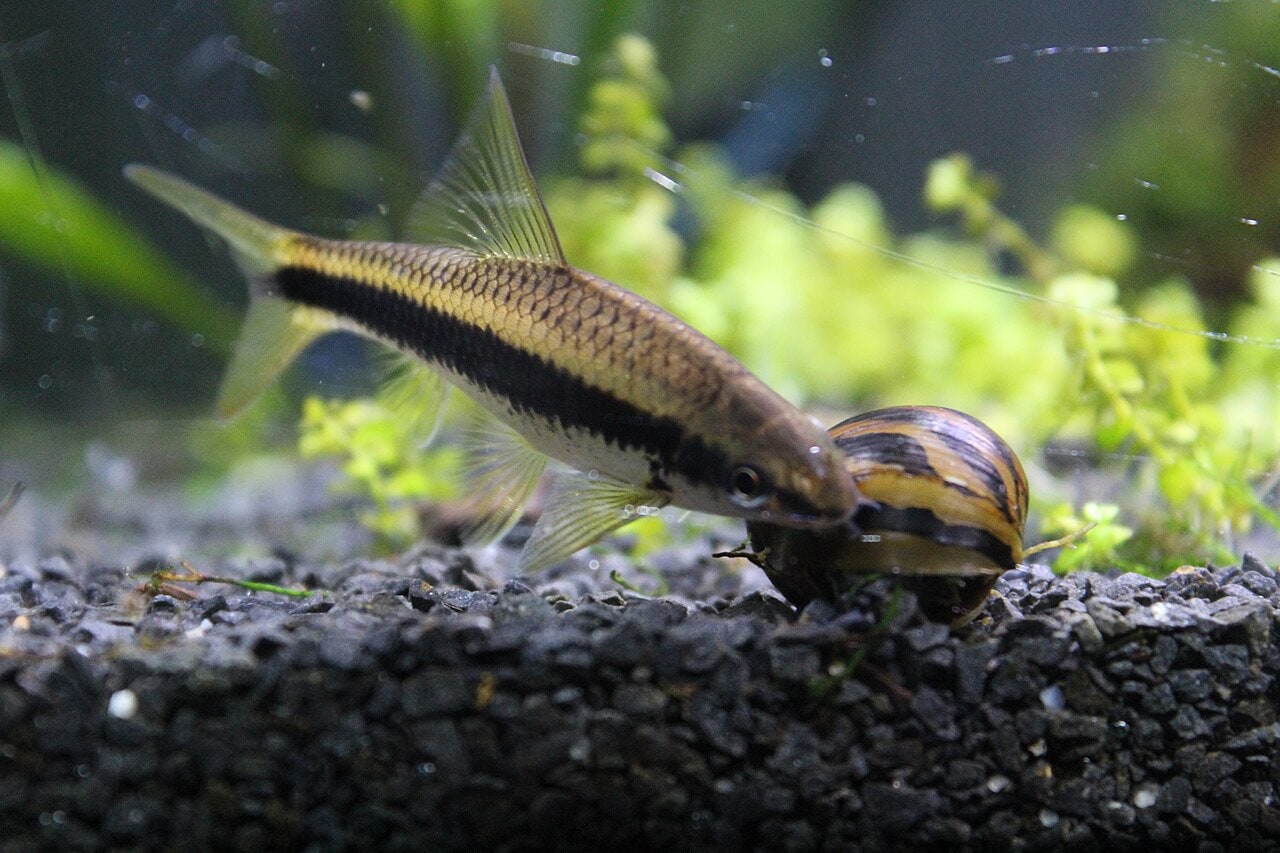
Should I buy it?
Siamese Algae Eater
Crossocheilus oblongus
Also known as: SAE, true SAE, Crossocheilus (trade name)
One of the few fish that genuinely eats black beard algae. Grows to 15 cm and becomes territorial with age. Not a low-maintenance algae solution.
Siamese Algae Eater tank mates · 100L tank size hub
peaceful · beginner care
Sources & confidencemedium · partially verified · beginner: caution
Typical care sources — trade names for this fish get mixed up, so verify the ID before you buy. Numbers here are a careful starting point. Your tap water, tank size, and habits decide the rest. How we evaluate.
Best for: Community tanks 100L or more with a black beard algae problem. One fish per tank.
Avoid if: You want a small permanent algae crew, or your tank is under 80L.
Common mistakeBuying two or three SAEs for algae control in a 60–100L tank is how keepers invent territory fights and idle adults. They grow toward 15 cm, often stop prioritising algae once well fed, and quarrel with their own kind in short footprints. One fish in a larger planted tank beats a cleanup crew fantasy.
Top things that go wrong
- Shrimp & snails. Cherry shrimp and other dwarfs can coexist with peaceful small fish; baby shrimp are food for almost anything that finds them.
Common trade-name warning
This fish is often sold under different names or species variants. Care guidance is based on typical aquarium examples rather than a single exact species. Shops frequently mislabel true Siamese algae eaters as Epalzeorhynchos "flying foxes", false SAEs, or other Crossocheilus. Identify fin pattern and barbels, not just the sticker.
What most shops don't tell you
- 1.Shops sell Siamese algae eaters as peaceful community cleaners that stay busy on glass forever. Adults often idle, quarrel in groups, and get confused with lookalikes that are more aggressive. Algae control is a temporary job description, not a lifelong personality.
- 2.Buying "SAE" without checking fin pattern. Flying fox and false SAE land in the same tank, and the dietary fit is not the same.
- 3.Stocking one for a 60L black brush problem. The adult outgrows the tank long before the algae loses.
- 4.Single fish or a group of four or more; a pair fights. Active feeders that beat slow cories to sinking food. Adults need a 100 cm run.
About this species
Siamese algae eaters are slim Asian cyprinids that work on hair and black brush algae. Adults reach 14 to 15 cm. Shops mislabel them as flying foxes and other Crossocheilus, so check fin pattern before you buy.
- Clown Pleco110L min · same group, comparable tank size
- Bristlenose Pleco80L min · same group, comparable tank size
- Otocinclus60L min · same fish family
- Royal pleco500L min · same fish family
- Common Pleco600L min · same fish family
- Beckford Pencilfishalso beginner peaceful, similar tank size
- Black Neon Tetraalso beginner peaceful, similar tank size
- Black phantom tetraalso beginner peaceful, similar tank size
- Bloodfin tetraalso beginner peaceful, similar tank size
- Bristlenose Plecoalso beginner peaceful, similar tank size
- Bronze corydorasalso beginner peaceful, similar tank size
- Boesemani Rainbowfish tank matesnames this fish as a conditional pairing — read the pair page conditions
Plan grid
Key limits are above. Here: pH band, swim level, bioload, and activity.
Swim zones
Care snapshot
Quick compare before you buy. Not a score of how “good” the fish is.
- Beginner ease60
- Peacefulness90
- Community fit65
- Small-tank fit54
- Hardiness76
- Energy54
Numbers are deterministic planning indices from Fishori fields — not a scientific score of your individual fish.
Example setups
Starting points only. Run the pair checker for every fish you add.
Match temperature and pH overlap with every tank mate, then verify adult size and group rules on pair pages — Fishori is biased toward boring, survivable plans.
Compatibility
Tank mates for Siamese Algae Eater
No unconditional “safe” tank mates are listed for Siamese Algae Eater — this shortlist has CAUTION pairings that need specific conditions and RISKY pairings to avoid. Conditional (CAUTION — read the pair page before buying): Angelfish, Cherry Barb, Harlequin Rasbora, Neon Tetra. Avoid (RISKY): Jack Dempsey, Oscar. Every name links to a live pair check — the lists are a shortlist, not a stocking plan.
Usually safer
Open a pair page with this fish as the starting point.
None listed. Use the pair checker before mixing.
Needs planning
Read the blocking rule on each pair page before experimenting.
Usually avoid
Do-not-stock combinations on conservative hobby rules.
No safe-mate list on this record yet. Use the fish index to find species with similar care, then run a pair check before you buy.
Behaviour and temperament
Siamese algae eaters are usually peaceful toward other species when kept singly, then become territorial with their own kind as they grow. They are not a school. Stress and chasing show up when two adults share a short community tank sold as an algae fix.
What sets them off
- Sudden crowding
- Poor water quality
Fin nipping: Not a habitual fin-nipper; stressed or crowded individuals can still test fins.
Predation: Not a predator toward similarly sized community fish; fry and dwarf shrimp are still fair game for most species.
Territory: Not strongly territorial, but still needs room so its working space does not overlap the next fish.
Planted tanks: good — easy plant ideas
In the glass: typical and warning signs
- A single adult patrols glass and hardscape, then rests in midwater between grazing bouts.
- Vegetable foods keep condition when the easy algae is gone.
- Two SAEs lining up and flaring along a pane is a territory problem, not play.
- Sudden idleness after the tank goes clean means feed plants foods, not add more SAEs.
- Same-species fights are the common failure mode in under-length tanks.
- Lookalike species sold under the same name can be far more aggressive — verify the fish.
- Rehome extras until one adult remains if chasing starts along the glass.
- Remove any fish sold as SAE that shreds tank mates — you may have a different species.
Fish behaviour can vary between individuals and tank setups. Always observe new fish closely after introduction.
Water, food, and grouping
Hardness
variable
Diet
herbivore
True Siamese algae eaters graze soft algae and still need vegetable foods as the tank cleans up — spirulina wafers, blanched greens, and plant-based staples. A meat-only community diet fattens them while algae work stops. Feed deliberately once the glass is clean, or they shift from grazing to harassing slower fish for leftovers.
Shrimp & snails
Cherry shrimp and other dwarfs can coexist with peaceful small fish; baby shrimp are food for almost anything that finds them.
Siamese Algae Eater is fine singly or as a researched pair — check behaviour before doubling up.
- Hold 24 to 28 °C steadily on a real thermometer, not the dial on the heater.
- Aim for pH 6 to 8 and a hardness you can re-test in two weeks. A one-time strip in the shop car park is not a water test.
- Footprint: short wide tanks and tall narrow tanks fish differently for the same volume. Match the tank shape to the swim pattern, not just the litre count.
- Tank volume meets or exceeds 100L published minimum for adults.
- Heater can hold 24–28°C without cooking cooler-water tank mates.
Explore and stocking hubs
Tank-mates hub, matching guides, category peers, and litre stocking lists around this species’ minimum tank.
Plan with tools
Check mates as pairs first, then add this fish in the tank builder for the full stocking.
Filtration & heating
A 100L minimum tank needs a filter rated for at least 400L/hr turnover and a heater to hold 24–28°C reliably.
Plant suggestions
Siamese Algae Eater does well in planted tanks. Plants compatible with 24–28°C and pH 6–8:
Research: partially verified · Confidence: medium · 3 linked source(s). We do not invent citations.
How Fishori evaluates compatibility (same logic as pair and tank tools).
- LiveAquaria. Siamese Algae Eater (care profile)
Primary: retailer care sheet: tank size, water parameters, diet, and use in planted community tanks. Commercial copy may list C. siamensis; trade 'SAE' is often a mix of similar Crossocheilus. Identify the fish, not the bag label alone.
- Planet Catfish. Labeoninae (Crossocheilus and look-alikes)
Primary: Cat-eLog subfamily list for Crossocheilus and related Asian labeonins; the standard reference when separating SAE from Epalzeorhynchos 'flying foxes' and other doppelgängers.
- FishBase. Crossocheilus oblongus
Secondary: species-level taxonomy and size in the wild; reconcile with the fish in your tank, not every shop's name tag.
Evidence notes
- Crossocheilus taxonomy in the hobby is messy: Seriously Fish did not expose a working C. oblongus profile URL here, while retailers and forums split 'true SAE' vs C. langei/atrilines look-alikes. This entry pairs a LiveAquaria care page with the Planet Catfish labeonin index for ID context.
- FishBase contributes natural-range size and habitat context. Translate those numbers through your heater, your water report, and your tank footprint before stocking.
- All compatibility text reflects typical hobby experience and the Fishori model. Individual fish, shop stress, and the order tank mates are added in can still defy a single-paragraph label.
Featured compatibility checks
Curated pair pages for Siamese Algae Eater. Each opens a full verdict — not just a list label.
Common questions about Siamese Algae Eater
- How big do Siamese Algae Eater get?
- Siamese Algae Eater adults reach about 15 cm. Shop fish look smaller; stock for the adult length.
- What size tank does Siamese Algae Eater need?
- 100L is the planning floor for adult swimming space and bioload. A 122L+ tank is the more comfortable long-term footprint. Length and depth matter as much as raw litres for active or territorial fish.
- Are Siamese Algae Eater aggressive?
- Siamese algae eaters are usually peaceful toward other species when kept singly, then become territorial with their own kind as they grow. They are not a school. Stress and chasing show up when two adults share a short community tank sold as an algae fix.
- What is the most common mistake with Siamese Algae Eater?
- Buying two or three SAEs for algae control in a 60–100L tank is how keepers invent territory fights and idle adults. They grow toward 15 cm, often stop prioritising algae once well fed, and quarrel with their own kind in short footprints. One fish in a larger planted tank beats a cleanup crew fantasy.
- What fish can live with Siamese Algae Eater?
- This profile currently has no curated unconditional safe-mates shortlist for Siamese Algae Eater. Other species may still return GOOD in the pair checker, so check the exact pair rather than treating this shortlist as exhaustive. Angelfish, Cherry Barb, Harlequin Rasbora, Neon Tetra are conditional (CAUTION): workable only with the specific conditions on each pair page. Avoid Jack Dempsey, Oscar (RISKY). Run the pair checker for your exact water and tank size before stocking.